Updated April 25, 2025 at 09:28 AM ET
Rather watch? Check out the interview video below.
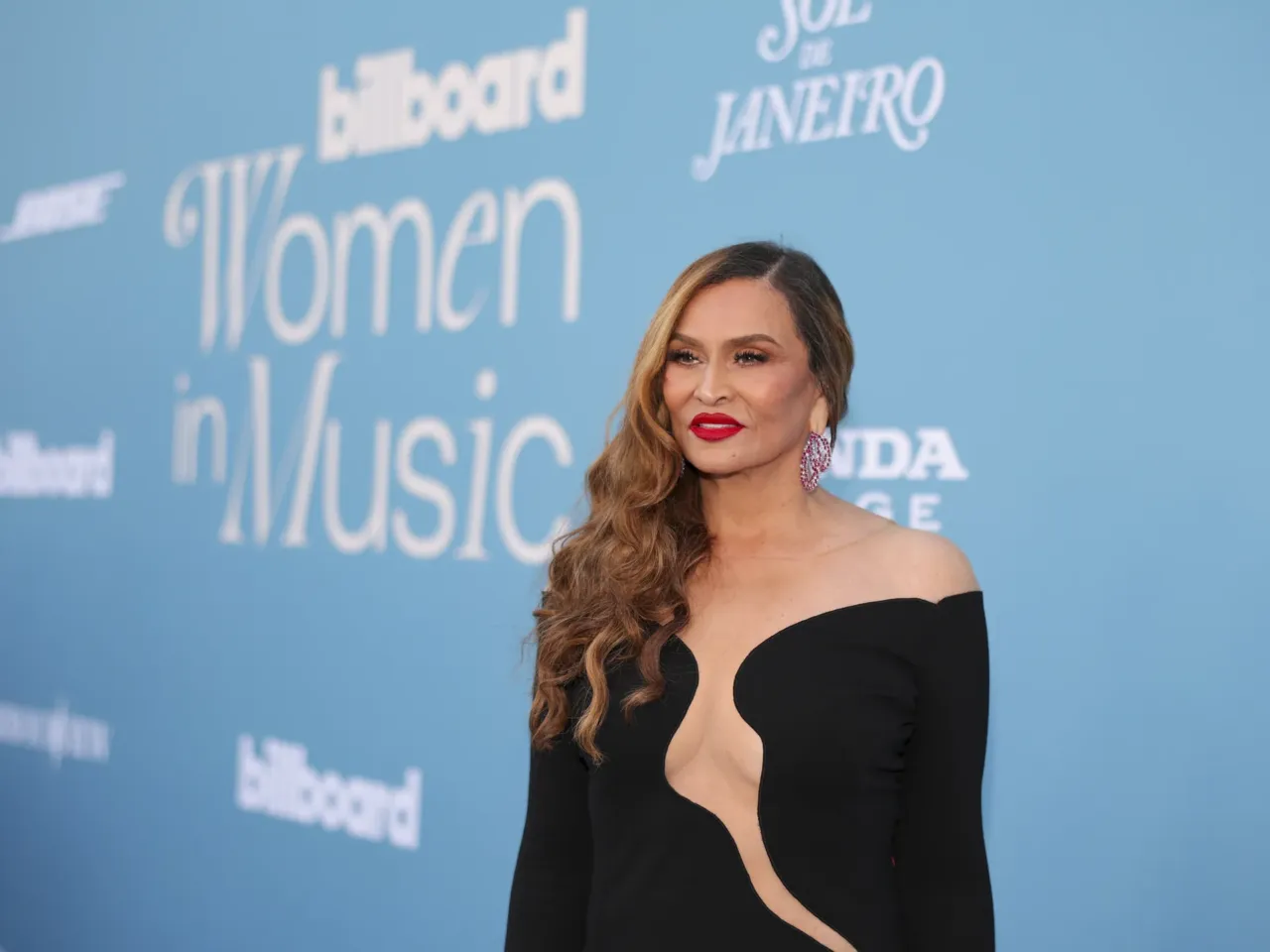
Before Tina Knowles became known as the force behind the scenes helping to style and guide her daughters Beyoncé Knowles-Carter and Solange Knowles, she owned a beauty shop. She liked to cook and care for her family and friends, and she prided herself on helping other people achieve their dreams.
Now, in a new book titled, Matriarch, Knowles steps into the spotlight herself with the inside story of how she helped her daughters achieve rare heights of stardom as entertainers and cultural icons.
NPR’s Michel Martin recently spoke from Washington D.C. with Tina Knowles, who was at a studio in Los Angeles. Knowles talked about growing up in Texas, her relationship with her ex and father of her daughters, Mathew Knowles, and the importance of sharing one’s story for future generations.
This interview has been lightly edited for length and clarity.
Michel Martin: May I call you Ms. Tina?
Tina Knowles: Of course.
Martin: I was struggling with how to describe your book. It tells the story of Black entrepreneurship, how you and your former husband, Mathew Knowles, built your business and it’s also the story of mothers– being a mother, the mothers we had, the ones we wished we had. It’s a lot. And I was wondering, when you started writing this book, is that what you started with or did it just become that?
Knowles: You know, I actually was going to write a book about behind the scenes things with my career in the music business, but it just came out of me once I started writing. It was like I just wanted to tell my story.
Martin: One of the things that I got from the book was how hard you had to fight to allow the girls to express their style. There was a magazine cover shoot where they wanted to put Beyoncé’s hair in a bun, and you were like, ‘They’re not going to put your hair in a bun. Why does her hair have to be in a bun?’ And also, Maxwell was in that same cover shoot. This was at a point where people who know Maxwell, know he had this crown of hair that was kind of his signature, but they wanted him to put on a hat. And you were like, ‘Don’t let them make you put on a hat.’ You took his hat off and were picking out his hair.
Knowles: Right. I take his hat off. I didn’t even know him, but he looked sad. And so I walked over and I said, ‘Why do you look so sad?’ And he said, ‘”Oh, they made me put this hat on.’ And I took it off and I took my pick and started picking his hair out. And Beyoncé was mortified. She was like, ‘Mom, what are you doing?’ But Maxwell and I connected that day, and we are really good friends. And, you know, he tells that story all the time because why did they want Beyoncé to put our hair in a bun and for him to put a hat on? I didn’t like that.
Martin: This happened over and over again. And in fact, one of the music companies actually talked to your ex, Mathew Knowles, who was their manager, and actually said that you were holding the girls back.
Knowles: Well, they were just doing what they knew. And they felt like four Black girls, curvy country Black girls from Texas with big hair and very Motown-esque costumes were not, that wasn’t that. They were right in that wasn’t the style then. There were all these pop icons who had huge careers, and they felt like they should look like them and they should wear jeans and midriff tops. And they were like, ‘This is so Motown is so over the top.’ But we liked over the top. We were from Texas. They looked different. And I think that was refreshing to the audience because in the meantime, people were coming up to us all the time saying, ‘We can’t wait to see what you guys are going to have on next.’ And some of it looked a little crazy. I mean, I look at it like now we look at it now. We were like, what were we thinking? But it was that time.
Martin: Well, how did you get the chutzpah? This is not a Texas word. I’m from New York, so I’m going to say it. The chutzpah to say to these people, ‘This is what they want to wear.’
Knowles: I’ll tell you, I was a sort of laid back behind the scenes person. A little, I wouldn’t say shy, but when it came to my girls, I was a beast. Like most mothers are, you know, the mother bear comes out and I would bring out Badass Tenie B. And I would stand up to people.
Martin: Who is Badass Tenie B?
Knowles: Badass Tenie B was this little girl who had to protect herself from the nuns and from the message that I wasn’t enough and I didn’t belong and I had to fight. So I didn’t have any problem saying this is who they are, this is what they like and people would be like, ‘Oh, God, who is somebody’s momma coming in here trying to tell me my job?’ But I fought for it. I fought with people and I’m really proud of that.
Martin: You write a lot about your relationship with your ex in the book. It’s moving and it’s deep and it had to have been hard to write about. Very on and off and on and off. And I will say, for people who haven’t had a chance to read the book yet, you don’t let yourself off the hook. You talk about the ways in which you participated in this.
Knowles: Well, it takes two people to be in a relationship. And I just, for so many reasons, stayed in this relationship for way longer than I should have. But he was the first person in my life to really say, I won’t say the first, but the second person that told me I could do anything and always said, ‘Oh, you got this, you can do this.’ He was always my biggest cheerleader and that’s hard to give up.
Martin: Did your daughters get input or read in the book? Did they get an edit?
Knowles: They haven’t read the book. They only read their parts.
Martin: Interesting.
Knowles: Parts that they’re involved in. They are kind of busy.
Martin: So how do you feel now that you’ve put your story out, that you’ve got it down on paper and it’s out there for the world?
Knowles: It’s kind of scary. It’s kind of scary, I tell you. Sometimes I wake up and I’m like, ‘Did I just really do that?’ You know, it’s a big deal because you’re opening yourself up. But it’s important to me to tell my own story, especially in my family, because there’s been so many narratives and so many, so much speculation. And I just think everyone should write their story for their kids and their grandkids and their great, great, great grandchildren. I wish I would have had that from my mother.
This story was produced for the web by Majd Al-Waheidi.
Copyright 2025 NPR