(SOUNDBITE OF BELL RINGING)
SCOTT SIMON, HOST:
In Rome at St. Peter’s Square, a farewell to Pope Francis.
(SOUNDBITE OF ARCHIVED RECORDING)
GIOVANNI BATTISTA RE: (Speaking Italian).
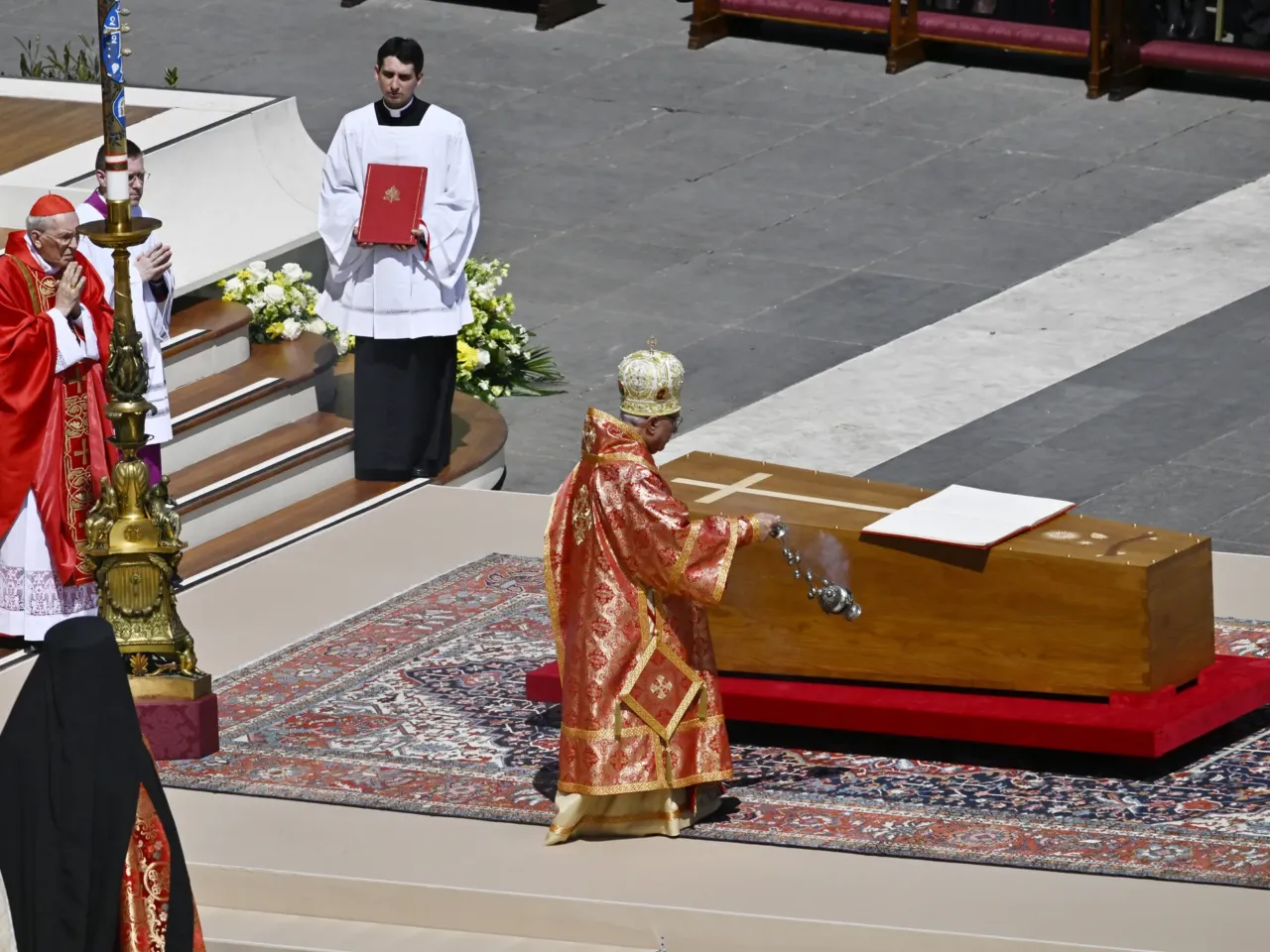
SIMON: His funeral was an open-air mass led by Cardinal Giovanni Battista Re. And as the ate pontiff wanted, it was relatively simple. Music was mostly in Latin and some in Gregorian chant.
(SOUNDBITE OF ARCHIVED RECORDING)
UNIDENTIFIED CHOIR: (Singing in non-English language).
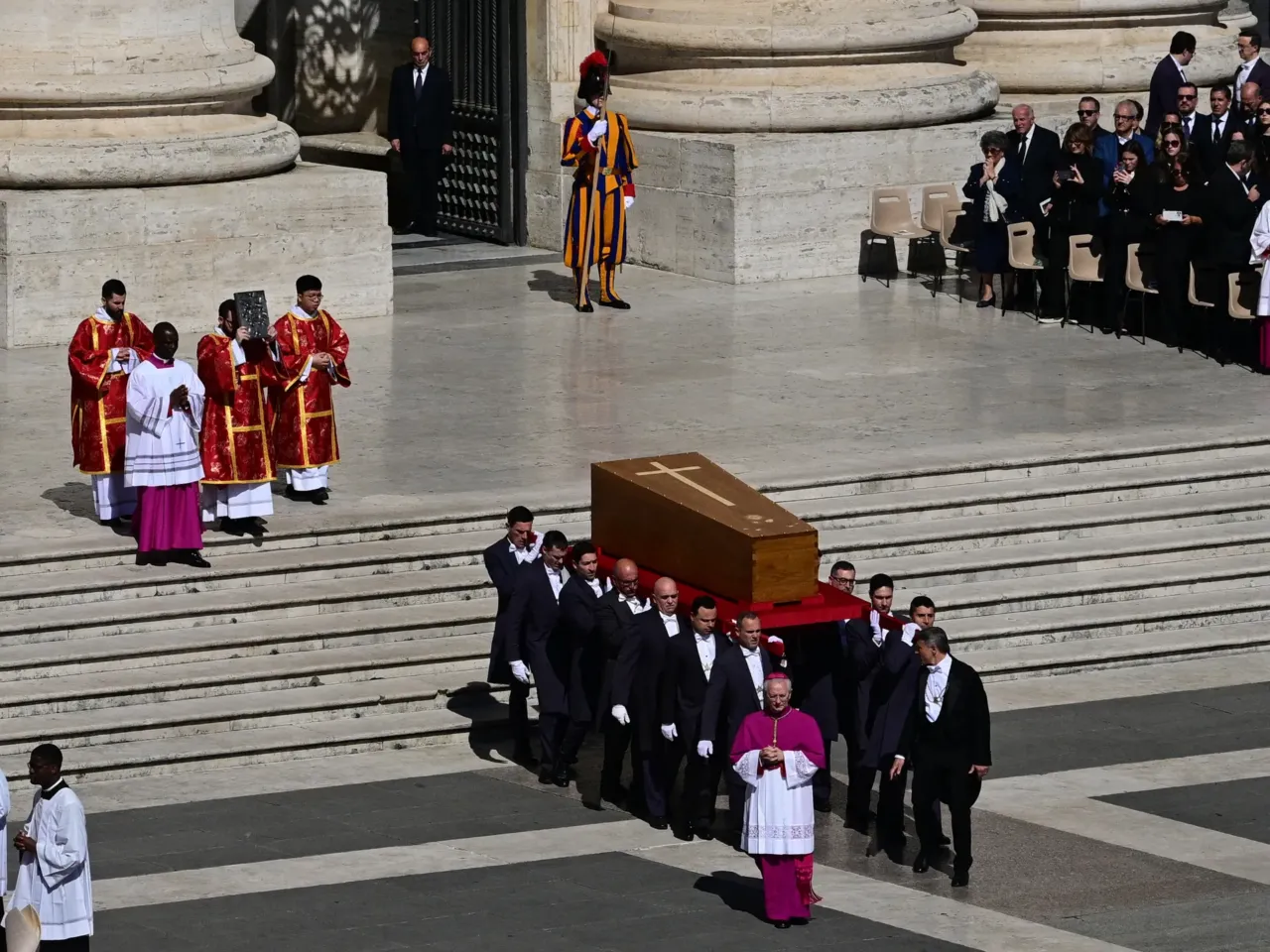
SIMON: More than 200,000 people, including worshippers of all denominations, world leaders and royalty, came out to pay their respects. And after the mass, many people lined the streets and applauded as the pontiff’s body in a plain wooden coffin passed by in a procession.
(APPLAUSE)
SIMON: NPR’s Lauren Frayer is in St. Peter’s Square, Vatican City, along with our colleague Sylvia Poggioli and Ruth Sherlock. There might be a slight delay on the line, but it’s good to have all of you with us. Thank you.
RUTH SHERLOCK, BYLINE: Thank you, Scott.
LAUREN FRAYER, BYLINE: Thanks for having us, Scott.
SYLVIA POGGIOLI, BYLINE: Thank you.
SIMON: Lauren, please tell us what you saw.
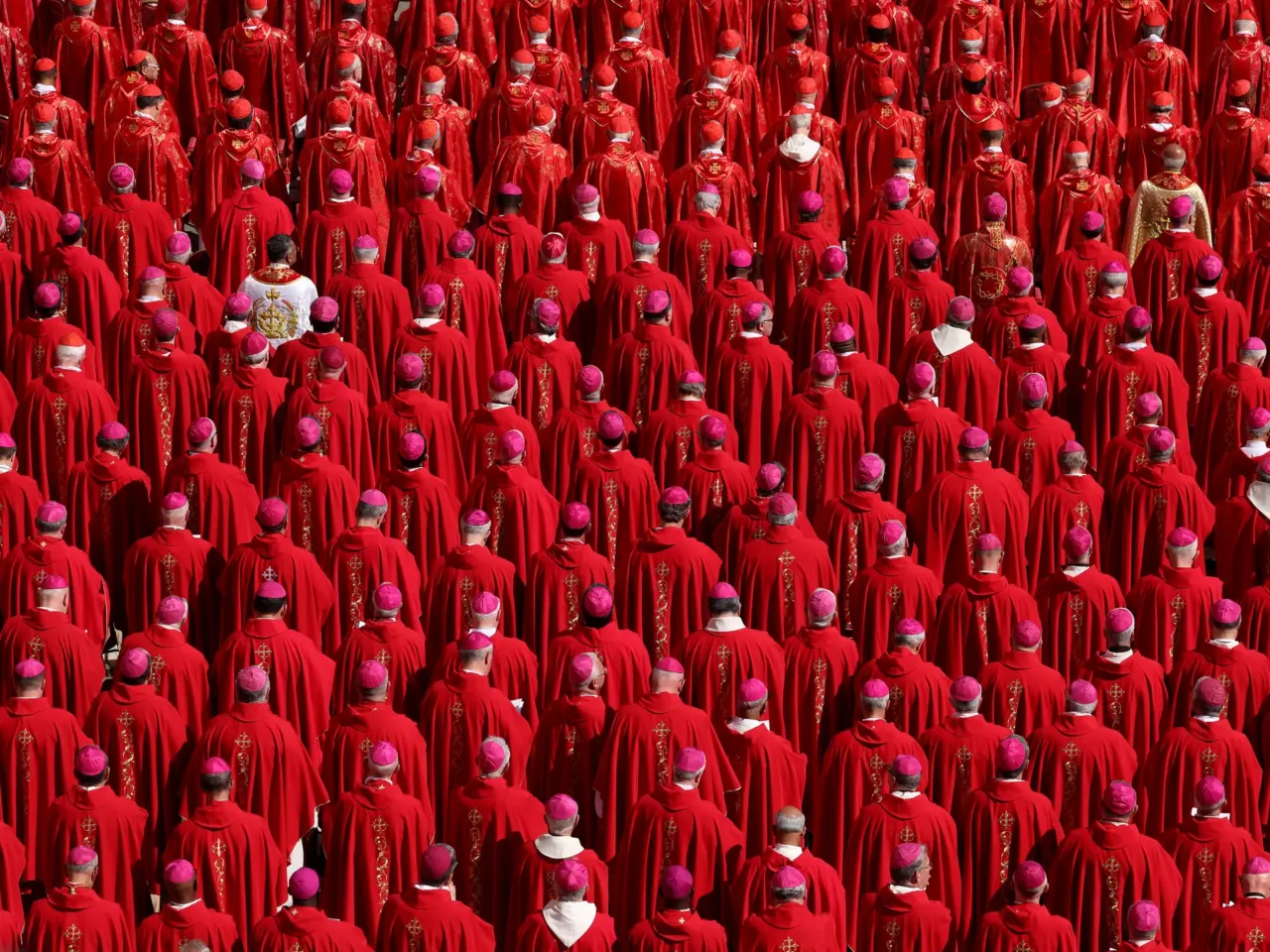
FRAYER: Scott, we’ve just stepped into a Renaissance painting. I’m looking up at the dome of St. Peter’s Basilica etched across these deep blue skies and puffs of white clouds rolling past. This square in front of the basilica swelled with people today and with colors – cardinals in bright red, nuns in black and white, monks in brown robes. The day began with bells tolling across this city and at the basilica here. And then a homage of global leaders, royals, military men and women. The cobblestone streets of Rome have been lined with people. In some places, 20 people deep, applauding as the popemobile carried Francis out of the Vatican for the last time, past Roman ruins, past the Colosseum to his final resting place in an immigrant neighborhood.
And, Scott, one of the things that strikes me, while these were very traditional Catholic rights, this has been a very interfaith commemoration. There have been Muslim clerics here. I saw a person in a Native American feather headdress, European royals with medals pinned on their coats next to Latin American nuns, next to African leaders in military dress – a very global send off for Pope Francis.
SIMON: And, Sylvia Poggioli, you covered Pope Francis on so many papal trips around the world. What signs did you see of his global legacy there today?
POGGIOLI: Oh, there was huge evidence of his global outreach here. There were, as Lauren said, representatives of many of the world’s religions. And the mass was sprinkled with readings in many languages, not just Latin, Italian and English, but also Arabic, Polish and Chinese. Pope Francis made many foreign trips. I went on several to Cuba, the U.S., several African countries and the Middle East. And in his homily, the dean of the College of Cardinals, Giovanni Battista Re, mentioned, in particular, the one in 2021 to Iraq, which has some of the world’s oldest Christian communities and where the cardinal said Pope Francis defied every risk, providing what he called a balm on the open wounds of the Iraqi people who had suffered so much from the inhuman actions of ISIS. It was also on that trip that Francis visited the Shiite Ayatollah Sistani in Najaf, part of his outreach to the world of Islam.
FRAYER: And our colleague NPR’s Ruth Sherlock has been wading through the crowds of faithful all day today. Ruth, what are people telling you out there?
SHERLOCK: Well, Lauren, there are people who traveled all night to be at this funeral. There was, for example, Antonella Marcuz, who took a bus from Austria to arrive at dawn in Rome. This means so much to her, and you can hear the emotion in her voice.
ANTONELLA MARCUZ: It is important to arrive Rome for Papa Francisco.
SHERLOCK: She’s crying, and, you know, she talks about how much Pope Francis meant, like you mentioned in – for bringing different faiths together. And you have stories like this all over the square. I spoke with Bishop Thomas Masters, who was in the crowd, dressed in his bright purple bishop robes. And I asked him why he chose to make this long trip from Florida to be here.
THOMAS MASTERS: I honor Pope Francis in so many different ways. Human rights, he was there. Justice, he was there fighting for the underdog, if I can use that phrase. The people, the poor, the impoverished, he was there. And he did not use his position to be above and beyond others. The pope used his position to be with the common people.
SHERLOCK: St. Peter’s Square is surrounded by these semicircles of colonnades with statues of Catholic saints all around, and that threw open to this bright blue sky, and many people in the crowd told me they felt as though Pope Francis might be looking down on this event from above.
SIMON: Sylvia, a solemn, religious day, of course, but politics don’t take the day off. President Trump was there. So was Ukraine’s President Zelenskyy and former President Biden. How did all that work out?
POGGIOLI: Well, the crowd watching the ceremony on big video screens in the square made their opinion known. Clearly, they were silent when President Trump and the first lady arrived and broke out into loud applause when Ukrainian President Volodymyr Zelenskyy appeared. The White House confirmed Trump and Zelenskyy met briefly before the ceremony, and we’ve seen a photo of the two of them seated in chairs inside St. Peter’s Basilica, arms on knees, huddling deep in conversation.
The seating order of all the other big – many delegations was very interesting. It was by name of nation in the alphabetical order of French, the language of diplomacy. The U.S. has the letter E for Etats-Unis, so President Trump sat between the representatives of Estonia and Finland. There was also a strict dress code. Many men wore black ties. Many women had the recommended long, black dress, heads covered by a black veil or lace mantilla.
One of the most striking moments was during the homily. With President Trump sitting nearby, Cardinal Re recalled a famous quote of Francis, build bridges, not walls – one of the pope’s strongest criticisms of the U.S. president’s policy of deporting migrants.
FRAYER: Ruth, you followed Pope Francis’s funeral cortege across Rome to the Basilica of St. Mary Major, where he’s now been laid to rest. What’s the scene there?
SHERLOCK: Well, of course, there were crowds of people outside this church that were so dear to Francis. You know, this basilica is home to an icon, a painting of Mother Mary and baby Jesus that Francis would pray to before and after every trip out of Rome. And one of the priorities of his papacy was Francis’ care for the poor and the disadvantaged. And he was known, for example, to slip out of the Vatican to visit homeless shelters nearby there. And this was also the final focus of this funeral, too. A group of people from disadvantaged backgrounds were invited to be by the entrance of St. Mary Major – people without homes, migrants, prisoners, victims of war. It was a fitting end that these people should be the final people to say goodbye to this pope.
SIMON: And, Sylvia Poggioli, you covered this entire papacy from the moment that Pope Francis first stepped out onto the steps to greet the people to today. What are your thoughts?
POGGIOLI: Well, I’m sitting here looking at this grand baroque square, and I think it’s very much – this architecture is a representation of the temporal power of the Catholic Church. One of the characteristics is trompe l’oeil, optical illusion. I think that’s a metaphor for – that helps us understand the Vatican’s modus operandi, shifting perspectives, always using the conditional. That’s the opposite of how Francis thought and acted. He was always very direct and assertive. It’ll be interesting to see if his straightforward style will change the Vatican’s centuries-old secrecy and vagueness. We’ll have a better idea next week or maybe in 10 days or so when we see who the cardinals pick as Francis’ successor in the upcoming conclave.
SIMON: NPR’s Sylvia Poggioli, Ruth Sherlock and Lauren Frayer. Thank you all. And we will have more on Pope Francis elsewhere in this program.
SHERLOCK: Thank you, Scott. Transcript provided by NPR, Copyright NPR.
NPR transcripts are created on a rush deadline by an NPR contractor. This text may not be in its final form and may be updated or revised in the future. Accuracy and availability may vary. The authoritative record of NPR’s programming is the audio record.