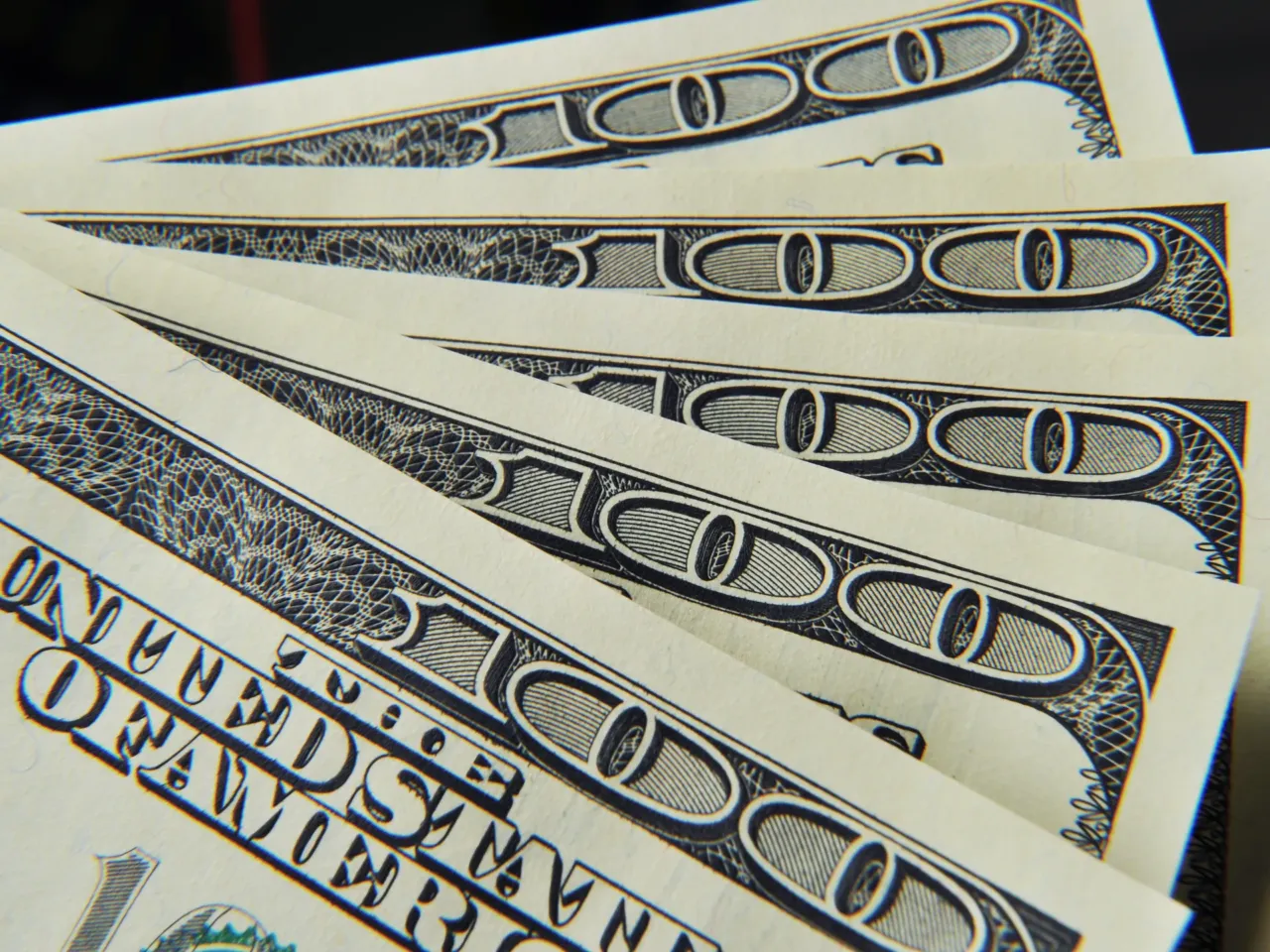
President Trump’s trade policies are accelerating a weakening of the U.S. dollar, which is off to its worst start of a year in half a century, according to Harvard University economics professor Kenneth Rogoff.
“I don’t think there’s any question that Donald Trump is a catalyst and it may go much further with what he’s doing,” Rogoff told NPR’s Michel Martin.
The dollar fell by 10.8% since the first half of this year, according to the U.S. dollar index, which compares the United States’ currency with a basket of other world currencies like the yen and the euro. The drop makes it more expensive for Americans traveling abroad and increases the cost of imports.
“The dollar has been the talk of the global economy this year. Everyone’s worried about it,” the former International Monetary Fund chief economist said on Morning Edition. “They’re talking about the fact that the dollar might not be used as much anymore. They’re worried about the U.S. budget deficit and what will happen. They’re worried about Trump shutting off markets, which also makes it less attractive to all dollars.”
Rogoff said the dollar hasn’t weakened this much since then-President Richard Nixon canceled the convertibility of the dollar to gold in the 1970s.
This interview has been edited for length and clarity.
Michel Martin: Why is the dollar so weak right now?
Kenneth Rogoff: Well, the dollar was very high coming into the year. I would say you had to go back 25 years to see it as high. So that’s part of it. But I don’t think there’s any question that Donald Trump is a catalyst and it may go much further with what he’s doing. The trade wars, threatening to put taxes on foreign investment, generally making it seem like investing in the United States is not as safe as it used to be.
Martin: So is it more the volatility, or is it the policies themselves, or some combination of it?
Rogoff: I’ll be honest with you, we don’t know. It’s very hard to analyze exchange rates after the fact. But we do sort of notice whenever Trump attacks the chair of the Fed, that drops the dollar. And when he does some ramp up of the tariff policy, the dollar goes down. So there’s no question you can connect the rhythm of what’s been happening to Trump
Martin: Might the president’s taxation and spending bill have an impact?
Rogoff: Absolutely. The dollar has been king of the Hill for a long time. But at the same time, our debt policy is just off the rails. I mean, the debt is about to pass the post-World War Two record high as a ratio to income. It just doesn’t look like there’s a plan. And, you know, Trump just says, ‘oh, there’s nothing to worry about. The Big Beautiful Bill is going to make us grow like crazy. Who’s worried about the debt?’ Well, foreign investors are. So I think he has accelerated a trend of moving away from the dollar being as important as it was. And that’s very costly if that happens over the long run.
Martin: Who benefits from a strong U.S. dollar? And is there anybody who benefits from a weaker U.S. dollar?
Rogoff: Well, we benefit if you’re an exporter. When the dollar gets weaker, imports are more expensive, but our exports are cheaper. And there are some exports like services, which is actually one of our biggest exports — it’s insurance, consulting, finance, intellectual property — that’s priced in dollars, and we’re going to become more competitive than it would have been otherwise. Conversely, if you’re a farm worker and you’re sending remittances back to your parents in, say, Mexico or some foreign country, it’s going to be worth less when the dollar is going down.
Martin: So where you stand, in a way, depends on where you sit. But what I also think I hear you saying is that in some ways, the dollar is a referendum on how investors see the strength, the overall strength of the U.S. economy. Is that accurate?
Rogoff: It’s certainly true that how much they’re willing to hold dollars and at what price is a referendum. It’s always been the talk of the global economy this year. We absolutely may be looking at an inflection point in the global economy and economic history. We have not seen anything like this since 1971, when Nixon took us off gold. People couldn’t trade their dollars for gold, but countries could. Nixon announced we wouldn’t do it anymore, and the 1970s followed. It was something of a catastrophe. This is the biggest thing, really, in more than 50 years. This is a very big deal.
The broadcast version of this story was edited by H.J. Mai. The digital version was edited by Olivia Hampton.
Copyright 2025 NPR