Copyright © 2026 VPM, all rights reserved.
PBS is a 501(c)(3) not-for-profit organization.
VPM News Morning Edition
NEXT UP: 9:00 AM

Thanks to our sponsors – Become a Sponsor

Ukraine approves law restoring independence of anti-graft watchdogs following backlash

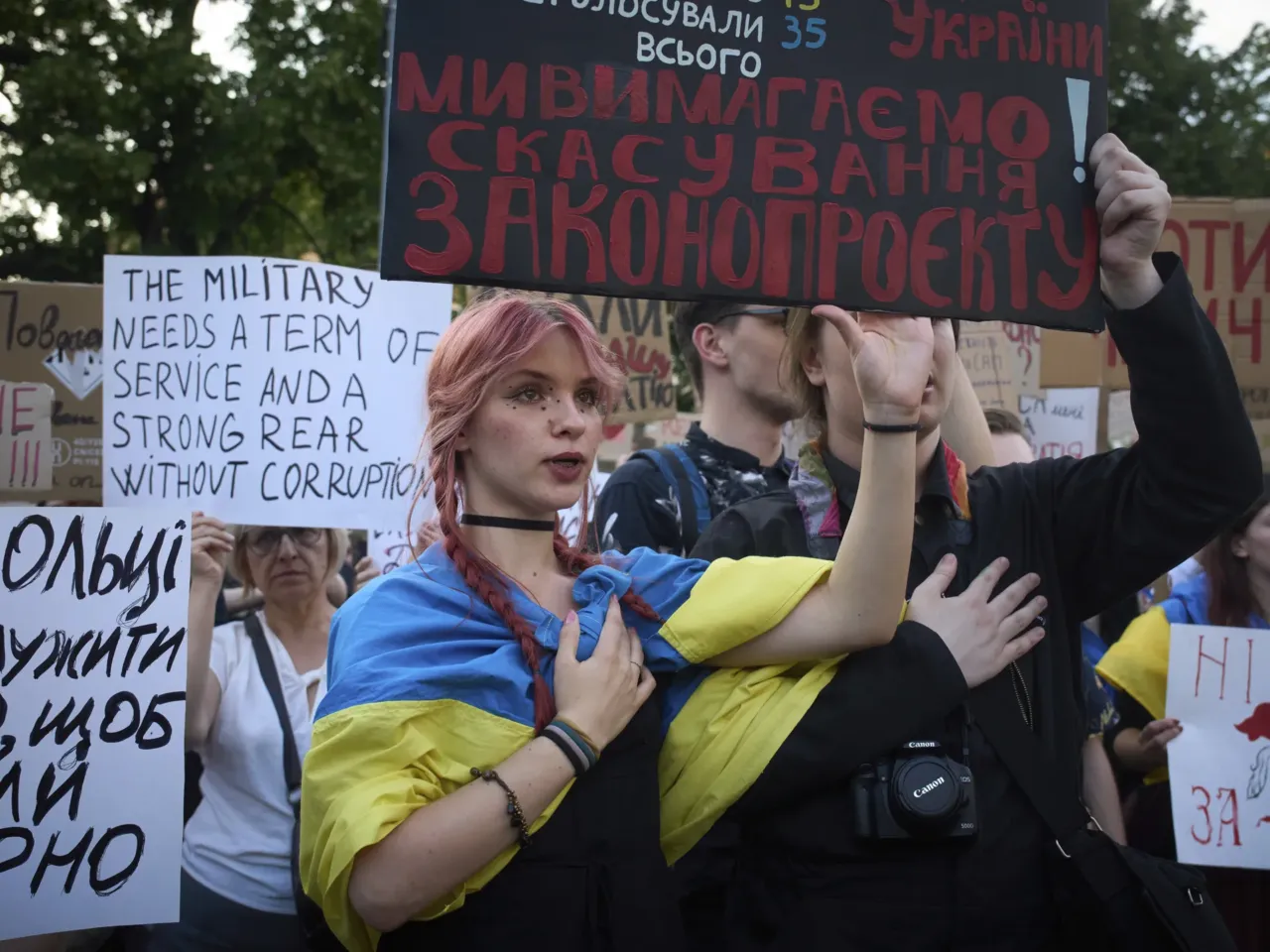
Demonstrators protest against the bill proposed by President Volodymyr Zelenskyy in Kyiv, Ukraine, Thursday, July 24, 2025.
Efrem Lukatsky / AP
Demonstrators protest against the bill proposed by President Volodymyr Zelenskyy in Kyiv, Ukraine, Thursday, July 24, 2025.

KYIV, Ukraine — After a public outcry and pressure from the European Union, a new law is now in force in Ukraine restoring the independence of state agencies investigating corruption.

Ukrainian President Volodymyr Zelenskyy introduced this bill after facing his first major domestic political crisis since Russia’s full-scale invasion three and a half years ago. He and Ukraine’s parliament reversed course after approving a previous bill to place anti-corruption agencies under a Zelenskyy-backed prosecutor.

Thousands of Ukrainians took the streets in protest, calling it an authoritarian move.

“It is very important that the state listens to public opinion and hears its citizens,” Zelenskyy said in a video address on Thursday. “Ukraine is a democracy for sure. There is no doubt.”
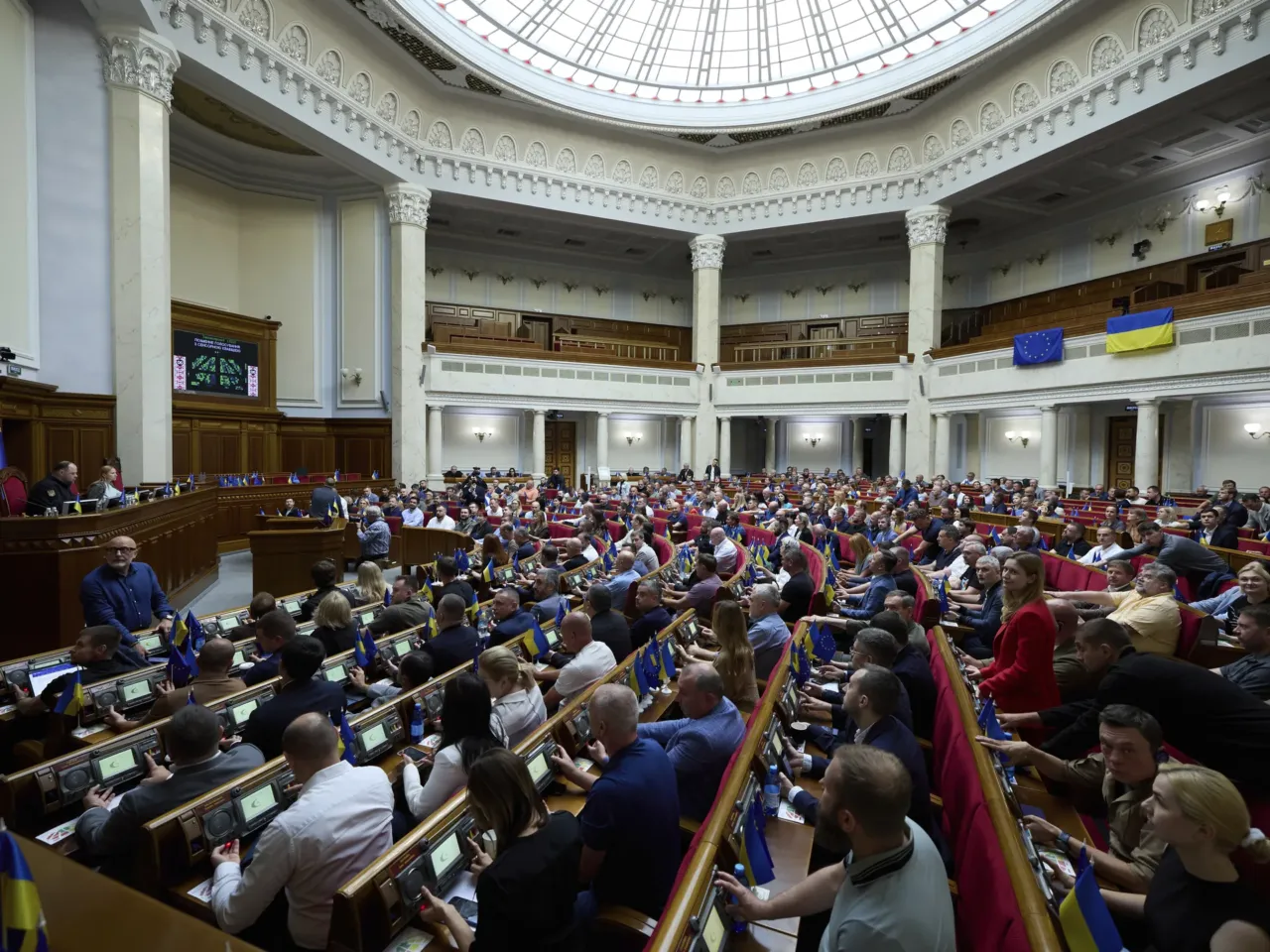
Ukrainian lawmakers vote for a new bill proposed by President Volodymyr Zelenskyy to restore the independence of the country's anti-corruption agencies, at the parliament session hall in Kyiv, Ukraine, Thursday, July 31, 2025.
Ukrainian lawmakers vote for a new bill proposed by President Volodymyr Zelenskyy to restore the independence of the country’s anti-corruption agencies, at the parliament session hall in Kyiv, Ukraine, Thursday, July 31, 2025. Sarakhan Vadym / AP

The two agencies — the National Anti-Corruption Bureau and the Specialized Anti-Corruption Prosecutor’s Office — were created after 2014, when a pro-democracy revolution brought down a corrupt, Kremlin-aligned president, Viktor Yanukovych. The EU, which has given Ukraine more than $178 billion since January 2022, sees these agencies as crucial to institutional reforms Ukraine is required to complete before the country possibly joins the 27-member bloc.

After last week’s move to weaken the anti-corruption agencies, the EU froze $1.7 billion in non-military aid. Writing on social media, Marta Kos, the EU commissioner for enlargement, said the new law “restores key safeguards but challenges remain.”

Thursday’s vote in parliament was livestreamed. Ukrainians watching at a square outside waited nervously as a timer inside parliament’s chambers counted down to the end of voting. When they saw that nearly all lawmakers supported the new law, they cheered and chanted.

Yehor Soboliev is a former lawmaker who, years ago, helped draft the legislation allowing anti-corruption agencies to conduct investigations independently. He now serves in the military and says transparency is especially crucial now.

“We are fighting a country that is many times larger than us, has many more resources and can throw them at us to conquer us,” he says. “Efficiency means survival. It’s simple: anything that weakens Ukraine’s ability to fight or preserve its freedom is a problem that must be solved immediately.”

Soboliev says this past week has shown that Ukraine “is probably the last country in the world where you can create a dictatorship.” And, he adds, that applies even as the country defends itself in a war against Russia.

“We must simultaneously hold the frontline,” he says, “while also pushing democracy and this country forward.”

Copyright 2025 NPR

Joanna Kakissis is an international correspondent based in Kyiv, Ukraine, where she leads NPR's bureau and coverage of a conflict that has upended millions of lives, affected global energy and food supplies and pitted NATO against Russia.

Kakissis began reporting in Ukraine shortly before Russia invaded in February. She covered the exodus of refugees to Poland and has returned to Ukraine several times to chronicle the war. She has focused on the human costs, profiling the displaced, the families of prisoners of war and a ninety-year-old "mermaid" who swims in a mine-filled sea. Kakissis highlighted the tragedy for both sides with a story about the body of a Russian soldier abandoned in a hamlet he helped destroy, and she shed light on the potential for nuclear disaster with a report on the shelling of Nikopol by Russians occupying a nearby power plant.

Kakissis began reporting regularly for NPR from her base in Athens, Greece, in 2011. Her work has largely focused on the forces straining European unity — migration, nationalism and the rise of illiberalism in Hungary. She led coverage of the eurozone debt crisis and the mass migration of Syrian refugees to Europe. She's reported extensively in central and eastern Europe and has also filled in at NPR bureaus in Berlin, Istanbul, Jerusalem, London and Paris. She's a contributor to This American Life and has written for The New York Times, TIME, The New Yorker online and The Financial Times Magazine, among others. In 2021, she taught a journalism seminar as a visiting professor at Princeton University.

Kakissis was born in Greece, grew up in North and South Dakota and spent her early years in journalism at The News & Observer in Raleigh, North Carolina.

Related Stories