Copyright © 2026 VPM, all rights reserved.
PBS is a 501(c)(3) not-for-profit organization.
VPM News Morning Edition
NEXT UP: 9:00 AM

Thanks to our sponsors – Become a Sponsor

Utah residents are reeling, knowing the Charlie Kirk suspect is one of their own

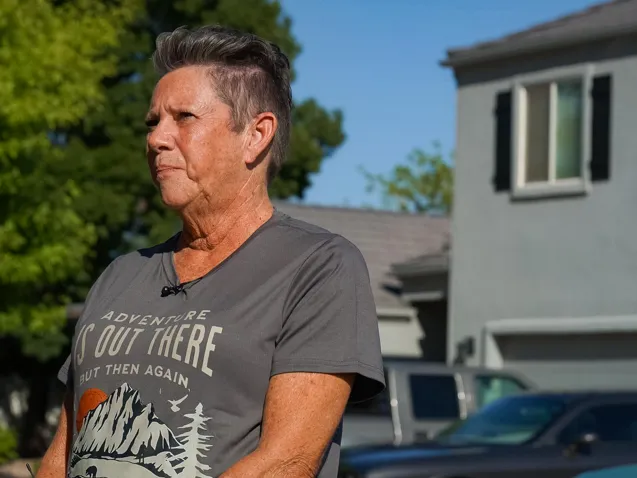
Kristin Schwiermann has lived in this home in Washington, Utah, for 16 years. She says she has known the Robinson family for "a long time." Tyler Robinson is a suspect in the Charlie Kirk assassination that took place Wednesday.
David Condos / NPR
Kristin Schwiermann has lived in this home in Washington, Utah, for 16 years. She says she has known the Robinson family for "a long time." Tyler Robinson is a suspect in the Charlie Kirk assassination that took place Wednesday.

OREM, Utah — The arrest of Tyler Robinson sent shockwaves through the small community where his family lives. Washington, a city of around 30,000, sits next to St. George in Utah’s southwest corner. It’s a 3 ½-hour drive from the Utah Valley University campus.

The 22-year-old is the suspect in the killing of conservative influencer Charlie Kirk during a Wednesday event at the campus in Orem. After a 33-hour manhunt, Robinson’s family helped turn him in the following day.

On Friday morning, after law enforcement released Robinson’s name, officers from the Washington City Police and Washington County Sheriff’s Office patrolled a quiet street, preventing onlookers from approaching the family’s two-story gray stucco home.
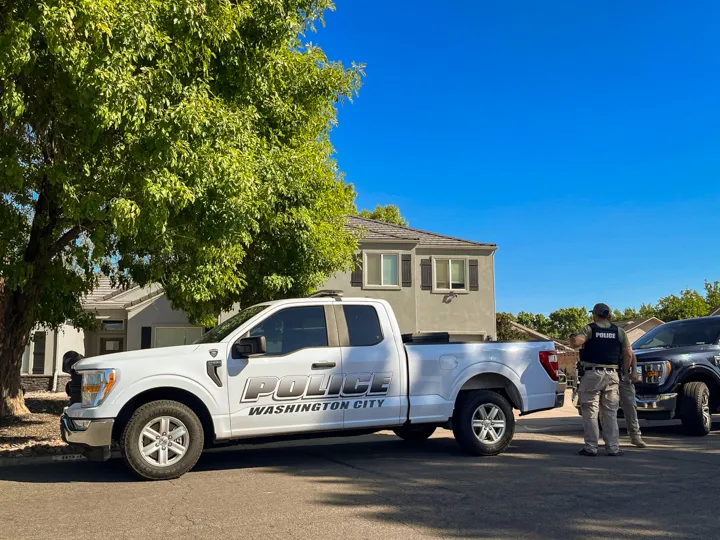
On Friday morning, after law enforcement released Tyler Robinson's name as the suspect in the Charlie Kirk assassination, officers from the Washington City Police and Washington County Sheriff's Office patrolled the street where his family lives.
On Friday morning, after law enforcement released Tyler Robinson’s name as the suspect in the Charlie Kirk assassination, officers from the Washington City Police and Washington County Sheriff’s Office patrolled the street where his family lives. David Condos / NPR

‘This is not who I wanted it to be’

Neighbor Kristin Schwiermann still couldn’t believe the news as she walked by.

“It was a shock that it was him,” she says, “I feel sorry for his mother and his dad because that’s not how they raised him.”

Schwiermann has lived a couple of houses down from the Robinsons for 16 years and has known the suspect since he was a little boy. She got to know the family when Tyler and his siblings attended the elementary school where she works.

“I really wanted them to find out who it was. This is not who I wanted it to be,” she says.

The Robinsons and Schwiermann had been part of the same local church, which, like most in this community, belongs to The Church of Jesus Christ of Latter-Day Saints. She hadn’t seen the family at church much recently, though.

Another neighbor, Melissa Tait, says it was a surprise to see her community connected with the shooting. But she believes it says more about the broader rising violence issues facing the country than it does about southwest Utah.

“I’m upset. This is horrific, but I am not shocked,” she says.

The residents’ sense of sadness was echoed in a statement from Washington County commissioners.

“To hear that the perpetrator of such terrible political violence was raised in our beautiful community is profoundly shocking,” the statement said. “Washington County, like Charlie Kirk himself, stands for the values of faith, freedom, the pursuit of happiness, and justice.”

To critics, however, Kirk was often viewed as a magnet for controversy who used his platform to spread conspiracy theories about the 2020 election, vaccines and transgender people.

Even after an arrest, many are still reeling in Utah

Nathan Pond, a trauma therapist in Orem, says he’s received almost 20 phone calls from people in the community seeking help since Wednesday’s assassination.
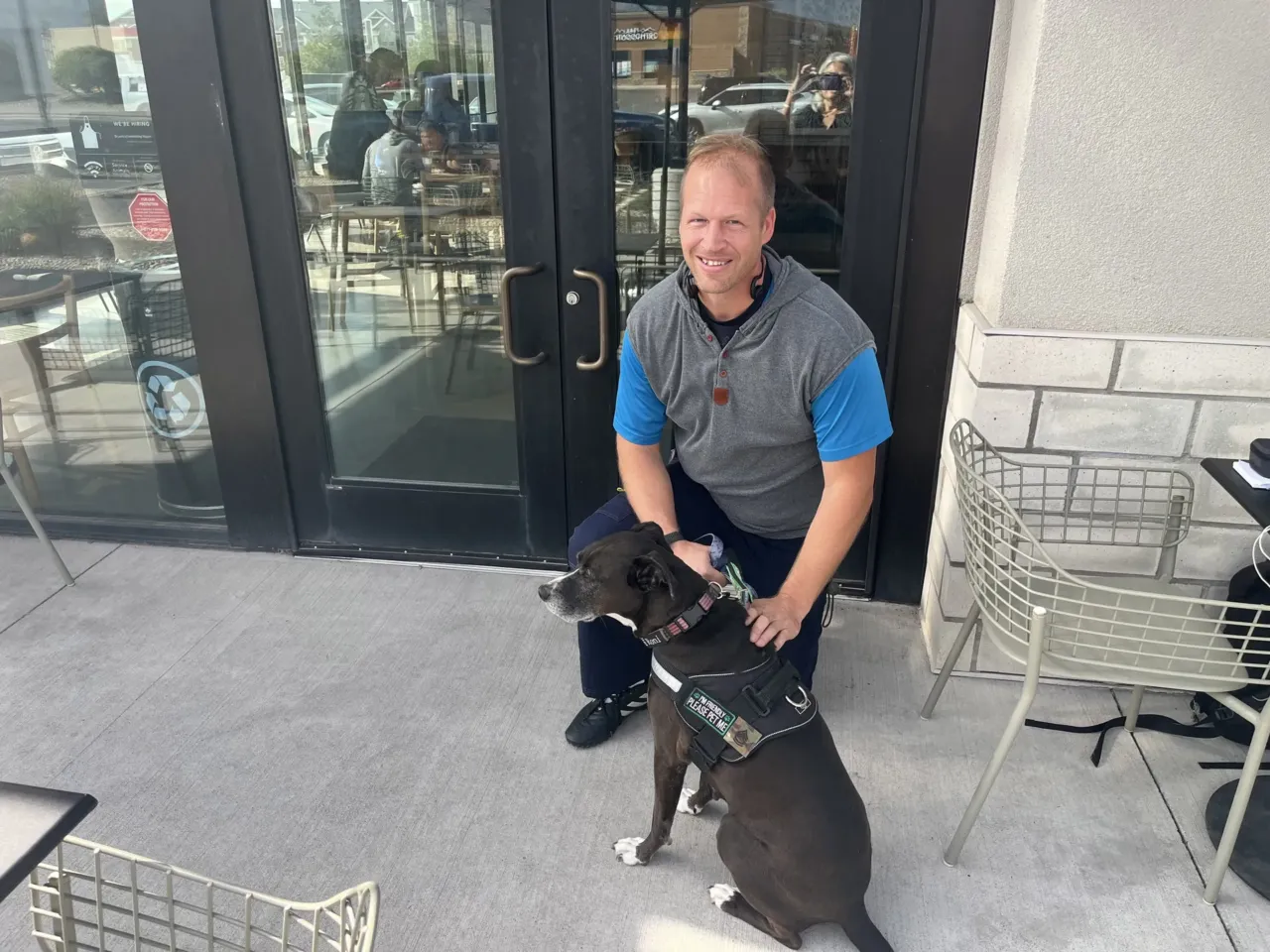
Trauma therapist Nathan Pond and his dog Roni live in Orem, Utah. Pond says he's been getting lots of calls from people in the community seeking help.
Trauma therapist Nathan Pond and his dog Roni live in Orem, Utah. Pond says he’s been getting lots of calls from people in the community seeking help. Marisa Peñaloza / NPR

He says Robinson’s arrest has brought some sense of relief to the community: “The fact that they found him, I think everyone’s breathing a sigh of relief because he’s not still wandering around. We didn’t know where he was.”

But he says people in Orem, whether they were on campus that day or not, are still traumatized and in shock.

“A lot of people feel like it could have easily happened to them. People are scared” despite what the data says, he says, “I know the likelihood of being involved in mass shootings is rare. We are so much more likely to die driving home from work than we are to die in a mass shooting. But when we are scared, our sense of perspective diminishes.”

Pond works with a trauma dog, Roni, who patiently sits by him at a coffee shop less than a mile from campus. Even with the suspect detained, he says, the fact that there was an assassination in the community has people reeling. “People don’t feel safe. We’re reminded of how fragile our lives are and that feeling alone can create feelings of uneasiness and not feeling safe.”

Pond recalled the last time he saw such high levels of collective trauma.

“I haven’t seen anything at this level since September 11th.” he says referring to the terrorist attacks in 2001. “Everyone was able to see it. Everyone watched the towers fall, all the trauma and stuff that had to do with that was unthinkable,” Pond says. “And at this event, everyone got to see someone of influence die on their phone. And I think because of that, I can say I feel like it reached a level of traumatizing for everyone who pulled out their phone,” he says.

Sariah and Case Dearden are having breakfast at an outdoor cafe with their 4-month-old baby boy. They moved to Orem because they thought it was a safe community, but now they are rethinking that, they say.
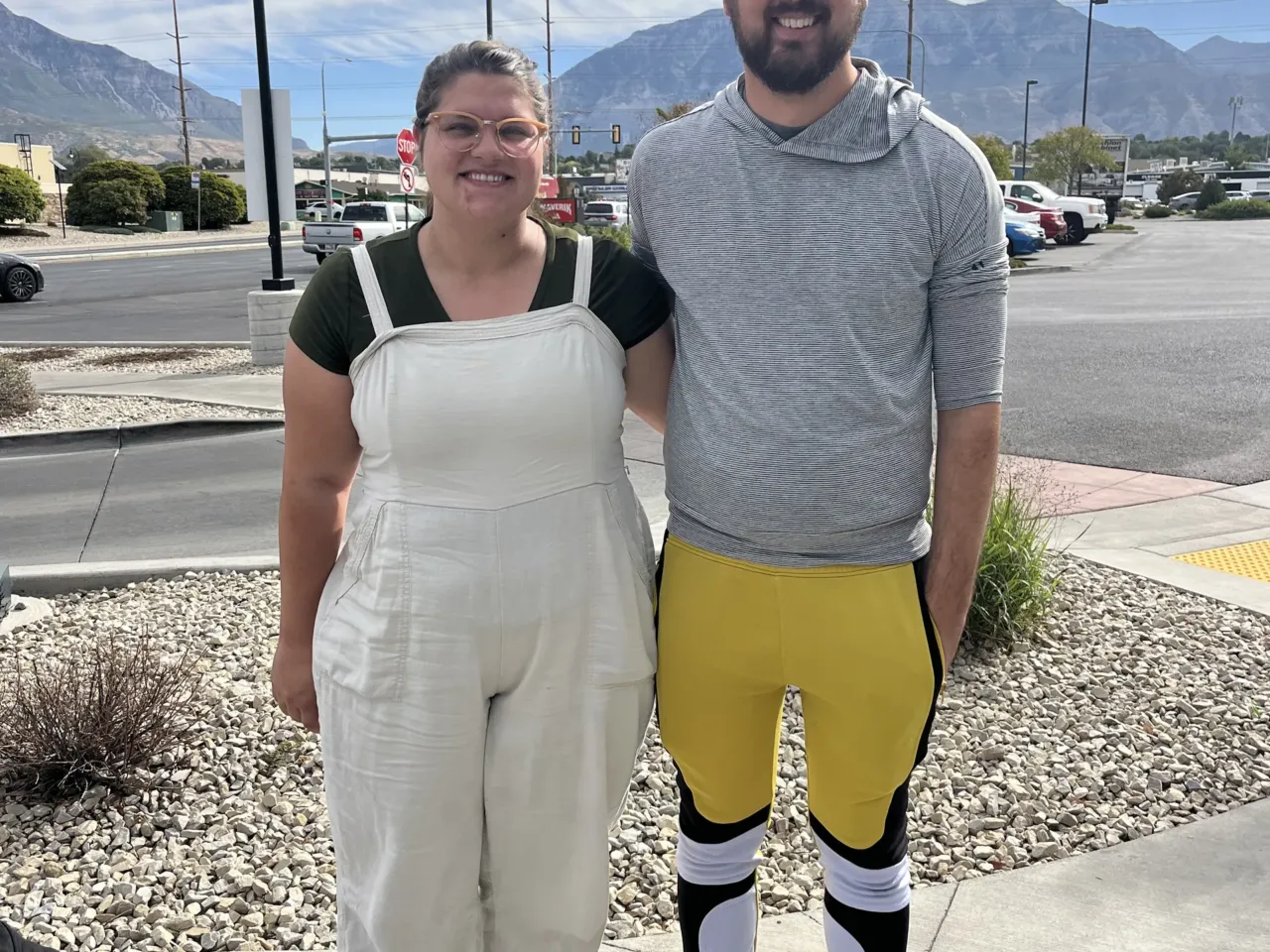
Sariah and Case Dearden say they don't feel any safer now that the suspect has been arrested. They are concerned things could escalate.
Sariah and Case Dearden say they don’t feel any safer now that the suspect has been arrested. They are concerned things could escalate. Marisa Peñaloza / NPR

The couple says those 33 hours before the alleged shooter was caught felt like an eternity.

He condemned Kirk’s murder. “I didn’t care for Charlie Kirk. I found him insufferable. But it’s awful what happened to him. No one deserves that, regardless of political beliefs.”

The couple says they’re grateful the suspect is alive. “At least we’re going to get some answers as to why he did it,” Sariah says. Her husband, Case, agrees. “That way justice can be served according to the law,” he says. “I know he’s already a coward for committing this assassination. I am glad he didn’t take another cowardly step and kill himself.”

But Case Dearden is concerned things could escalate. “This is an incendiary event. People are going to try and take justice in their own hands, is what I’m afraid of. And I don’t feel any safer that the man has been caught. People are pointing fingers in every direction even more now,” he says.

Copyright 2025 NPR

Marisa Peñaloza is a senior producer on NPR's National Desk. Peñaloza's productions are among the signature pieces heard on NPR's award-winning newsmagazines Morning Edition and All Things Considered, as well as weekend shows. Her work has covered a wide array of topics — from breaking news to feature stories, as well as investigative reports.

Although Peñaloza is a staff member on the National Desk, she occasionally travels overseas on assignment. In 2020, she traveled to Iraq and embedded with U.S. forces in Syria to report on the work the troops were doing on the ground after President Trump decided to withdraw a large portion of the forces in the fall of 2019. She's traveled to Guatemala to report on parents separated from their children at the U.S. border and to Honduras to cover the genesis of the migrant caravans. She traveled to Brussels right after the terrorist attack in March of 2016 and to Haiti soon after the 2010 earthquake hit, and she went back several times to follow the humanitarian organizations working on the island nation. She's covered education in Peru and in Ecuador, a dengue outbreak in El Salvador, the Madrid train bombings in Spain, as well as the South East Asia Tsunami in Banda Aceh, Indonesia.

Her contributions to NPR's digital coverage of the current Coronavirus pandemic have been significant and ongoing. She reported the events of January 6, 2021, when Trump supporters attacked the U.S. Capitol. Her past productions include coverage of the 2020 election; the 2018-2019 government shutdown; the opioid epidemic in communities of color; Hurricane Maria in Puerto Rico and Hurricane Harvey in Houston; the 25th anniversary of the Exxon Valdez oil spill in Alaska in 2014; the devastating tornado in Moore, Oklahoma in 2013; and the Boston Marathon bombings also in 2013. In 2012 she produced a series on infertility, "Making Babies: 21st Century Families" — the stories explored the options parents have to create families. Peñaloza was one of the first NPR staff members to arrive on the Virginia Tech campus to cover the shootings in 2007. She was on assignment in Houston waiting for Hurricane Ike to make landfall in September 2008, and she produced coverage of New Orleans recovery after Hurricane Katrina. Peñaloza covered the Elian Gonzalez custody battle from Miami, protests outside the Navy site on the Island of Viequez in Puerto Rico, and the aftermath of the crash of the American Airlines flight 587 in New York. She also contributed to NPR's Sept. 11 coverage.

For two consecutive years, Peñaloza was the recipient of the Robert F. Kennedy Journalism Award, which celebrates "excellence in investigative journalism on a wide spectrum of social justice issues." In 2015 she was honored with the Distinguished Journalism Award for radio for her series on clemency and sentencing reform, "Boxed In: When The Punishment No Longer Fits The Crime." Peñaloza was honored with the Robert F. Kennedy 2014 Award for a series on the increasing number of veterans who are getting out of the service with an "other than honorable" discharge. She was also honored with a Gracie Award in 2014 for a series on female veterans, "Women Combat Veterans: Life After War." She won the 2011 National Headliner Award in investigative reporting and the Grand Award for a series of stories looking at the role of confidential informants — people who pose as criminals so they can provide information to federal law enforcement, except sometimes these informants are criminals themselves.

In 2009, Peñaloza was honored with several awards for "Dirty Money," an enterprising four-part series of stories that examined law enforcement's pursuit of suspected drug money, which they can confiscate without filing charges against the person carrying it. Local police and sheriffs get to keep a portion of the cash. The awards for "Dirty Money" include the Society of Professional Journalists' Sigma Delta Chi Award in the investigative reporting category; the Scripps Howard Foundation's National Journalism Foundation Award; and the RTNDA Edward R. Murrow Award in the "best website" category.

In 2008, Peñaloza was honored by the Education Writers Association with its "National Award for Education Reporting" for a year-long NPR on-air and online series following a Baltimore-area high school's efforts to improve student achievement. She won the Nancy Dickerson Whitehead Award for Excellence in Reporting on Drug and Alcohol Problems in 2007 for "The Forgotten Drug Wars," a five-part series of stories that examined the U.S.'s gains and losses since the war on drugs was launched more than 30 years ago.

Peñaloza made the leap from television to radio in 1997, when she joined NPR's National Desk. Before joining NPR, she was a freelance writer for the Fox affiliate and an editorial assistant at the local NBC station in Washington, DC. She graduated from George Washington University.

Related Stories