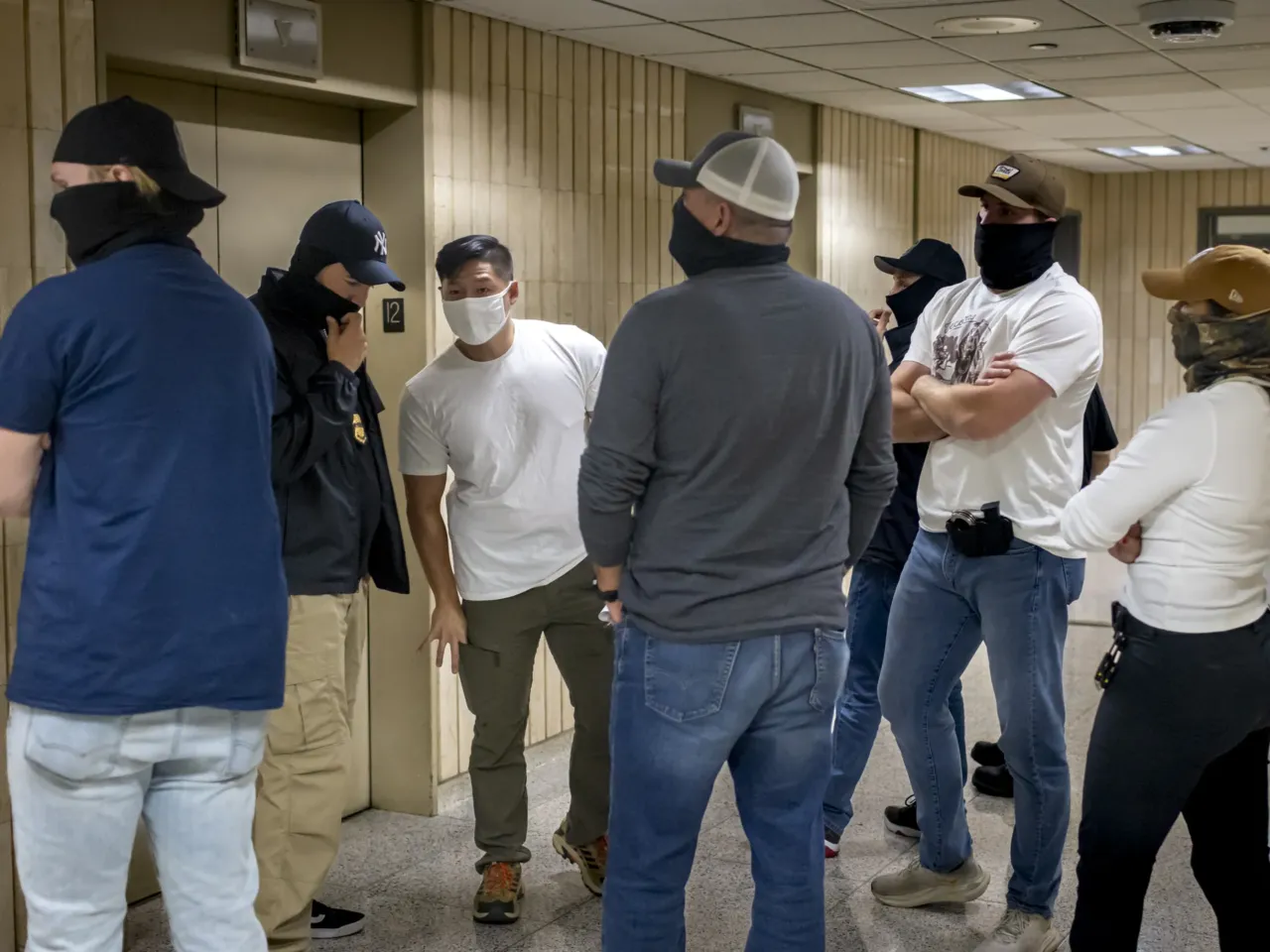
Employees at the General Services Administration — the U.S. agency that manages government facilities and procurement — are scrambling to find office space to accommodate a rapid increase of immigration enforcement officers carrying out widespread raids across the country.
According to three employees at GSA, who requested anonymity to discuss sensitive internal operations and to avoid retribution, the agency has created an “ICE surge” team in recent weeks, referring to an effort to lease private offices to allow Immigration and Customs Enforcement agency officers to establish long-term work space in the cities where they are operating.
Last week, the GSA’s Public Buildings Service posted a solicitation for “as-is, fully-finished and furnished office space in support of administrative operations for law enforcement” in 19 cities across the country. The listing estimates each lease would include workstations for 70 people and notes the “unique” quick period of one week to submit bids.
One of the GSA employees said ICE has urgently requested the agency find around 300 fully furnished properties with private office space to lease by this winter.
The push is happening just months after the informal White House advisory group, the Department of Government Efficiency, or DOGE, fired a large number of GSA employees and terminated a huge chunk of government leases, decisions that are now being reversed in many cases in order to accommodate government procurement needs. There’s no clear evidence those cuts saved significant amounts of taxpayer money.
It’s also happening alongside a government-wide effort to divert resources towards immigration enforcement, from federal leasing efforts to law enforcement expertise from other agencies like the FBI. Limited enforcement resources, including a lack of funding to bring on more people to conduct arrests and investigations and litigate cases, have been one of the biggest challenges to scaling up the pace of arrests, detentions and deportations.
Congress this summer provided ICE with $75 billion to hire more officers, expand detention space and increase the rates of arrests and deportations. The agency, which started the year with about 20,000 people, is looking to hire more than 10,000 new officers by the end of the year. The agency is offering candidates large signing bonuses of tens of thousands of dollars in a streamlined hiring effort that immigration policy experts and other critics fear could compromise vetting standards.
The agency is also increasing its detention capacity and launching enforcement operations across the country aimed at increasing the number of people arrested and detained. The administration has promoted large-scale operations in cities like Boston and Chicago.
The most recently available immigration detention data publicly published by ICE shows that there are 58,000 people in detention. Immigrant rights advocates have warned that the rapid expansion of arrests and detention is leading to widespread concern over human rights and due process violations for immigrants.
Public polls have increasingly shown that American voters disapprove of how ICE is carrying out its operations, particularly in places like hospitals and other “protected areas.”
Meanwhile, GSA employees are finding themselves swept into the immigration crackdown.
“It’s been incredibly chaotic,” said one of the GSA employees familiar with the new “emergency” lease project.
In addition to finding new office space to lease for ICE, the agency has also requested that GSA identify existing federally owned or leased property that might be suitable for their use in a range of cities across the country. Those cities include Baltimore, Philadelphia, Washington, New York City, Denver, Chicago, Kansas City, Mo., Greensboro, N.C., and Fort Myers, Fla., according to a list shared with NPR. The list mentions that the properties would be used in enforcement and removal operations. In Boise, Idaho, ICE is looking to spend over a million dollars to expand an existing, leased office space, according to a permit application filed with the city uncovered in reporting by the Idaho Statesman.
The efforts are causing frustration among some GSA employees, who dealt with months of DOGE downsizing and reorganizing at the agency. Now, with around half the staff they had before the government restructuring efforts began, they’re being forced to renegotiate cancelled leases with landlords who are “increasing their rates substantially,” said one of the GSA employees.
“It’s hypocrisy at its finest,” said another GSA employee.
In a statement, a GSA spokesperson told NPR that GSA is “proud to support U.S. Immigration and Customs Enforcement (ICE) in fulfilling their mission to protect America. We are working closely with our agency partners to ensure they have the facilities that fit their workforce needs.”
Copyright 2025 NPR