Updated October 20, 2025 at 12:11 PM ET
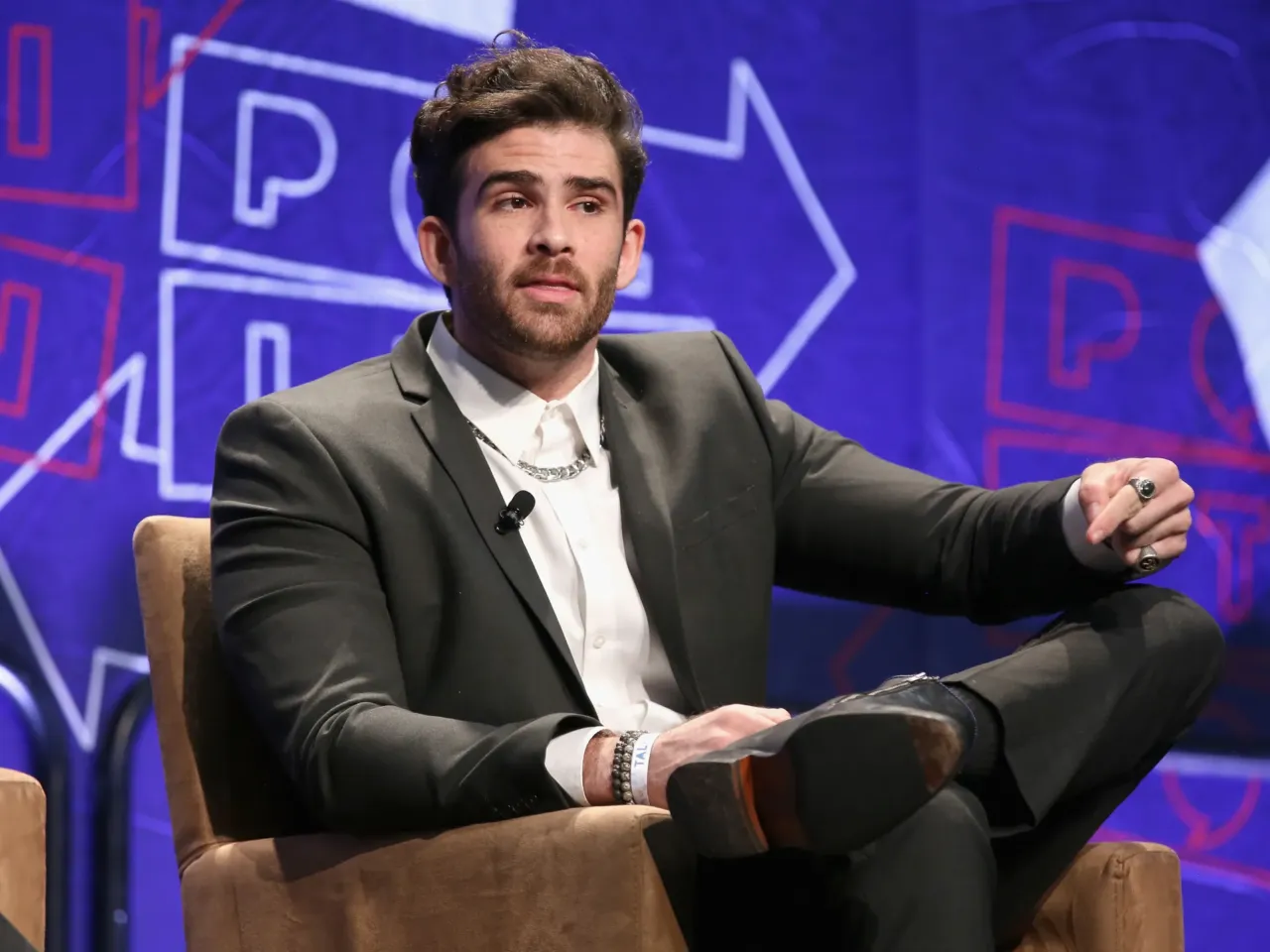
Hasan Piker was livestreaming on Twitch when news broke that conservative activist Charlie Kirk had been shot while speaking at a Utah university.
“Holy s***,” Piker said after seeing a grisly video of Kirk being shot in the neck and warned viewers not to watch. “America is so absolutely f***ed.”
Piker, who was scheduled to debate the late founder of Turning Point USA at Dartmouth College in late September, describes himself as a counterpart to Kirk on the ideologically opposite side. He has amassed a huge following through video game streaming and discussing politics online.
He’s a fierce critic of U.S. foreign policy, of President Trump and of Israel’s war in Gaza. On social media, right-wing influencer Laura Loomer even called for Piker, who was born in the U.S., to be deported, though she later indicated she was joking. Loomer has the ear of the president and has described herself as being “pro-white nationalism” and promoted anti-Muslim views.
Piker says he was shocked by the murder of a public figure like him. But what happened in the weeks after scared him in a new way. After Kirk’s killing, Trump vowed his administration would go after leftist groups. Vice President Vance encouraged people to call the employers of anyone celebrating Kirk’s death. Later, Trump signed an executive order designating antifa — an ideology and not an organized group — a domestic terrorist organization.
Federal Communications Commission Chair Brendan Carr made a not-so-subtle threat against ABC over a comment Jimmy Kimmel made about the suspect in Kirk’s killing. ABC pulled him off the air before reinstating him.
Piker told Morning Edition he worries that if the Trump administration is successful in stamping out what it deems unacceptable speech, the U.S. will “end up in an authoritarian nightmare where one of the last bastions of liberalism is eroded and there is no way to go against the wishes of this administration, no matter how violent they may be.”
Speaking to NPR’s Leila Fadel, Piker discussed how the Trump administration is cracking down on political opponents and how it affects his own discourse.
Piker sees an effort to “mobilize against all kinds of political dissidents”
He says the Trump administration’s wide-ranging terrorist designation of antifa is “illegal and also intentionally vague to such a degree that if you actually organize any sort of protest against [Immigration and Customs Enforcement] or you demand identification from ICE agents … then you could be considered a domestic terrorist, a designation that hasn’t existed.”
Trump and administration officials have accused protesters associated with antifa of attacking federal law enforcement officers in Portland, Ore., and other U.S. cities. At a recent White House roundtable on antifa, Trump said, “Everything we’re doing is very lawful.”
He worries the Trump administration is painting leftists as the cause of political violence
Piker points to press reports that the Department of Justice removed findings from its website that found right-wing extremists have killed more people than any other domestic terrorist groups as evidence of how the Trump administration is trying to “one, create this hysterical narrative and then, two, stamp out this kind of leftist violence that they have cultivated in their minds.” NPR has not confirmed those reports.
He added that “it’s very obvious that the administration has decided that we live in a post-truth era and that they can simply say this was a leftist antifa shooter.”
“Any time there is any shooting,” Piker continued, “one of the most damaging aspects of this misinformation, I think, has been that people believe it.”
His own questioning by federal agents set off alarm bells earlier this year
While returning to the U.S. from a trip abroad in May, Piker said he was questioned for hours by U.S. Customs and Border Protection agents. He said they asked how he felt about President Trump and asked his opinions about Hamas.
“But one of the most interesting questions that I got in the process was if I had actually interviewed anyone from a known State Department-designated terrorist organization,” Piker said. “That’s not only not illegal, but it’s something that the media does all the time.”
Homeland Security Assistant Secretary Tricia McLaughlin told The Associated Press that Piker was “lying for likes” and that he was “promptly released” after his inspection was complete.
Physically being shot and silenced like Kirk isn’t Piker’s biggest fear.
“If I let fear dictate my life — fear of violent repercussions coming from random people who want to take matters into their own hands — then I wouldn’t be able to do what I’m doing,” he said.
Piker’s biggest fear as a provocative leftist commentator is what could come from the government.
“It’s not that I advocate for anything that I think is unconscionable or violent or anything like that, but it’s more so that things can always be weaponized and misconstrued,” Piker said. “I worry that the administration might take unprecedented action that is otherwise illegal and against constitutionally protected speech.”
The radio version of this story was edited by Arezou Rezvani and produced by Ana Perez and Taylor Haney.
Copyright 2025 NPR