Copyright © 2026 VPM, all rights reserved.
PBS is a 501(c)(3) not-for-profit organization.
VPM News Morning Edition
NEXT UP: 9:00 AM

Thanks to our sponsors – Become a Sponsor

In a new book, Rep. Jim Clyburn highlights the Black politicians who paved the way for him

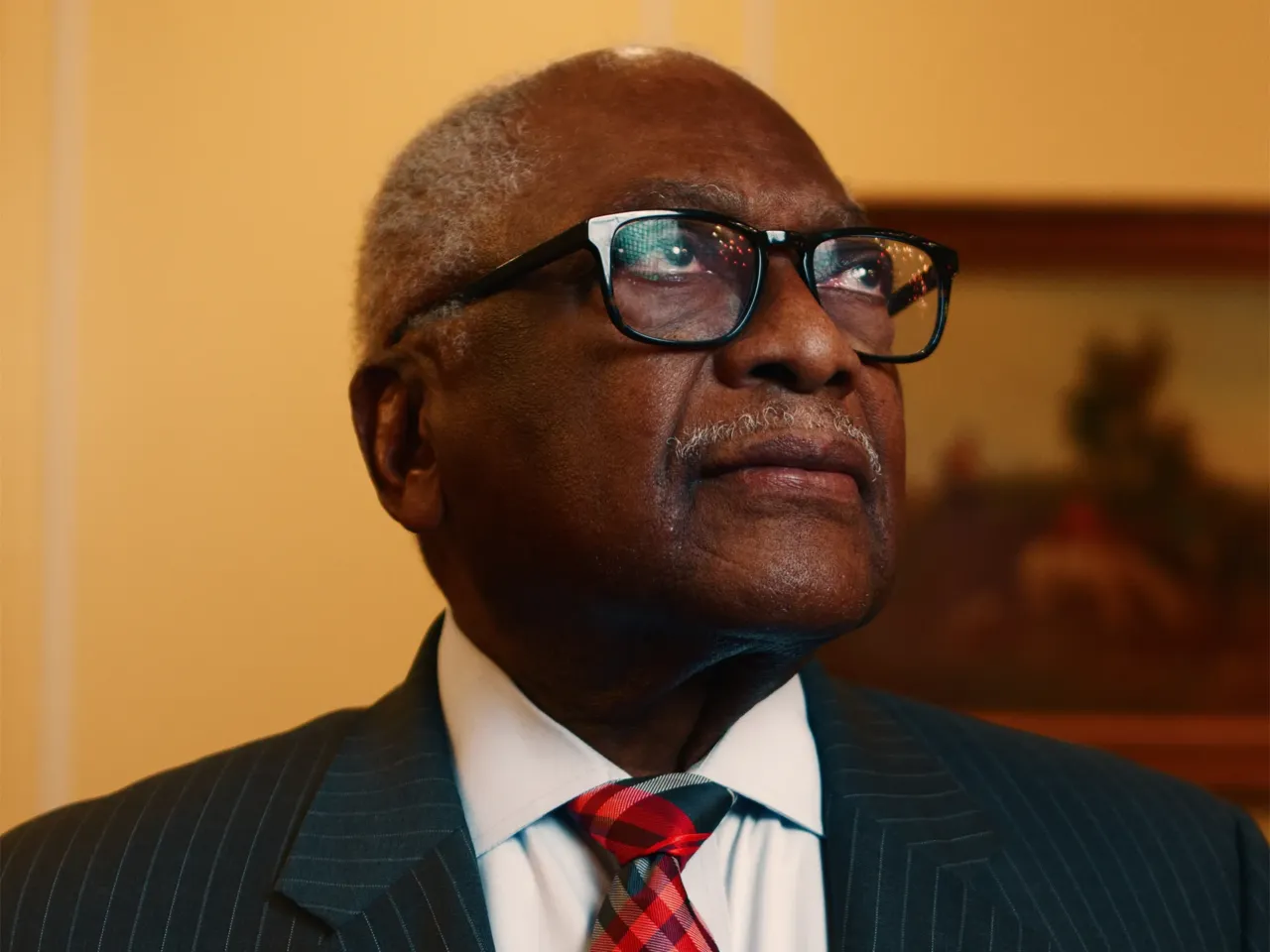
Democratic Rep. Jim Clyburn of South Carolina at Patriot Hall in Sumter, S.C.
Donaven Doughty for NPR
Democratic Rep. Jim Clyburn of South Carolina at Patriot Hall in Sumter, S.C.

Updated November 25, 2025 at 20:00 PM ET

Democratic Rep. Jim Clyburn of South Carolina has spent more than three decades in Congress, and he’s adamant about one point: he is not the first Black congressman to serve from his state. Eight others, largely erased from public discourse, served during and after Reconstruction, clearing a path that made his tenure possible.

A framed image of the eight’s portraits hangs in his office. Over the years, Clyburn says that image sparked what ultimately led him to write The First Eight: A Personal History of the Pioneering Black Congressmen Who Shaped a Nation. The book, which was published this month, restores these men to the historical record and draws lessons from their lives.

Morning Edition host Michel Martin spoke with Clyburn about the book and what he hopes readers will learn.

Here are our four key insights:

The remarkable arc of Robert Smalls’ ascent into politics
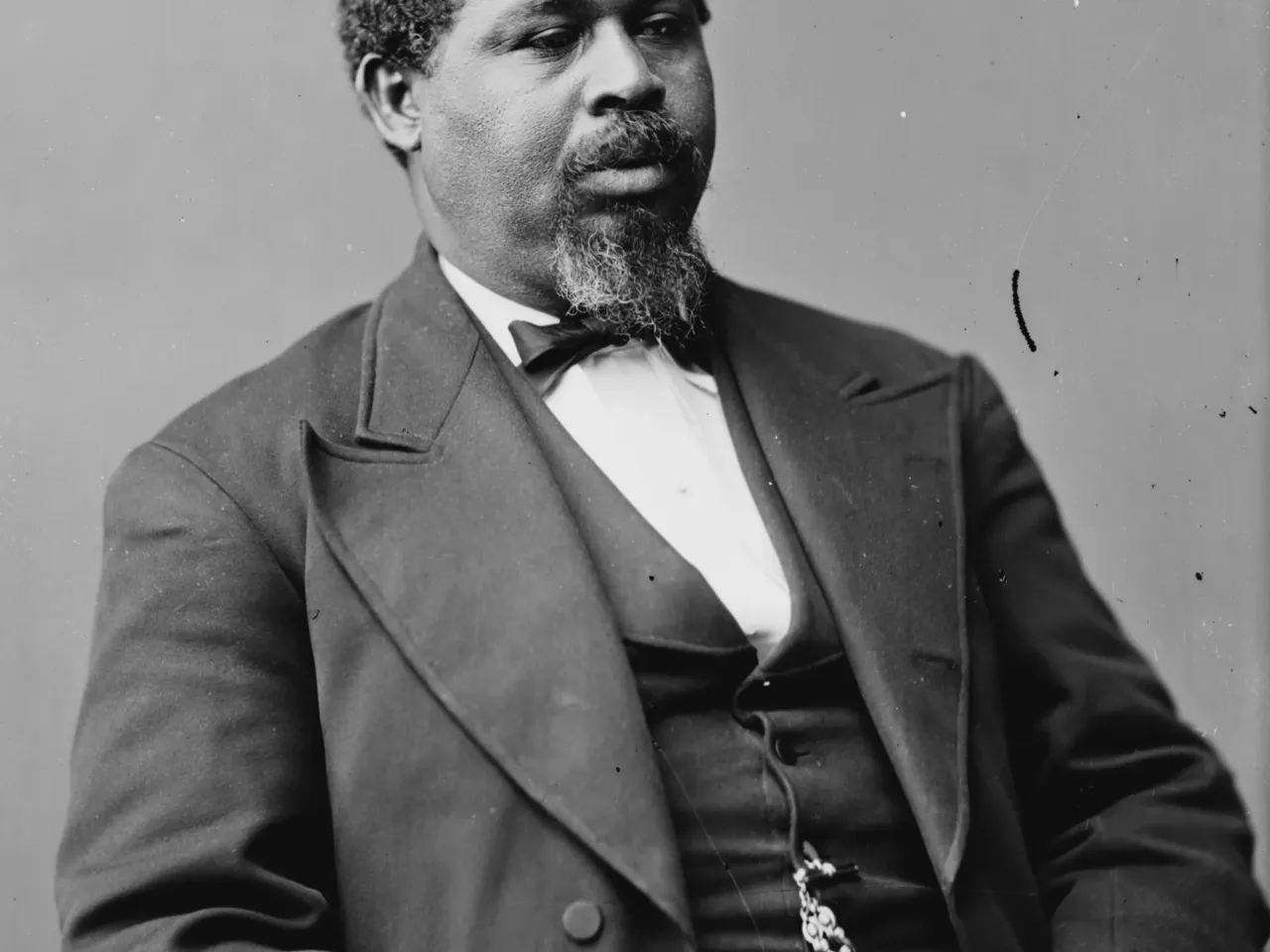
Robert Smalls circa 1870–80.
Robert Smalls circa 1870–80. Brady-Handy Collection / Library of Congress

One of the most important figures in the book is Robert Smalls, born into slavery in Beaufort, South Carolina. In 1862, while working aboard the Confederate transport ship Planter, Smalls seized an opportunity: he smuggled his family among the crew, commandeered the vessel and delivered it to Union forces in Charleston Harbor.

“While he was on that waterfront, people noticed that he had leadership skills,” Clyburn said.” This led to Smalls being entrusted with the crew on the nights when the Confederate men who ran the ship left to go into town.

“Well, one day when they were gone, Smalls smuggled his wife onto the ship and took off,” Clyburn recalled of Smalls’ escape and the daring start to his political career.

“His reward was his freedom. Everybody on the ship got their freedom and he got 1500 bucks in cash,” Clyburn said. “And he [Smalls] became the first African American captain in the U.S. Navy.”

George Washington Murray’s battles changed the direction of the book
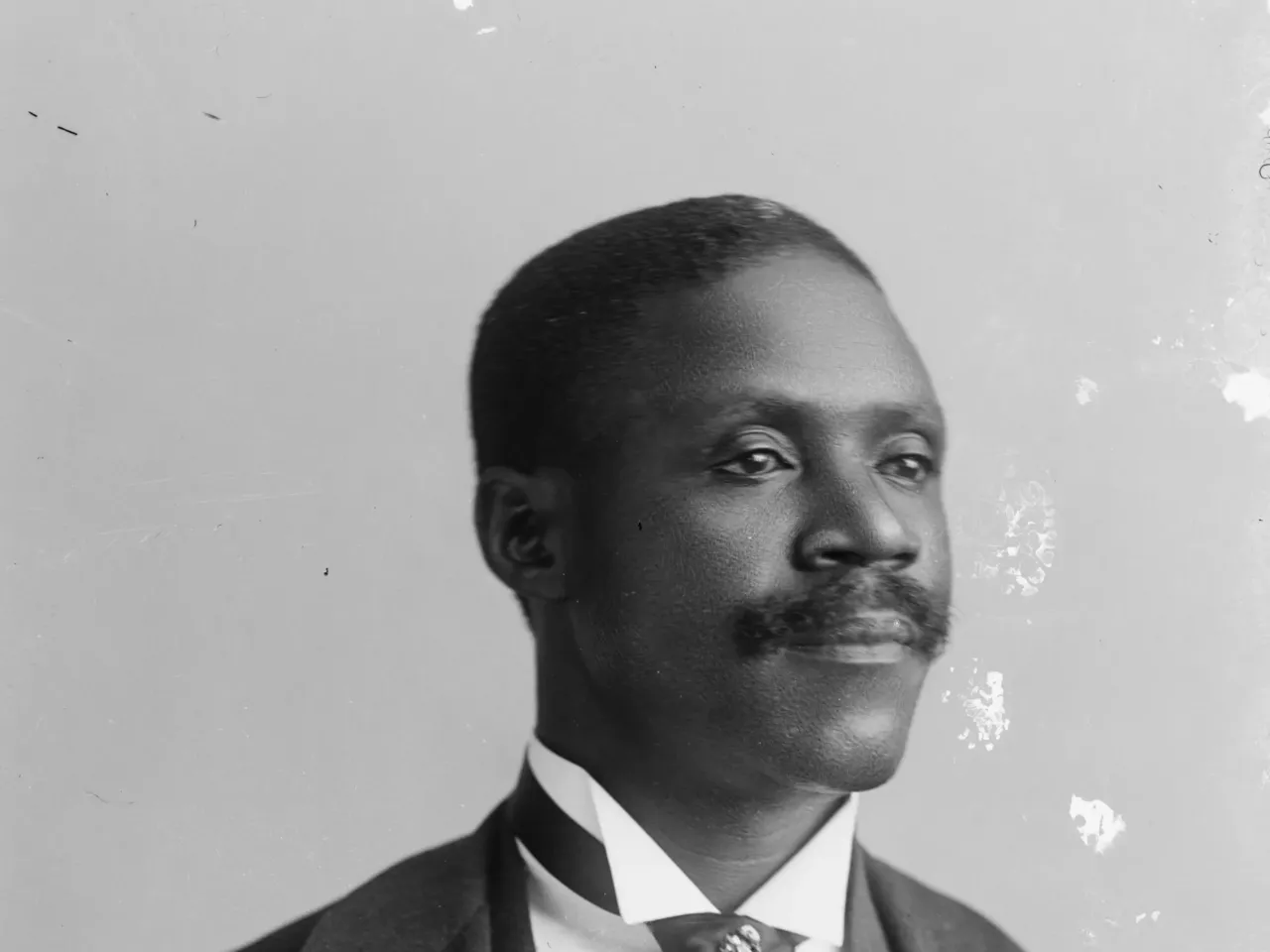
U.S. Rep. George Washington Murray of South Carolina circa 1894–1901.
U.S. Rep. George Washington Murray of South Carolina circa 1894–1901. C.M. Bell / Library of Congress

Another of the “first eight,” George Washington Murray, served as the only Black representative in the 53rd and 54th Congresses. He faced cases of congressional map redistricting and of voter fraud in precincts that discriminated against African Americans.

Clyburn said that writing about Murray’s experience changed the direction of The First Eight.

“When I saw what was happening after the 2020 elections, someone had taken the playbook from the 1876 election,” he said. “The book was going to be just to inform people about these guys, but then it got to the point that it was, ‘no, it’s got to be more instructive than informant’ and so I almost started over with the book.”

Clyburn says he has not decided whether he’ll run again 

Recently, the chairman of the S.C. Freedom Caucus, Jordan Pace, unveiled what he calls a “race agnostic” proposal for redrawing the district that Clyburn has long held. The congressman does not consider proposals such as that or his age, 85, as deterrents for a possible next campaign. Instead, his family members will soon be the ones to weigh in on his political plans at their annual family summit, which they’ve hosted since 1972.

“I feel great. I still can play 36 holes of golf in one day,” Clyburn said. “And I can tell you, none of the voters down there are asking me to leave. In fact, just the opposite, they want the benefit of that experience.”

4.  Read the history of these congressmen as cautionary tale
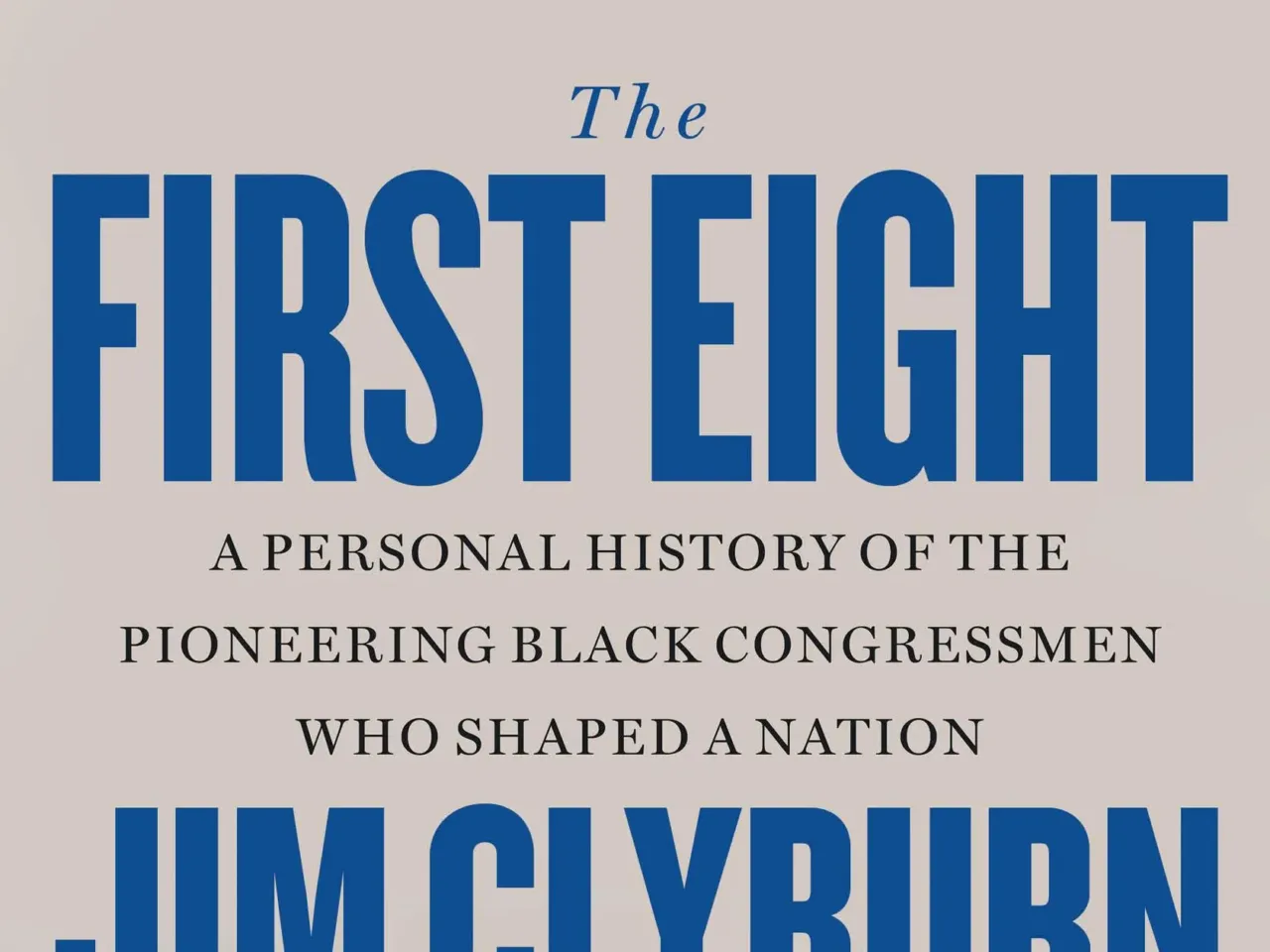
172925 9780316572743
Little, Brown and Company /

For Clyburn, the history of the first eight congressmen in South Carolina, carries more than inspiration.

“Anything that’s happened before can happen again,” he said. “And so you cannot allow this President [Trump], with this majority in the Congress, to cause you to react to their foolishness, because that’s what happened before and it will happen again if you aren’t careful.”

He said that when he last spoke to former President Joe Biden about the rise in African American men voting Republican in the last election, Clyburn told Biden: “I use to say ‘there’s no substitute for substance,’ but I don’t say that anymore because people seem to be more attracted by style these days than substance. And so that’s one of the things that I talk about in this book.”

The digital version of this interview was edited by Majd Al-Waheidi.

Copyright 2025 NPR

Michel Martin is the weekend host of All Things Considered and host of the Consider This Saturday podcast, where she draws on her deep reporting and interviewing experience to dig in to the week's news. Outside the studio, she has also hosted "Michel Martin: Going There," an ambitious live event series in collaboration with Member Stations.

Martin came to NPR in 2006 and launched Tell Me More, a one-hour daily NPR news and talk show that aired on NPR stations nationwide from 2007-2014 and dipped into thousands of important conversations taking place in the corridors of power, but also in houses of worship, and barber shops and beauty shops, at PTA meetings, town halls, and at the kitchen table.

She has spent more than 25 years as a journalist — first in print with major newspapers and then in television. Tell Me More marked her debut as a full-time public radio show host. Martin says, "What makes public radio special is that it's got both intimacy and reach all at once. For the cost of a phone call, I can take you around the world. But I'm right there with you in your car, in your living room or kitchen or office, in your iPod. Radio itself is an incredible tool and when you combine that with the global resources of NPR plus the commitment to quality, responsibility and civility, it's an unbeatable combination."

Martin has also served as contributor and substitute host for NPR newsmagazines and talk shows, including Talk of the Nation and News & Notes.

Martin joined NPR from ABC News, where she worked since 1992. She served as correspondent for Nightline from 1996 to 2006, reporting on such subjects as the congressional budget battles, the U.S. embassy bombings in Africa, racial profiling and the aftermath of Hurricane Katrina. At ABC, she also contributed to numerous programs and specials, including the network's award-winning coverage of Sept. 11, a documentary on the Anita Hill-Clarence Thomas controversy, a critically acclaimed AIDS special and reports for the ongoing series "America in Black and White." Martin reported for the ABC newsmagazine Day One, winning an Emmy for her coverage of the international campaign to ban the use of landmines, and was a regular panelist on This Week with George Stephanopoulos. She also hosted the 13-episode series Life 360, an innovative program partnership between Oregon Public Broadcasting and Nightline incorporating documentary film, performance and personal narrative; it aired on public television stations across the country.

Before joining ABC, Martin covered state and local politics for the Washington Post and national politics and policy at the Wall Street Journal, where she was White House correspondent. She has also been a regular panelist on the PBS series Washington Week and a contributor to NOW with Bill Moyers.

Martin has been honored by numerous organizations, including the Candace Award for Communications from The National Coalition of 100 Black Women, the Joan Barone Award for Excellence in Washington-based National Affairs/Public Policy Broadcasting from the Radio and Television Correspondents' Association and a 2002 Silver Gavel Award, given by the American Bar Association. Along with her Emmy award, she received three additional Emmy nominations, including one with WNYC's Robert Krulwich, at the time an ABC contributor as well, for an ABC News program examining children's racial attitudes. In 2019, Martin was elected into the American Academy of Arts and Sciences for outstanding achievement in journalism. She is the 2021 recipient of PMJA's 2021 Leo C. Lee Award.

A native of Brooklyn, N.Y., Martin graduated cum laude from Radcliffe College at Harvard University in 1980 and earned a Master of Arts from the Wesley Theological Seminary in 2016.

Related Stories