
HURON, S.D. — American farmers are welcoming the $12 billion assistance package President Trump announced for them this week, but there’s also evidence that his trade policies are a big reason many farmers aren’t profitable this year.
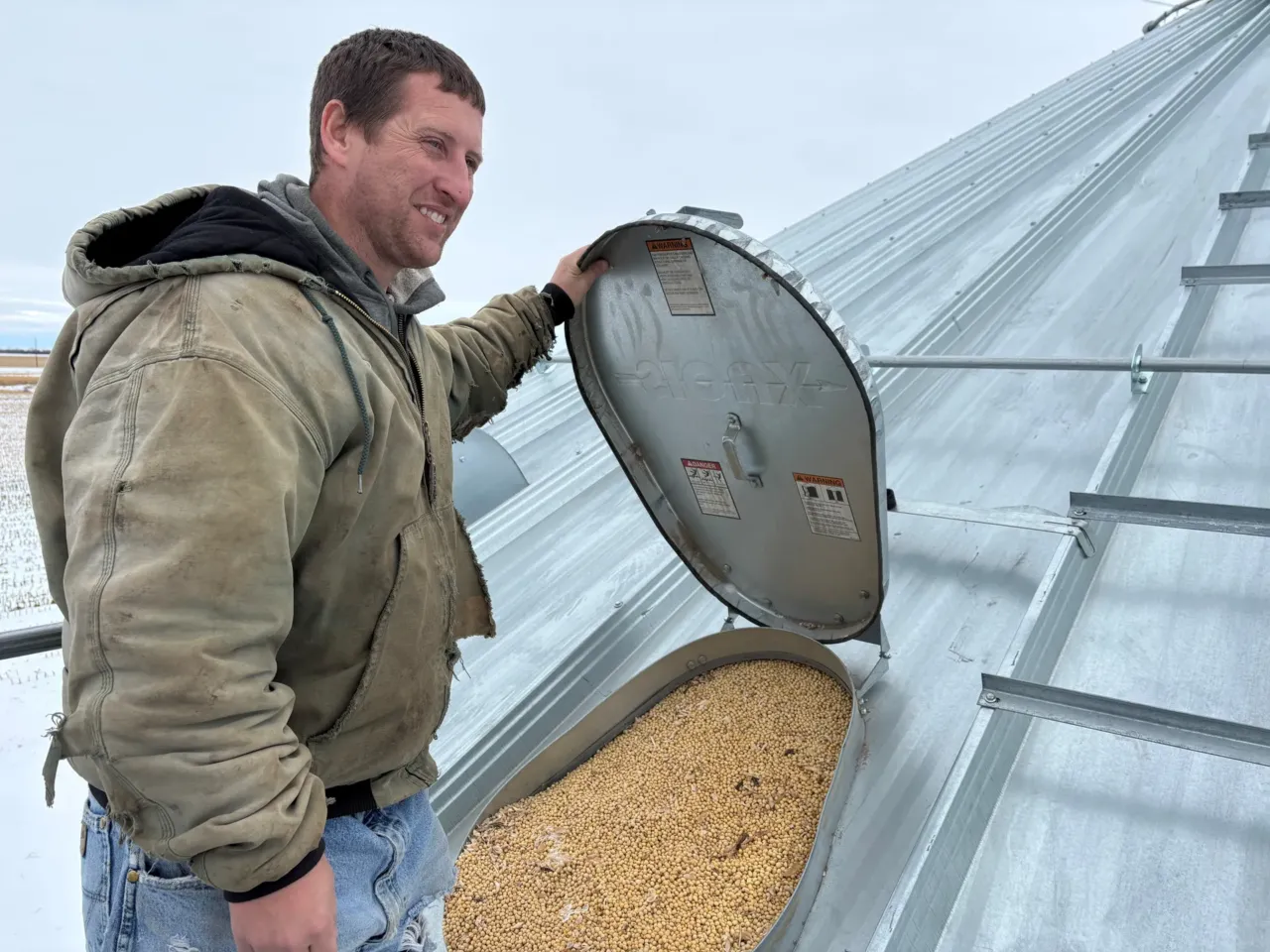
Farmers like Kevin Deinert in South Dakota, who opens the hatch of a shiny silver grain bin on his farm that’s full of this year’s soybean harvest.
“I stored everything I could, so it’s full, as you can see,” he says. “A little too full.”
In recent years, Deinert’s bins would be empty by now, his soybeans sold to China, which has been buying about 25 million metric tons annually from the U.S. since 2019.
But this spring, they started buying them from Brazil and other countries instead, in response to President Trump levying tariffs against Chinese exports to the U.S.
The Chinese market evaporated as prices farmers pay for fertilizer and other products they need have been rising sharply due to inflation and tariffs Trump imposed on Canada and other countries that produce them.
That’s left a lot of farmers in the red. Deinert says the $12 billion aid package will help.
Aid appreciated, but farmers prefer trade
“It’s meaningful,” he says, “I don’t want to say it’s not. But is the quantity going to alleviate all the farmers’ concerns? I don’t think so.”
Even conservative agriculture groups like the Farm Bureau Federation, which welcomed this week’s aid package, say it alone won’t restore farmers to financial health. In a statement, Missouri Farm Bureau President Garrett Hawkins called the bridge payments an important first step.
“We look forward to continued efforts from the federal government to recalibrate trade strategies, open new markets, bolster domestic demand, and strengthen long-term farm viability,” Hawkins said.
State chapters of the historically less conservative National Farmers Union have been more critical, saying the culmination of President Trump’s two trade wars, the first during his first term in 2018, is causing irreparable damage in the Heartland.
Doug Sombke, president of the South Dakota Farmers Union, says the administration is having to bail out farmers as a result of the President’s own trade policies.
“He’s back at the fire and he’s trying to put it out with a garden hose,” Sombke says. “And it’s an inferno.”
Agricultural lobbying groups across the nation say farmers have lost long standing trade relationships while also paying four to five times more for everything from fertilizer to farm equipment. Many are also still recovering from supply chain disruptions from the pandemic.
Kevin Deinert, who’s also president of the South Dakota Soybean Growers Association, would like to get back to relying on international markets for income.
“You know, as farmers we want trade, not aid,” he says.
The Trump administration did strike a new trade deal with China in November. It says China will buy 12 million metric tons of American soybeans by the end of February, and 25 million metric tons in the next three years. If it holds, that would only bring farmers back to roughly the same situation they were in before the President started a second trade war.
Deinert says he’s heard some grain is finally moving to Asia again. But his bins are still full.
“We haven’t seen anything on paper,” he says. “Right now we’re just trading on headlines.”
The White House says that payments from the $12 billion in aid package should arrive in farmers’ bank accounts in late February. They have to apply for them by Dec. 19, and should know exactly how much they’ll receive in January. The administration also points to its “Big Beautiful Budget Act,” which includes provisions that will increase price support for commodity crops like soybeans and corn starting late next year.
The timing here is crucial as farmers are trying to figure out how much they’ll have to invest, or need to borrow, to buy seeds and other supplies to plant in the spring. A guarantee of federal payments on the way could help them get financing.
But John Kippley, a farmer near Aberdeen, S.D., who also owns a tax preparation company, worries it’s too little too late.
“Banks are really nervous right now because they don’t know what’s going to happen,” says Kippley, who is 80. “Is he [Trump] going to put more tariffs on? Or is he going to less up on the tariffs? It just feels like the foreign countries don’t like us anymore.”
The fate of the farm economy is especially consequential with next year’s midterm elections approaching. Farm states like South Dakota, home to Senate Majority Leader John Thune, have long been strongholds for Trump and the Republican majority in Congress.
Copyright 2025 NPR