Copyright © 2026 VPM, all rights reserved.
PBS is a 501(c)(3) not-for-profit organization.
VPM News Morning Edition
NEXT UP: 9:00 AM

Thanks to our sponsors – Become a Sponsor

A man is fatally shot by federal agents in Minneapolis

SCOTT SIMON, HOST:

U.S. federal agents have shot and killed another person in Minneapolis. It is the third such shooting and second fatality in the city this month. Local and state officials are again calling the Trump administration to pull its officers out of Minnesota. NPR’s Jennifer Ludden is in Minneapolis. Jennifer, thank you for being with us.

JENNIFER LUDDEN, BYLINE: Hi, Scott.

SIMON: What can you tell us about what’s happened?

LUDDEN: Well, we know the shooting was around 9 o’clock this morning outside a doughnut shop south of downtown. The victim was a 37-year-old male. And from there, we have gotten conflicting information. The Department of Homeland Security tweeted a statement saying officers were conducting a targeted operation. They said it was against an immigrant in the U.S. illegally who was wanted for violent assault. DHS says the man approached Border Patrol agents with a semiautomatic handgun. They tried to disarm him. He resisted them, and agents fired defensive shots, fearing for their life.

Now, Minneapolis Police Chief Brian O’Hara has told reporters he does not know what happened before his officers arrived on the scene. But the victim has been identified, and he said officials think it’s a U.S. citizen, a white male with no criminal record and that he’s a lawful gun owner with a right to carry. Now, Police Chief O’Hara also said that there was an unlawful gathering of protesters, and he urged people to clear out and stay calm. And I was there this morning. You had dozens and dozens of people who rushed to the scene, protesting ICE but not knowing exactly what had happened.

SIMON: Governor Walz has also spoken and the mayor of Minneapolis, too…

LUDDEN: Yes.

SIMON: Haven’t they?

LUDDEN: Yes. Governor Tim Walz put out a statement, saying this was sickening. He said on social media – he called on the Trump administration to pull the, quote, “thousands of violent, untrained officers out of Minnesota now.” You know, this comes after weeks of local residents describing, you know, what they see as really aggressive treatment on the part of these officers. We’ve had some American citizens detained. Refugees here lawfully have been detained. Mayor Jacob Frey spoke this morning at a press conference and said that, you know, this is a political partisan narrative, and he’s just tired of residents being blamed for the tense situation here. Let’s listen to Mayor Frey.

(SOUNDBITE OF ARCHIVED RECORDING)

JACOB FREY: So to everyone listening, stand with Minneapolis. Stand up for America. Recognize that your children will ask you what side you were on. Your grandchildren will ask you what you did to act to prevent this from happening again.

SIMON: Jennifer, I know you’ve been out at the scene of the killing. Tell us what you’ve seen there and how people seem to be reacting.

LUDDEN: You know, there’s just a lot of anger. And let me just note that this comes one day after a huge, very peaceful, kind of joyful, in a sense – sorrowful but joyful, in a sense, protest yesterday, where I also was. Thousands of people assembled, lots of signs about – making puns on ICE and asking them to get out, demanding they get out, people saying they’re worried for their neighbors, their coworkers who’ve been arrested, just – their city, which they feel has been targeted. And, you know, you have people hiding out, afraid to go outside. It was a very peaceful protest.

And now, this morning, after the shooting, dozens of people did come to the scene. They put up barricades. They were chanting, ICE, Get Out. And then we had local police officers really pushing them back. There were blocks and blocks blocked off with yellow tape and multiple rounds of tear gas to try and clear the scene.

You know, Rachel Sayre is the head of emergency management for the city. She also spoke about the human impact this is having – profound impact – especially on the many people who are afraid to go out. Let’s give a listen to her.

(SOUNDBITE OF ARCHIVED RECORDING)

RACHEL SAYRE: Families with loved ones detained and those who are afraid to be in public, lest they become targets, need help accessing the most basic necessities, like food, housing and rides to school. Businesses are shuttering, and our local economy is severely impacted, which means families are suffering just as we were rounding a corner in our recovery.

LUDDEN: Yeah. So families are suffering. Businesses are suffering. People here are just wondering how long this is going to go on. They really want the thousands of federal agents here to move on.

SIMON: NPR’s Jennifer Ludden in Minneapolis. Thanks so much.

LUDDEN: Thank you. Transcript provided by NPR, Copyright NPR.

NPR transcripts are created on a rush deadline by an NPR contractor. This text may not be in its final form and may be updated or revised in the future. Accuracy and availability may vary. The authoritative record of NPR’s programming is the audio record.
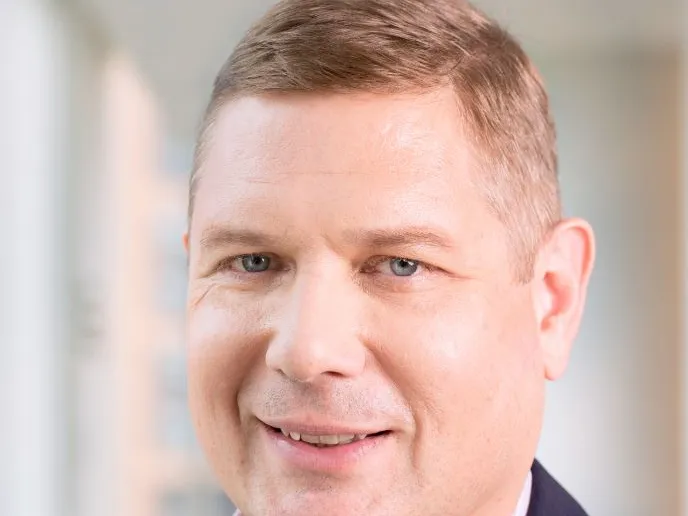
Eric Westervelt is a San Francisco-based correspondent for NPR's National Desk. He has reported on major events for the network from wars and revolutions in the Middle East and North Africa to historic wildfires and terrorist attacks in the U.S.

For a decade as a foreign correspondent, Westervelt served as NPR reporter and bureau chief in Baghdad, Jerusalem, and Berlin. He's covered the Pentagon, the war in Afghanistan, and the U.S. invasion and troubled occupation of Iraq, including the insurgency, sectarian violence, and the resulting social and political tumult.

He has reported on the ground from North Africa during revolutions there, including from Tahrir Square during fall of Egypt's Mubarak, the front lines during the civil war and NATO intervention in Libya, and the popular uprising in Tunisia. He's also reported from Yemen, the Arabian Gulf states, and the Horn of Africa, including Ethiopia, Djibouti, and the Somalia border region.

Westervelt was among the first western reporters to reach Baghdad during the 2003 U.S-led overthrow of Saddam Hussein embedded with the lead elements of the army's Third Infantry Division. He was also among the first western reporters to enter the Gaza Strip via Egypt during the 2008-2009 Israeli ground offensive in the coastal Palestinian enclave known as the Gaza War.

Westervelt has reported extensively across the U.S. on big stories and breaking news, from mass shootings to natural disasters and police use of force. He helped launch NPR's innovative, award-winning education platform NPR Ed, and serves as a guest host for NPR news shows.

Westervelt is currently helping to launch a collaborative team that covers America's criminal justice system, including issues and reform efforts surrounding prisons, policing, juvenile justice, and the courts.

He's been honored with broadcast journalism's highest honors, including the 2002 George Foster Peabody Award for coverage of the Sept. 11 terrorist attacks and the aftermath; the 2003 Alfred I. DuPont-Columbia University Award for coverage of Sept. 11 and the subsequent war in Afghanistan; and 2004 and 2007 DuPont-Columbia Awards for NPR's in-depth coverage of the war in Iraq and its effect on Iraqi society. Westervelt's 2009 multimedia series with the late NPR photojournalist David Gilkey won an Overseas Press Club Award. He also recently shared in an Edward R. Murrow RTNDA Award with NPR Ed for innovative education coverage.

In 2013, Westervelt returned to the U.S. from overseas as a visiting journalism fellow at Stanford University with the John S. Knight Journalism Fellowship

As Jerusalem bureau chief, Westervelt covered the failed diplomatic efforts to broker peace between Israel and the Palestinians, and the social, political, and cultural news across Israel and the occupied West Bank. He reported from the front lines of the 2006 war between Israel and Hezbollah known as the Second Lebanon War. He was on the ground for multiple Israeli-Hamas battles in the Gaza Strip and the Fatah-Hamas civil war and battle of Gaza City that led to the current political split within the Palestinian Authority.

While based in Berlin, Westervelt covered a broad range of news across the region, including the Euro debt crisis, the rise of far right nationalists, national elections, and more.

Prior to his Middle East assignments, Westervelt covered military affairs and the Pentagon out of Washington, DC, reporting on the major defense, national security, and foreign policy issues of the day. He began his work at NPR on the network's national desk where his coverage spanned the mass shooting at Columbine High School, the presidential vote recount following the 2000 election, and the Sept. 11 terrorist attacks reporting from the Ground Zero recovery in New York City, among many other stories.

On the lighter side, Westervelt also produces occasional features for NPR's Arts Desk, including for the series American Anthem, as well as Rock Hall Award profiles of blues great Freddie King and an exploration of roots rock pioneer Roy Orbison for NPR's 50 Great Voices series. His feature on the making of John Coltrane's jazz classic "A Love Supreme" was part of NPR's project on the most influential American musical works of the 20th century, which was recognized with a Peabody Award.

Before joining NPR, Westervelt worked as a reporter in Oregon and the Pacific Northwest, reported for the broadcast edition of the Christian Science Monitor, Monitor Radio, and worked as a news director and reporter in New Hampshire for NHPR.

Westervelt grew up in upstate New York. He's a graduate of the Putney School and received a Bachelor of Arts degree from Reed College. He was a recipient in 2013 of a J.S. Knight Fellowship at Stanford University.

Related Stories