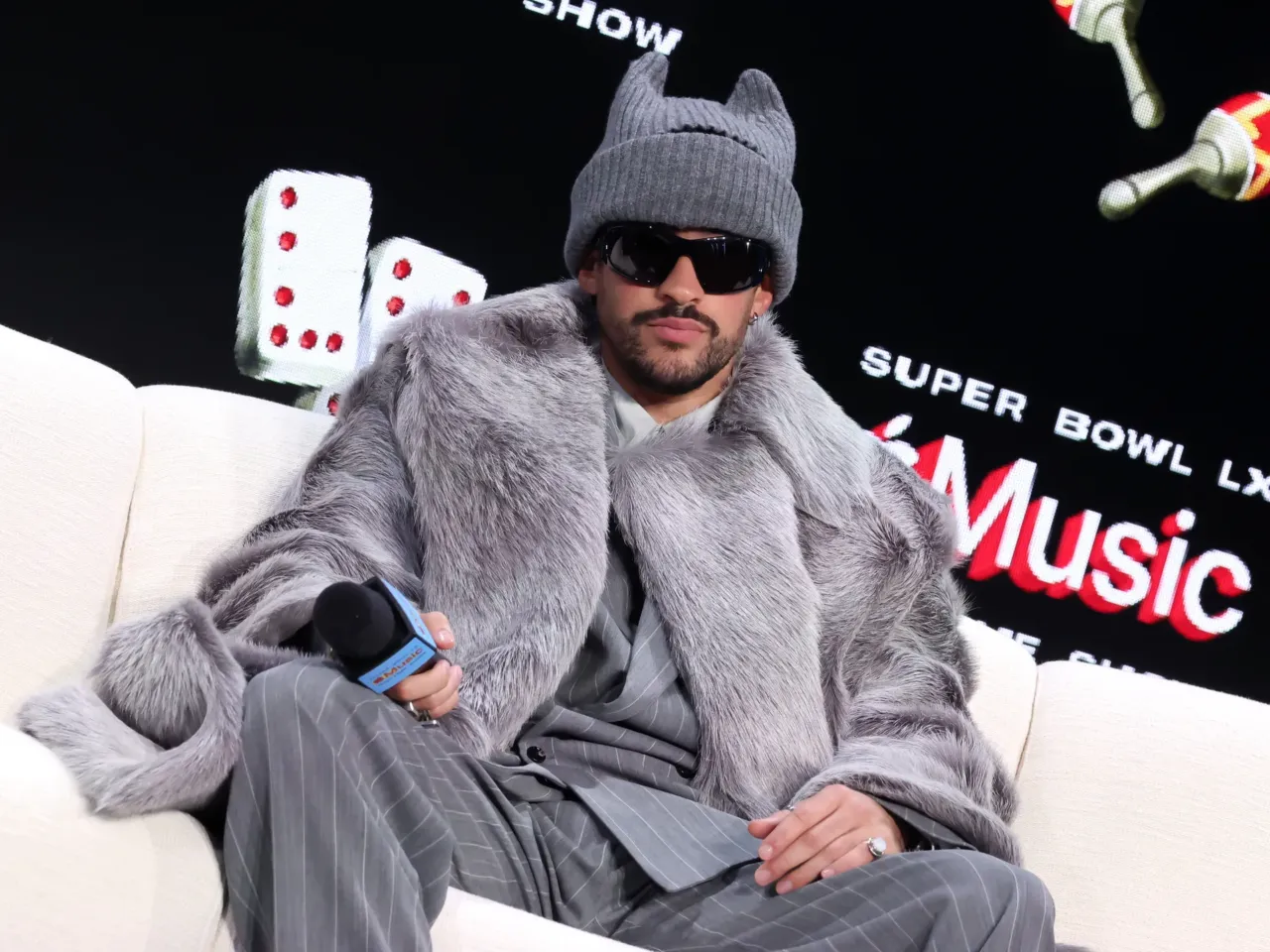
Puerto Rican superstar, Bad Bunny, made history at the 2026 Grammy Awards when he became the first artist to win album of the year for a Spanish-language project, with him winning for his album Debí Tirar Más Fotos. In addition to the top prize, Bad Bunny, whose given name is Benito Antonio Martínez Ocasio, took home the award for the best música urbana album and best global music performance for his song “EoO”.
In his acceptance remarks, and not unlike other moments throughout his career, the artist used the spotlight to express his political views.
“Before I say thanks to God, I’m going to say ICE out,” Bad Bunny said during his acceptance speech for best música urbana album. “We’re not savages, we’re not animals, we’re not aliens — we’re humans and we are Americans,” he added in response to the ongoing U.S. Immigration and Customs Enforcement raids across the country.
The crowd in Los Angeles, largely met his statements with applause and ovation.
But this Sunday, Bad Bunny will meet a larger and potentially more politically divided audience at the Super Bowl, where he is set to headline this year’s halftime show. Since late September when the NFL, Apple Music and Roc Nation announced their invitation to Bad Bunny, many took to social media to voice their indignation at the choice to platform an artist who has only released music in Spanish.
To learn more about Bad Bunny’s political history and what we might expect at the Super Bowl, Morning Edition host A Martinez spoke with Petra R. Rivera-Rideau, who chairs the American Studies Department at Wellesley College and the co-author, alongside Vanessa Díaz, of the new book, P FKN R: How Bad Bunny Became the Global Voice of Puerto Rican Resistance. The two academics are also behind the Bad Bunny Syllabus, an online teaching resource based on Puerto Rican history and Bad Bunny’s meteoric rise since 2016.
Below are three takeaways from the conversation.
Students come for Bad Bunny and stay for the history
Rivera-Rideau teaches “Bad Bunny: Race, Gender, and Empire in Reggaetón” at Wellesley and said the course uses Bad Bunny’s work as a hook to get students into the seminar.
“But we really actually spend most of our time talking about Puerto Rican history and Puerto Rican history is part of U.S. history,” she said. “And Bad Bunny music has consistently made references to this history.”
Rivera-Rideau pointed to an example from 2018 when Bad Bunny debuted on a U.S. mainstream English language television show, The Tonight Show Starring Jimmy Fallon. The artist opened with a critique of the Trump administration’s handling of Hurricane Maria, which had devastated his island in 2017.
“After one year of the hurricane, there’s still people without electricity in their homes. More than 3,000 people died and Trump is still in denial,” Martínez Ocasio said.
Latinos remain “perpetually foreign” to some
Puerto Ricans are born U.S. citizens — but this has not always protected them from being caught in recent ICE operations.
“I think part of that has to do with the kind of racialization of Spanish and the racialization of Latino communities of which Puerto Ricans are a part,” she said. “And I think what it indicates is that, to me, Latinos in the United States, many of whom have been here for generations, are often understood to be perpetually foreign as a group of people that just does not belong.”
The Party is the Protest
Rivera-Rideau said if Apple Music’s trailer for the Super Bowl halftime show — which features Bad Bunny dancing with a group representing a smattering of ages, faces and abilities — is any indication of what audiences can expect on Sunday’s stage, the theme might be joy in the face of a difficult moment for immigrants and Latinos in the U.S.
“One of the things we talk about in our book is that Bad Bunny is part of resistance, he does engage in protests but it’s often through joy,” she said. “We have a chapter in our book called ‘The Party is the Protest’ and I actually feel like that’s what I expect at the Superbowl, a party and a protest.
Copyright 2026 NPR