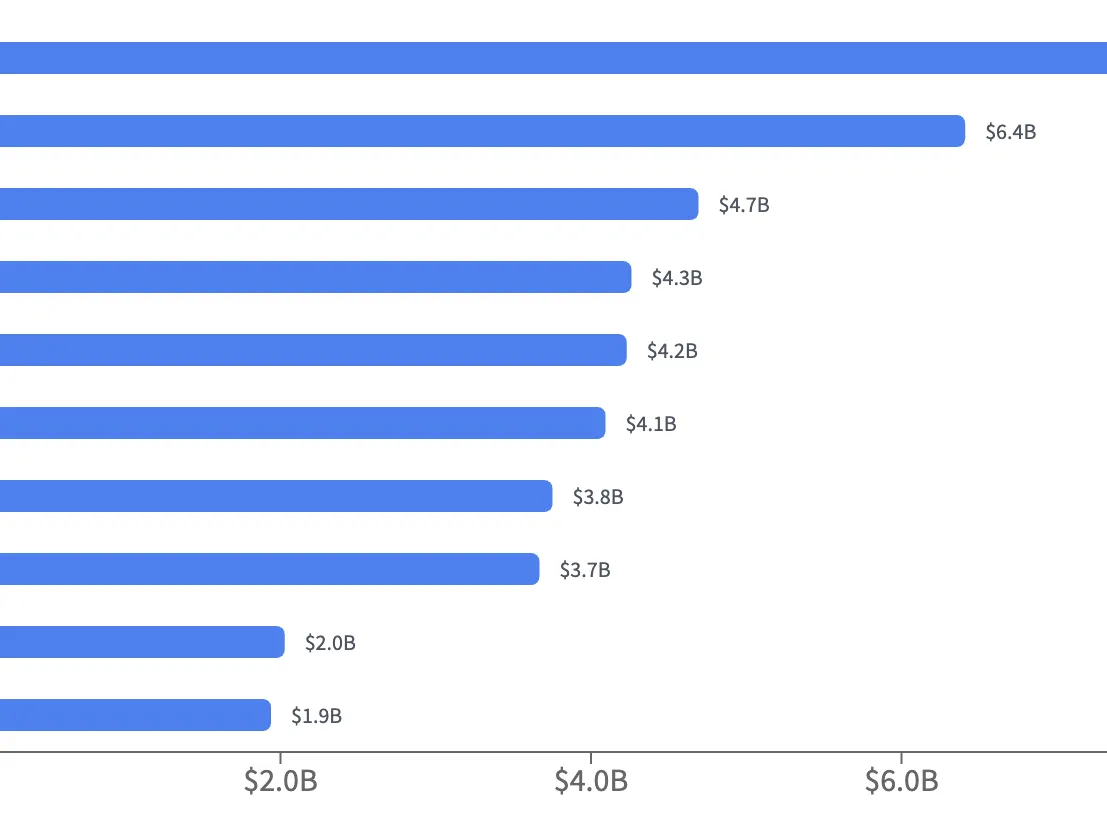
U.S. colleges received more than 5 billion dollars in reportable foreign gifts and contracts in 2025, according to a new website from the U.S. Education Department. The release is part of a push by the Trump administration to make foreign influence in colleges and universities more transparent.
Among the biggest recipients, the data show, are Carnegie Mellon University, Harvard University, the Massachusetts Institute of Technology and Stanford University.
Qatar was the largest foreign source of funds to schools, making up more than 20% — or about 1.1 billion. Other sources include the United Kingdom, China, Switzerland and Japan.
In a statement, Education Secretary Linda McMahon said the data provide “unprecedented visibility into funding” from countries that threaten “America’s national security.”
Under existing federal law, institutions are required to report gifts or contracts from foreign entities above $250,000. But Republicans have long raised underreporting as an issue of national security — pushing for more reporting and more transparency.
Since the start of President Trump’s second term, the administration has investigated Harvard University and the University of California, Berkeley, for allegedly underreporting their foreign gifts.
Ian Oxnevad, a senior fellow at the National Association of Scholars, a conservative advocacy organization, called the release of the new information a “step in the right direction.”
He said the data brings welcome transparency to the sometimes murky world of foreign gifts to U.S. colleges. This data sheds light on “specific countries, what universities they donate to, and the amounts.“
Among the significant revelations, he noted, are that “Qatar and China are among the top countries that donate to our universities, and not our allies or neighbors.”
The new website includes data on what McMahon called “countries of concern,” including China, Russia and Iran. Harvard, New York University and MIT top the list of schools getting money from those countries.
It’s important, Oxnevad said, given the role that universities such as Harvard and other Ivy League schools play in shaping public policy, to be aware that they’re “getting such heavy foreign funds.”
Universities have said they are in compliance with the law.
“MIT research on campus, regardless of funding source, is open and publishable,” the university said in a statement. “We follow all federal laws in accepting and reporting any such gifts or contracts.”
The American Council on Education, a member organization that represents and advocates for colleges and universities, echoed that sentiment.
“This demonstrates that our institutions are doing a good job reporting this information,” says Sarah Spreitzer, vice president and chief of staff at ACE.
Both Spreitzer and Oxnevad pointed out limitations in the data on the website, including a lack of details or an ability to compare years and see trends over time. Both were critical of the government’s tracking and reporting of this information under past administrations.
But Spreitzer added that some of the information, without more context or detail, is misleading, or at best dated.
“I worry that [the administration] is trying to send a message to taxpayers that our institutions are taking a lot of money from foreign donors,” says Spreitzer. “We are all for more transparency.”
Her concern though, she said, is how the Trump administration will use this data in its continuing attacks on higher education.
Copyright 2026 NPR