
Copyright © 2026 VPM, all rights reserved.
PBS is a 501(c)(3) not-for-profit organization.
VPM News Morning Edition
NEXT UP: 9:00 AM

Thanks to our sponsors – Become a Sponsor

Trump to raise global tariffs to 15%

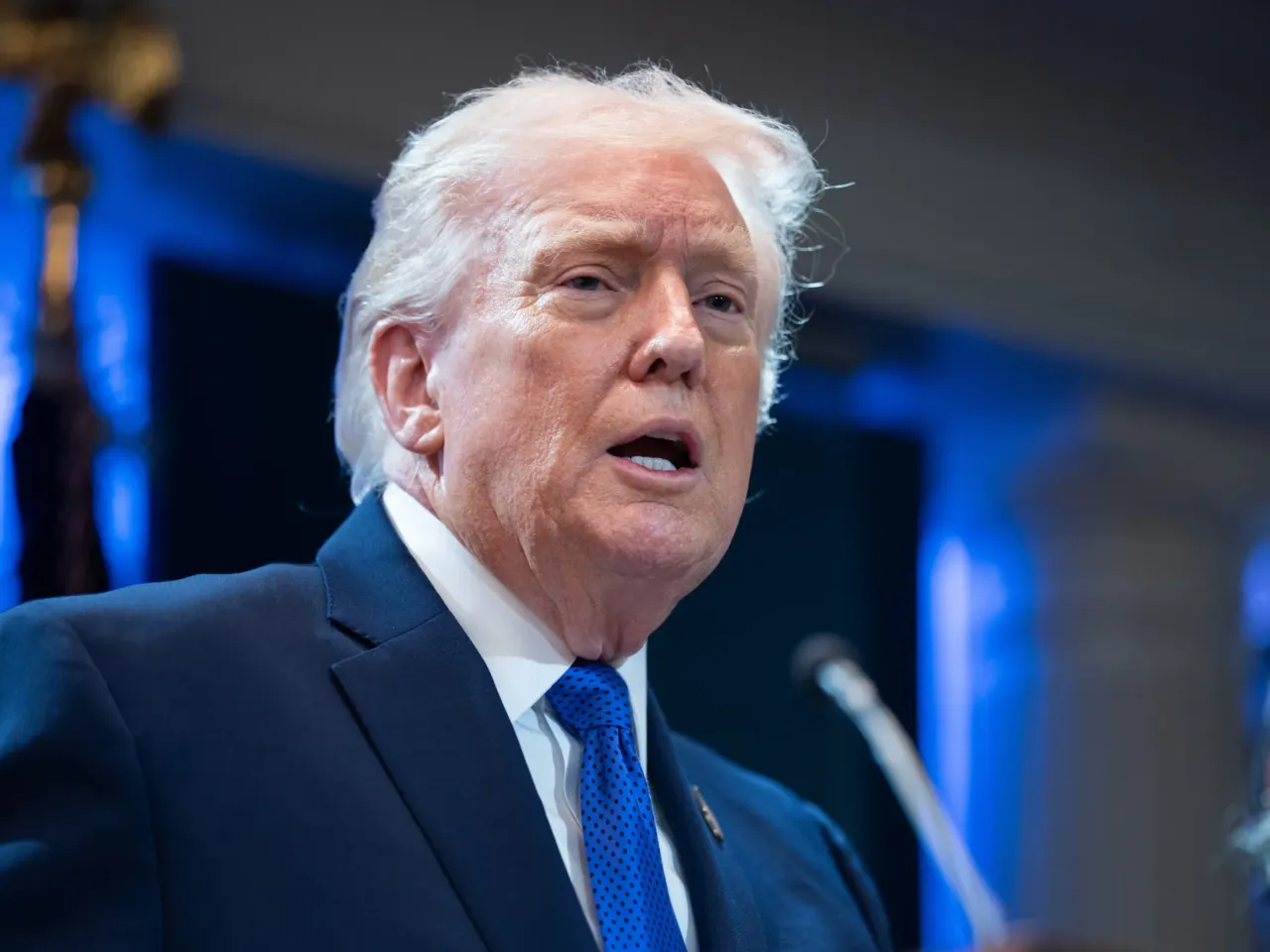
President Donald Trump answers questions during a press briefing held at the White House Feb. 20, 2026 in Washington, D.C.
Aaron Schwartz / Getty Images
President Donald Trump answers questions during a press briefing held at the White House Feb. 20, 2026 in Washington, D.C.

President Trump on Saturday said he plans to raise global tariffs from 10% to 15%.

“…I, as President of the United States of America, will be, effective immediately, raising the 10% Worldwide Tariff on Countries, many of which have been “ripping” the U.S. off for decades, without retribution (until I came along!), to the fully allowed, and legally tested, 15% level,” the president posted on Truth Social.

The announcement was made a day after the U.S. Supreme Court struck down the president’s sweeping use of emergency powers to impose tariffs under the International Emergency Economic Powers Act (IEEPA). The 6-3 ruling is a major blow to Trump’s economic policy agenda.

Trump said his decision to raise taxes on imports to 15% is based on “a thorough, detailed, and complete review of the ridiculous, poorly written, and extraordinarily anti-American decision on Tariffs issued yesterday.”

Many countries were still reeling from Trump’s announcement of new tariffs Friday night when he signed a proclamation to impose a temporary 10% hike on imports of goods from around the world. The tariffs would be limited to 150 days.

In the proclamation, Trump cites the Trade Act of 1974 as authorizing the tariffs. Trump made clear on Saturday he plans to continue centering tariffs in his economic policy, despite legal setbacks.

“During the next short number of months, the Trump Administration will determine and issue the new and legally permissible Tariffs, which will continue our extraordinarily successful process of Making America Great Again,” he said in the social media post.

The president’s proclamation issued Friday said that certain goods from Canada and Mexico covered under a separate agreement with the U.S. would be exempt from the new tariffs. It also said the levies would not apply to certain agricultural products, including beef, tomatoes, and oranges.

Copyright 2026 NPR

Kristin Wright is an editor of NPR Newscasts airing during Morning Edition and throughout the morning. Based in Washington, D.C., Wright also contributes as a fill-in Newscast anchor.

Prior to her arrival to NPR in 2022, Wright spent 20 years as an anchor and reporter covering local news for NBC, ABC and FOX TV stations and affiliates in Washington, D.C.; Tampa, Fla.; Harrisburg, Pa., and Binghamton, N.Y. As a general assignment reporter, Wright covered everything from education and courts to crime and severe weather, and many other areas of interest impacting local communities.

On Capitol Hill, Wright served as a freelance correspondent at the Cox Washington Bureau. She was also a freelance anchor at WTOP-FM. Wright's first job in journalism was as a writer at the NBC affiliate in her hometown of Detroit.

In addition to her roles in journalism, Wright enjoyed her time as Director of Communications for The Arc of the United States, one of the country's largest disability rights advocacy organizations. Wright was invited to NBC News in New York to share best practices and ideas in covering issues impacting people with disabilities, their families and the support workforce.

Wright was recognized with an Emmy award for her reporting. She has also received awards from the National Association of Black Journalists and the Associated Press. Wright holds a bachelor's degree in political science from University of Michigan, where she wrote for the student newspaper, The Daily.

Wright, her husband and their two children live in Maryland, outside of Washington, D.C.

Related Stories