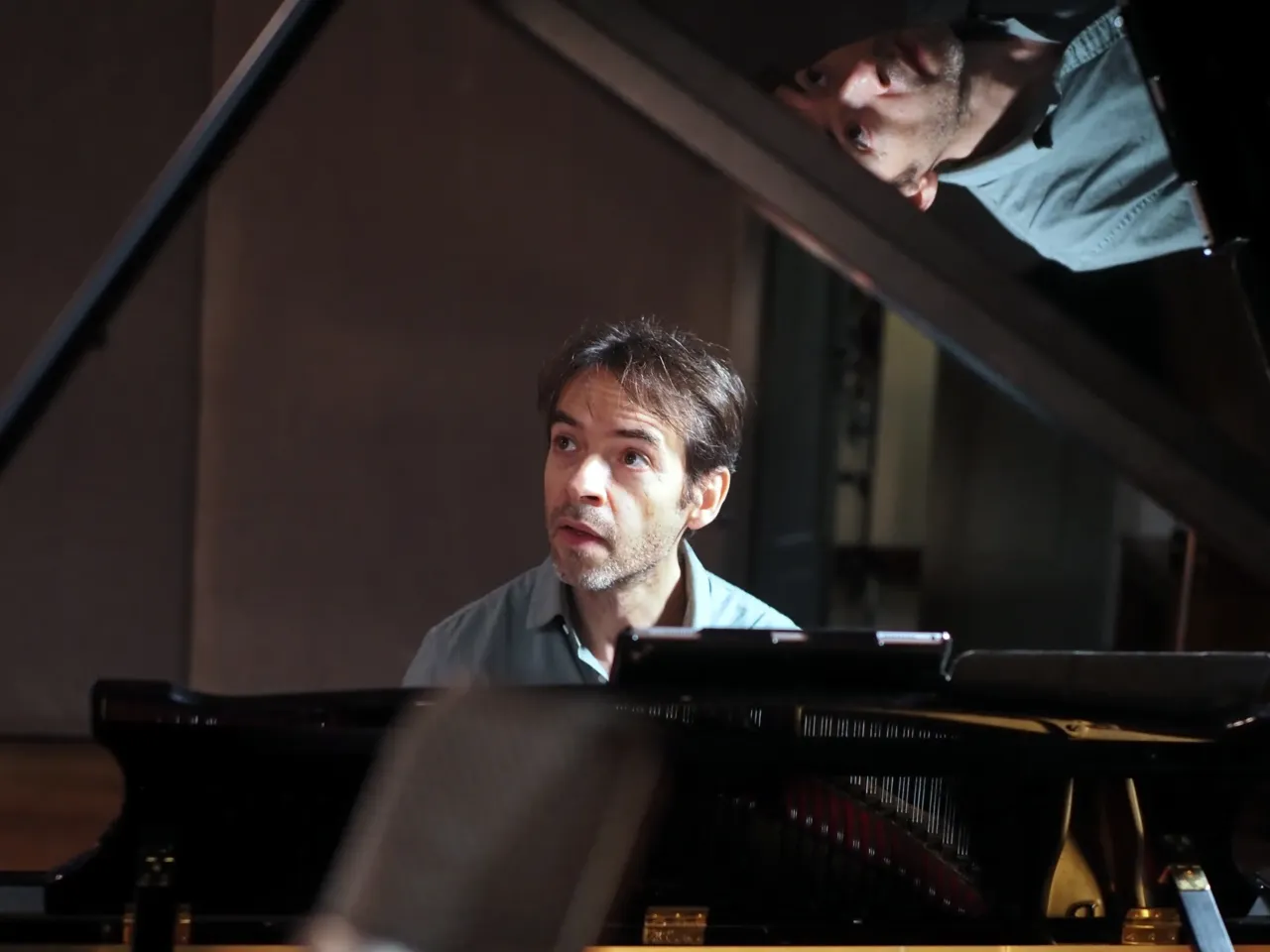
Vadim Neselovskyi isn’t used to being stumped. Music has flowed out of him since he was five years old. But the pianist-composer was transfixed and unable to play when he saw images of Russia’s all-out air and ground assault on his native Ukraine four years ago.
Three weeks later, when he finally approached the piano, he played brutal, repetitive chords at maximum volume. They became the basis of “Tanks Near Kyiv,” the second movement of an 11-part suite for piano and string trio he’s performing worldwide. The chords grow relentlessly faster, joined by frenetic strings. Repeated strokes on the violin become a desperate cry for help until it all peters out to a dissonant whisper in his signature blend of classical and jazz.
“I realized this is what I’m going to write about, this is what I feel, this is what I live right now. It’s a war in my country,” Neselovskyi told Morning Edition host Leila Fadel. “I felt that instrumental music maybe could deliver a message that words cannot.”
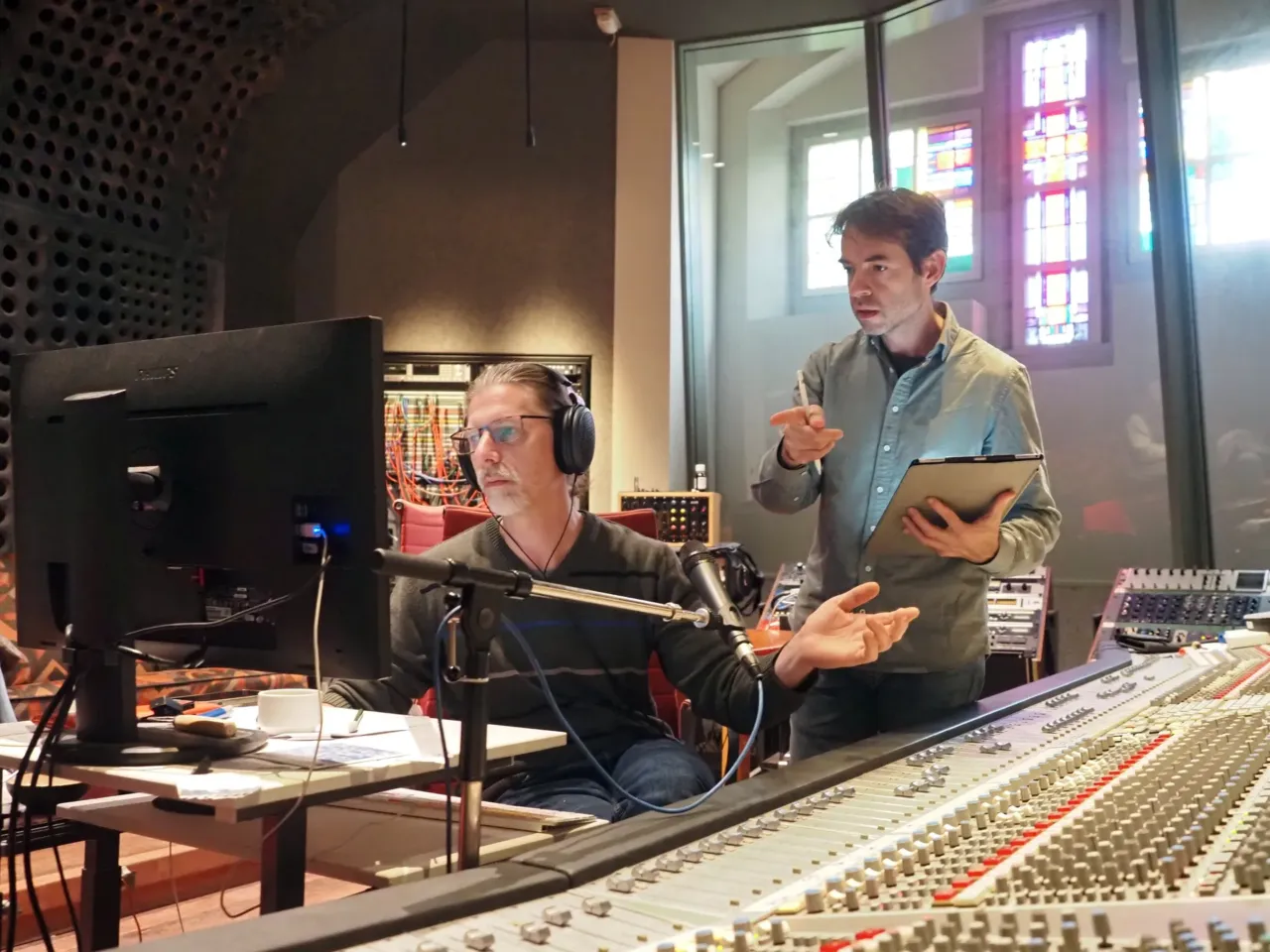
He titled the 11-movement suite Perseverantia, after the Latin term for perseverance — something that “is the sound of war, but also is the sound of empathy and hope.” He released a recording of it on Feb. 24 to mark the fourth anniversary of the full-scale Russian invasion. The album, made in Amsterdam, features the Netherlands-based Ysaÿe String Trio.
While filled with reflections on loss, the suite is bookended by movements that imagine a time without a Russian military presence in Ukraine. Called “Before 24” and “After 24” (referring to the beginning of the incursion and the eventual end of the conflict), both begin with delicate tinkling notes in the upper register of the piano.
“This music is my way to process the situation … But it’s also my way to help and support my home country in any way I can,” said Neselovskyi, who’s raised more than $200,000 for Ukraine through benefit concerts. “This is not a big amount of money on the political level, but it’s the least I could do.”
Neselovskyi was born in the Ukrainian port city of Odesa, where, at age 15, he was the youngest student to be accepted into its renowned conservatory. His family later moved to Germany before he came to the United States. Today, he’s based in New York and his work is performed by jazz and classical musicians alike, including Randy Brecker, Antonio Sanchez and Daniel Gauthier, as well as symphony orchestras.
Neselovskyi remembers being shocked by the brutality of the Bucha massacre in March 2022, when Russian forces killed more than 400 Ukrainian civilians in a city near Kyiv. “For the first time, the images of this unspeakable horror flew around the world,” he said.
The dead are mourned in “March Passacaglia,” where a single motif repeats dozens of times. Minimalistic layers of improvisatory strings and piano fill out this meditative movement.
“I wouldn’t write music like this if the situation wasn’t like this,” he said. “I’m a very optimistic person. I see life on the brighter side. And here, I simply couldn’t use the bright and lyrical colors of my music. I had to find an answer.”
In March 2022, Neselovskyi was in Germany, where he saw streams of people fleeing Ukraine at railway stations. “There was so much empathy in the air and so much suffering,” he recalled. “I just couldn’t help but see the parallels, so reminiscent of the refugee waves during the Second World War.”
He translated those moments into “Refugees,” where a fleeting melody searches and never quite finds a place to land. A calm chorale of strings accompanies it, quoting the “Lacrimosa” from Mozart‘s Requiem, a solemn mass for the dead.
Neselovskyi had hoped that by the time Perseverantia was released, Ukraine might be living in a more peaceful period. “I know that there is not much I can do as an individual and as an artist,” he said. “Being honest, sharing empathy and awareness and perhaps care for each other — the basic human values through music, as much as possible. That’s all I can do. And hope and pray for better times.”
Kaity Kline produced the broadcast version of this story. The digital version was edited by Tom Huizenga.
Copyright 2026 NPR