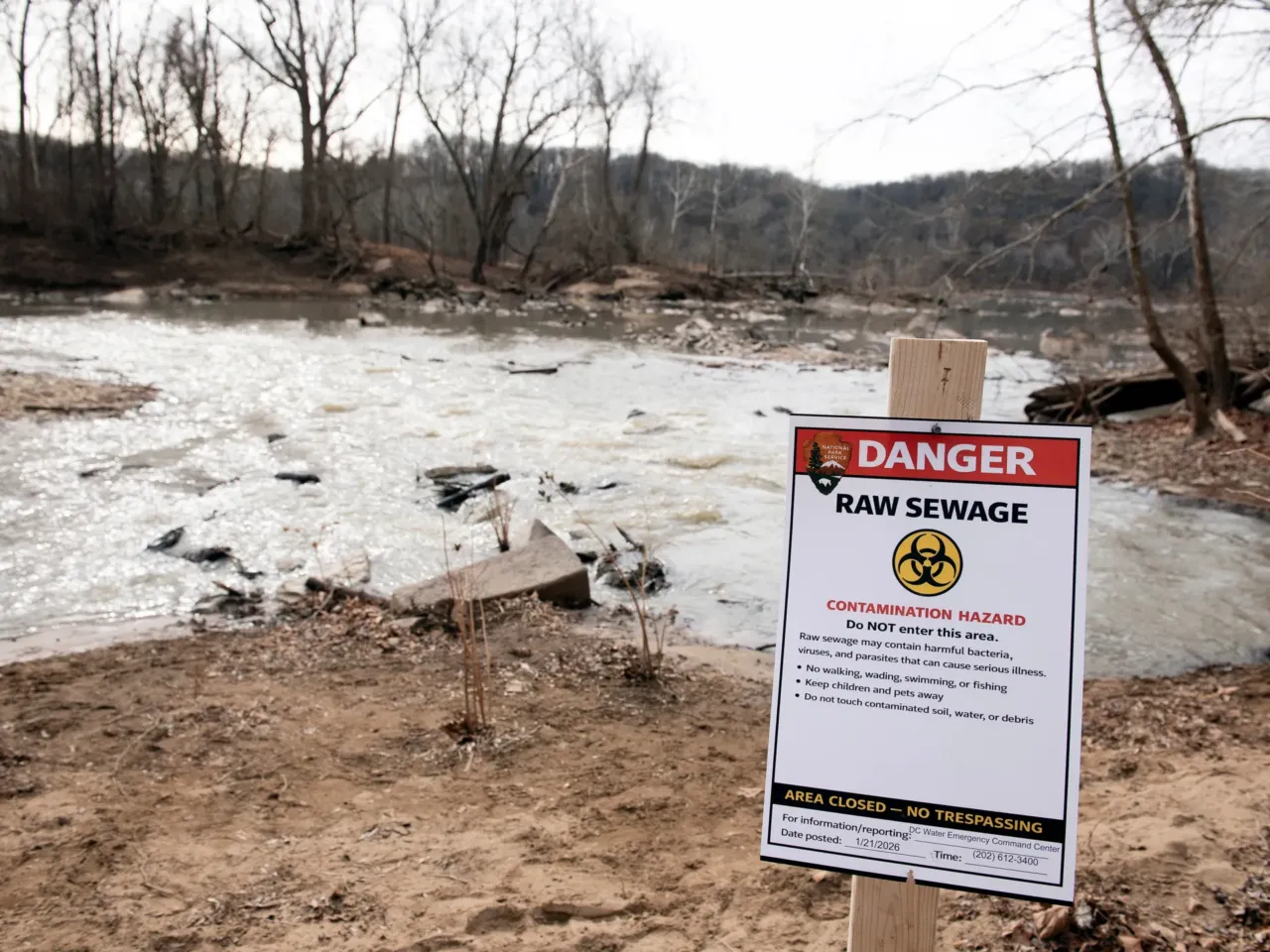
A class action lawsuit has been filed after a sewer line collapsed and spilled contaminated water into the Potomac River, near Washington, D.C. In January, the collapsed section of the 72-inch Potomac Interceptor dumped about 243 million gallons of raw sewage into the river.
The suit was filed against DC Water, the utility that manages the line. Dr. Nicholas Lailas, a Virginia physician who is also a recreational boat owner, sued the utility for negligence. He is seeking compensation for people “whose property interests in and use and enjoyment of the Potomac River” were impaired. The case claims the utility should have taken more actions, because it had acknowledged that the sewer line showed signs of corrosion before it collapsed.
“DC Water had 10 years to act to prevent this,” Steve W. Berman, managing partner of the firm that filed the case, wrote in a statement. “We seek losses for infrastructure failure, physical contamination and other economic damages for a failure of immense proportions.”
In an emailed statement to NPR, a DC Water spokesperson said that it wouldn’t be appropriate to comment on ongoing litigation.
The Potomac River incident is among the largest sewage spills in U.S. history, underscoring the risks communities face from aging infrastructure. The Interceptor sewer line system was built in the early 1960s.
After the initial spill, DC Water set up a system of pumps and a steel bulkhead to divert wastewater around the broken section of pipe so crews could repair it. The area’s drinking water hasn’t been contaminated and an advisory to avoid recreational contact with the water was lifted in the District and most of the rest of the region earlier this month.
After rain and snow delayed repairs to the sewer line on Thursday, crews in Maryland resumed work late in the day. Repairs had to be stopped because precipitation can increase the risk of spreading contamination, according to DC Water.
The utility says on its website that after the rain ended, crews worked overnight to apply a sealant called “geopolymer,” which cannot be applied in wet weather. DC Water says this is the final step before returning the wastewater flow to the Potomac Interceptor. There are still longer-term repairs that the utility estimates will take 9 to 10 months to complete.
The Potomac sewage spill highlights a chronic problem facing communities around the United States, Gussie Maguire, Maryland staff scientist at the Chesapeake Bay Foundation, told NPR in February. Sewer systems, especially those that handle a combination of wastewater and stormwater, often overflow during heavy rains.
The problem is exacerbated by population growth that’s straining aging infrastructure. Climate change is also a factor, Maguire said, because as temperatures rise, storms dump more rain in shorter periods of time, overwhelming sewer and stormwater systems.
“The intensity is a really important part of it,” Maguire said, adding: “It is absolutely a climate problem that will continue to get worse.”
President Trump approved emergency federal assistance last month, after criticizing how local leaders handled the spill. Now scientists and environmental advocates are watching for longer-term damage from the spill, in a watershed that stretches to the Chesapeake Bay.
“243 million gallons of sewage just doesn’t go away,” says Dean Naujoks, with the nonprofit Potomac Riverkeeper Network. Bacteria don’t thrive in cold water, but the weather is starting to warm. “We’re concerned about potential algae blooms and fish kills this summer,” Naujoks says.
Michael Copley contributed reporting to this story
Copyright 2026 NPR