Copyright © 2026 VPM, all rights reserved.
PBS is a 501(c)(3) not-for-profit organization.
VPM News Morning Edition
NEXT UP: 9:00 AM

Thanks to our sponsors – Become a Sponsor

David Attenborough celebrates his 100th birthday

Sir David Attenborough at the Beijing Museum of Natural History with fossil of Juramaia, as featured in the Smithsonian Channel series Rise of Animals: Triumph of the Vertebrates.
Courtesy Smithsonian Channel
Sir David Attenborough at the Beijing Museum of Natural History with fossil of Juramaia, as featured in the Smithsonian Channel series Rise of Animals: Triumph of the Vertebrates.

LONDON — He was born before the Great Depression, came of age in World War II, and is still making wildlife documentaries.

On Friday, one of the world’s most famous wildlife experts and climate campaigners, David Attenborough, turns 100. His films have brought intimate scenes of nature to hundreds of millions of viewers.

Brits call him a national hero.

“He can inform you, or make you cry at some iguanas being chased by snakes!” says Chris Dametto, commuting in central London. “He’s a great storyteller, he’s a great communicator, and I think the world is better place because of him.”

Fans dressed in animal costumes — lions, tigers and bumble bees — gathered around a life-sized cardboard cutout of Attenborough late Thursday on London’s Trafalgar Square, singing wildlife ballads — Toto’s Africa, The Lion Sleeps Tonight by the Tokens — and of course, Happy Birthday. A few aspiring Attenborough lookalikes roamed the crowd.

There are also special broadcasts on BBC, a concert Friday at Royal Albert Hall, events at science museums, nature walks and tree-planting events.

Attenborough’s best wildlife moments

Born in 1926 in suburban London, Attenborough collected fossils as a child, studied zoology at Cambridge, and got drafted into the Royal Navy in 1947. He had a career as a BBC manager before moving on-camera — only after someone else got ill.

He was already age 30 — though wearing what looks like a Boy Scout uniform of khaki shirt, shorts and knee socks — when in 1956, he wrestled a Burmese python into a burlap sack on TV.

“It’s important to grab his tail as soon as you grab his head,” he instructed the audience, after climbing a tree and sawing off a branch, on the Indonesian island of Java. “Otherwise he’ll wrap his great coils around you and give you a very nasty squeeze!”

One of his most famous TV moments was when he cuddled with gorillas in Rwanda’s Virunga Mountains, in 1978.

“There is more meaning and mutual understanding in exchanging a glance with a gorilla than any other animal I know,” he tells the camera.

Head of creative enterprise, Maddie Hall, watches hundreds of television screens with David Attenborough's face, from when he was a young broadcaster, projected inside the dome within the Market Hall at Real Ideas in Devonport, Plymouth, England, where Hall and her team are making preparations for a public release of an immersive film to mark Attenborough's 100th birthday on Friday.
Head of creative enterprise, Maddie Hall, watches hundreds of television screens with David Attenborough’s face, from when he was a young broadcaster, projected inside the dome within the Market Hall at Real Ideas in Devonport, Plymouth, England, where Hall and her team are making preparations for a public release of an immersive film to mark Attenborough’s 100th birthday on Friday. Ben Birchall / PA Images via Getty Images

In 1998, while filing the BBC series Life of Birds, he got pounced on by a lusty capercaille grouse in the Scottish Highlands. He also managed to fool a Patagonian woodpecker into mistaking him for a rival, and answering his call — which Attenborough faked by tapping stones on the side of a tree trunk.

He’s explored mating rituals of fireflies, blue whales and Galapagos tortoises — some of whom are even older than him.

What it’s like to work with Attenborough

Sharmila Choudhury was 15 when she first saw an Attenborough film in the cinema in her native India.

“That changed my world! There was this man showing me all these extraordinary creatures, from tiny protozoans to strange sea cucumbers,” she recalls.

Like Attenborough, she too decided to study zoology, and went all the way to a PhD. She eventually met her teenage idol — and then got hired by him.

“One thing you notice immediately when working with David is how easily he connects with everyone, whether they’re eminent scientists or a taxi driver or a field assistant,” Choudhury says.

Or a hedgehog, in one case.

Last year, Choudhury produced the film Wild London in which Attenborough — then aged 99 — shimmies on his belly to get eye-to-eye with the spiny mammal.

“You know, we call him the animal whisperer! The little peregrine chick in Wild London, it was screaming its little head off, and then David said, ‘Now, now,'” she recalled, in a phone interview with NPR. “And this little bird kind of leaned back, looked up at David and just seemed to know, it’s going to be alright.”

He has a similar effect on the British public.

Appreciation for a British icon

Even during London rush hour, commuters seemed happy to stop and talk to a reporter about Attenborough, waxing poetic about childhood memories, and his iconic half-whispered delivery.

“His voice! We connect his voice with nature and good things,” says Andriana Naidoo, on her way to an appointment. “He’s a good person, and at the moment, that’s really rare!”

“Sunday afternoons, watching Planet Earth with my dad growing up, and Blue Planet as well!” says Liam Wall, originally from Dublin. “I actually won a cardboard cutout of David Attenborough at bingo once! So I had that in my house for like a year.”

In an audio message released late Thursday, Attenborough said he’s “completely overwhelmed” by birthday greetings from school groups, nursing homes and everyone in between.

Scientists have also named a species of parasitic wasp after Attenborough, to honor his 100th birthday.

“I simply can’t reply to each of you separately, but I’d like to thank you all most sincerely for your kind messages,” he says.

Copyright 2026 NPR
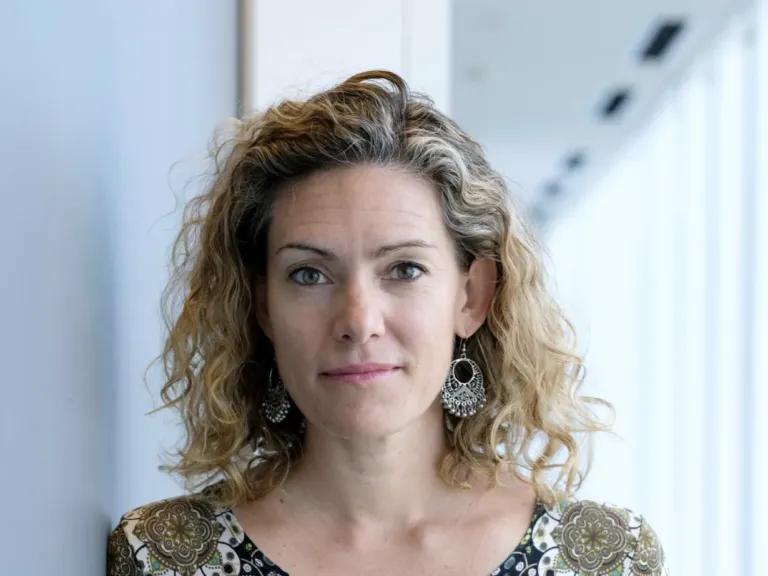
Lauren Frayer covers South Asia for NPR News. In 2018, she opened a new NPR bureau in India's biggest city, its financial center, and the heart of Bollywood—Mumbai.

She has covered the rise of Hindu nationalism in India, the aftermath of Sri Lanka's civil war and the power of a 19th century short story to combat racism against Afghan refugees. In 2019, she met the Dalai Lama at his monastery in northern India, and reported on the sticky geopolitics of who decides his successor. On Mahatma Gandhi's 150th birthday, Frayer examined how his legacy has changed.

When a 6-year-old Indian girl died of heat stroke on the U.S.-Mexico border, Frayer traced her path back to the Punjab, met her grieving grandparents – and uncovered a smuggling ring responsible for a 10,000% spike in the number of Indians detained on that border. For a year, Frayer followed an interfaith couple whose wedding plans were upended by 'Love Jihad' – an anti-Muslim conspiracy theory that's now law in several Indian states.

In 2022, Frayer was awarded the Overseas Press Club of America's Lowell Thomas Award for her coverage of India's COVID-19 outbreak, and a Gracie Award for coverage of India's farmer protests.

Frayer reported on caste discrimination for a 2020 episode of NPR's Rough Translation podcast, and is working on a new podcast about love marriage in India.

When Russia invaded Ukraine, Frayer was in the first batch of NPR reporters to cross from Poland into the embattled country. She chronicled the flow of Ukrainian refugees out, and military volunteers in. She also reported on the surprisingly long history of Ukrainian women in combat, a spiritual revolt among Orthodox Christians and how Ukrainian rock stars are turning their trauma into art.

Before moving to India, Frayer was a regular freelance contributor to NPR for seven years, based in Madrid. During that time, she substituted for NPR bureau chiefs in Seoul, London, Istanbul, Islamabad, and Jerusalem. She also served as a guest host of Weekend Edition Sunday.

In Europe, Frayer profiled a Portuguese opera singer-turned protest leader, and a 90-year-old survivor of the Spanish Civil War, exhuming her father's remains from a 1930s-era mass grave. In the fall of 2015, Frayer spent two months covering the flow of migrants & refugees across Hungary & the Balkans – and profiled a Syrian rapper among them. She interviewed a Holocaust survivor who owed his life to one kind stranger, and managed to get a rare interview with the Dutch far-right leader Geert Wilders – by sticking her microphone between his bodyguards in the Hague.

Farther afield, she has introduced NPR listeners to a Pakistani TV evangelist, a Palestinian surfer girl in Gaza, and K-pop performers campaigning in South Korea's presidential election.

Frayer has also contributed to The New York Times, the Los Angeles Times, and the BBC.

Her international career began in the Middle East, where she was an editor on the Associated Press' Middle East regional desk in Cairo, and covered the 2006 Israel-Hezbollah war in Syria and southern Lebanon. In 2007, she spent a year embedded with U.S. troops in Iraq.

On a break from journalism, Frayer drove a Land Rover across Africa for a year, from Cairo to Cape Town, sleeping in a tent on the car's roof. She once made the front page of a Pakistani newspaper, simply for being a woman commuting to work in Islamabad on a bicycle.

Born and raised in a suburb of New York City, Frayer holds a bachelor's degree in philosophy from The College of William & Mary in Virginia. She speaks Spanish, Portuguese, rusty French and Arabic, and is now learning Hindi.

Related Stories