Warning: This story discusses suicide.
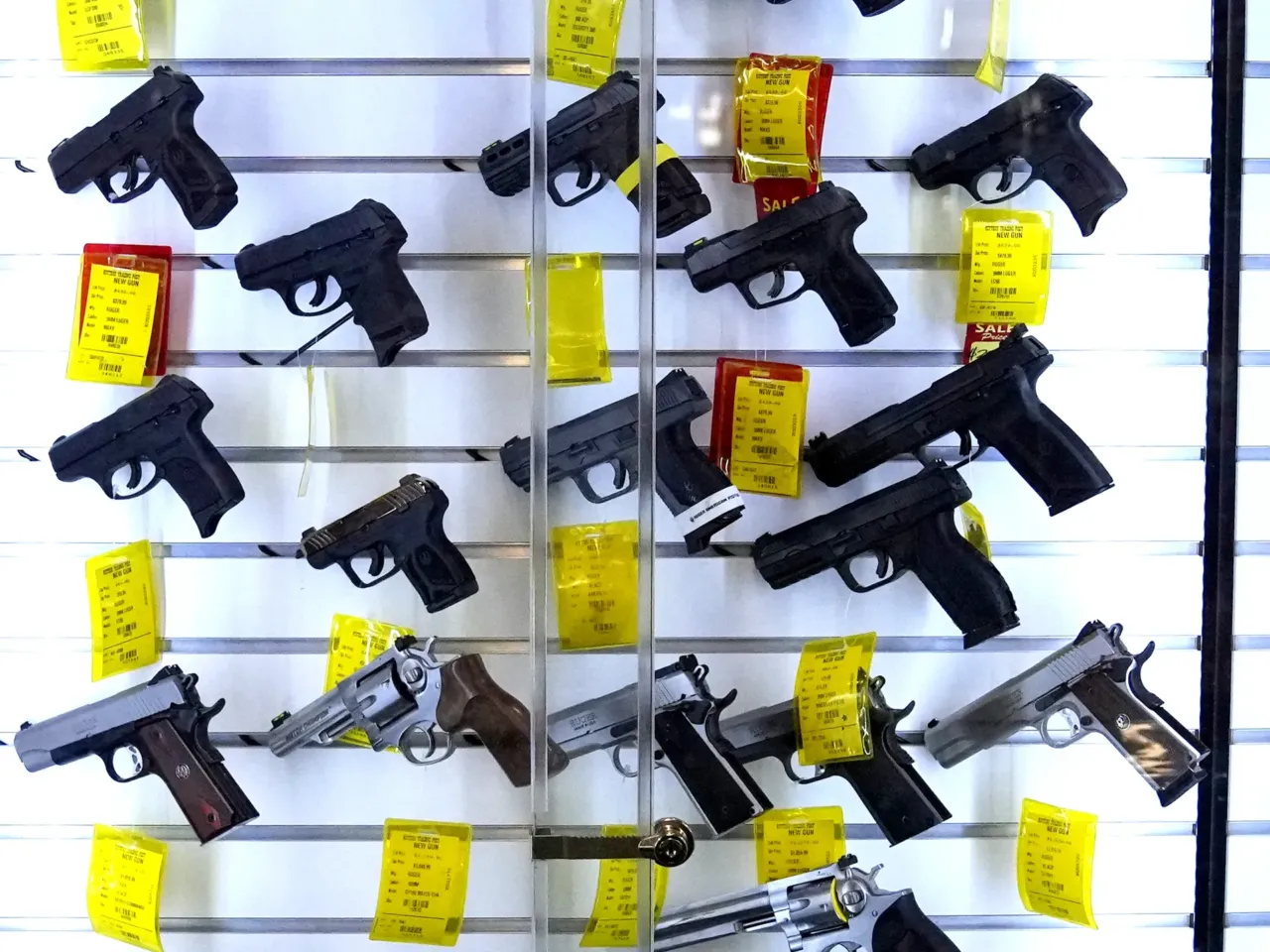
An estimated 32 million children in the United States live in homes with firearms, nearly 7 million of whom have at least one firearm in the household that’s unlocked and loaded. That’s according to a new study published in JAMA Network Open.
“This study sheds further light on the fact that there are millions of kids living in this country, in households where weapons are readily available and often not locked up,” says Dr. Chethan Sathya, a pediatric surgeon and director of the Center for Gun Violence Prevention at Northwell Health, a health system in New York. “Many of these families don’t know the risk of having that gun not being locked up.”
Since 2020, firearms have been the leading cause of death among children and teens. While a majority of those deaths are due to homicides, a significant percentage are suicides, says Dr. Matthew Miller, a public health researcher at Northeastern University.
“When children take their own lives purposefully, in a suicide, the gun almost always comes from their home,” says Miller, who is the lead author of the study published Tuesday. “It’s usually owned by a parent, and clearly, the children gain access to those guns.”
Studies show that safe storage of firearms can prevent these suicide deaths. “When guns are locked up, it reduces the risk of dying by suicide, by firearm suicide in particular, by threefold,” says Miller. “That doesn’t eliminate the risk, but it mitigates it.”
For the new study, Miller and his colleagues wanted to know how gun-owning parents with kids at home are storing their firearms these days.
They surveyed nearly 900 parents of kids under 18 who own guns. Nearly 35% said they stored them in the safest way possible — unloaded and locked up. But 21% had at least one firearm in the house unlocked and loaded — the least safe way possible to store a gun.
“So you pick it up, and you can fire it,” explains Miller. “You don’t have to unlock it. It’s ready to go.”
That 21% translates into 7 million children in the overall U.S. population, the authors estimate.
Unsafe firearm storage also increases the risk of unintentional injuries and of mass shootings, says Sathya.
“We know from the literature in the past that many mass shooters obtain weapons without their parents knowing, but from the parents themselves.”
The new study also found that parents of children under 13 are more likely to keep their firearms unloaded and locked away compared to parents of teenagers. Sathya calls that finding “reassuring.”
“Maybe some of the education initiatives have actually worked on the younger side to promote the idea that guns do need to be stored safely, even when you have younger kids in the home,” he says.
However, the risk of suicides is higher for teenagers, says Miller. (And school shooters are also more likely to be in their teens than younger kids.) So parents of teenagers should take just as much care to unload and lock away their firearms, he says.
While Miller and his colleagues note in their study that past efforts to convince gun-owning households with kids to safely store their firearms haven’t succeeded, Sathya sees reasons to be optimistic in his own health system.
He and his colleagues at Northwell now routinely screen all patients for risk of gun violence — asking them questions about guns in the household, and offering counseling on safe storage practices.
“We’ve had over 200,000 of those conversations and we’ve demonstrated [that] a substantial number of those families do end up safely storing guns as a result of the conversation,” says Sathya.
But, he notes that these conversations should include modern technologies for safe storage that don’t impede a gun owner from accessing the gun themselves.
“There are smart guns; there are smart holsters. There are new biometric finger safes,” notes Sathya. “And I think we have to start getting creative with how we roll those out to truly improve our safe storage rates.”
Anyone in crisis can text, chat or call 988 to speak to a counselor with the 988 Suicide and Crisis Lifeline.
Copyright 2026 NPR