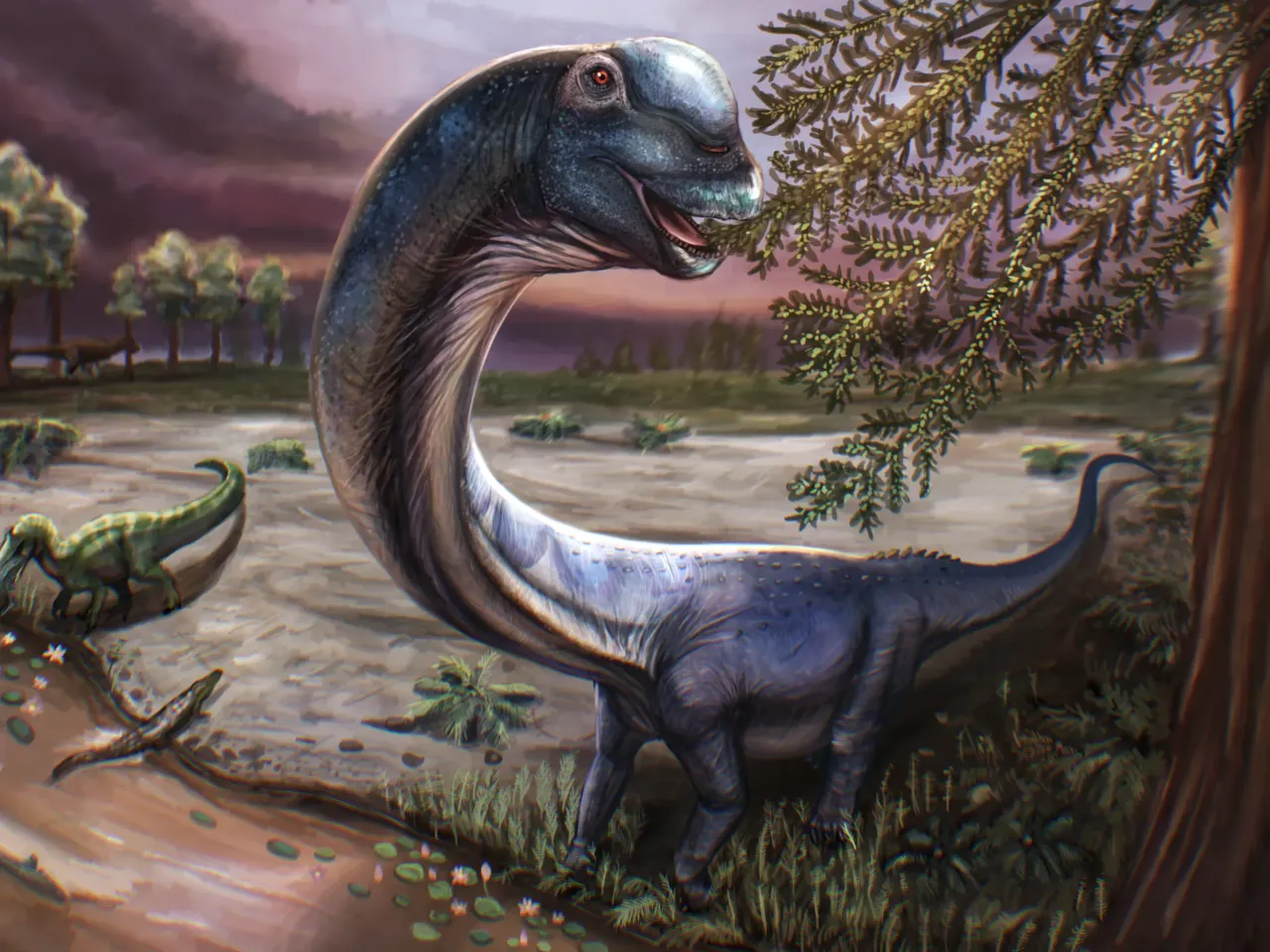
Researchers have identified a new species of dinosaur in Thailand, the largest found in Southeast Asia.
It would have been about 90 feet long and weighed some 30 tons, according to research published on Thursday in the journal Scientific Reports.
That’s the weight of more than four large African savanna elephants, or more than three times the weight of a Tyrannosaurus rex.
“One of the many features that we’re kind of excited about is the size of this dinosaur,” says Thitiwoot Sethapanichsakul, a Ph.D. student at University College London who is the lead author on the research paper.
The sauropod — an herbivore with a long neck and tail — comes from the late Early Cretaceous period, some 100 to 120 million years ago, Sethapanichsakul says, and falls somewhere in the “upper middle” range of the largest dinosaurs ever discovered.
As big as this dinosaur was, sauropods were about to get a lot bigger. “It gives us an understanding of the potential kind of evolutionary trends that are beginning to occur” around this time, he says.
Larger sauropods have been found from later on in the Cretaceous period — one as heavy as 70 tons.
“In the Middle Cretaceous, we find dinosaurs in China, South America and probably Africa that are super giants. They are the biggest of the biggest,” Sethapanichsakul says. The new discovery, he says, “essentially represents that kind of on-ramp towards that kind of supersizing.”
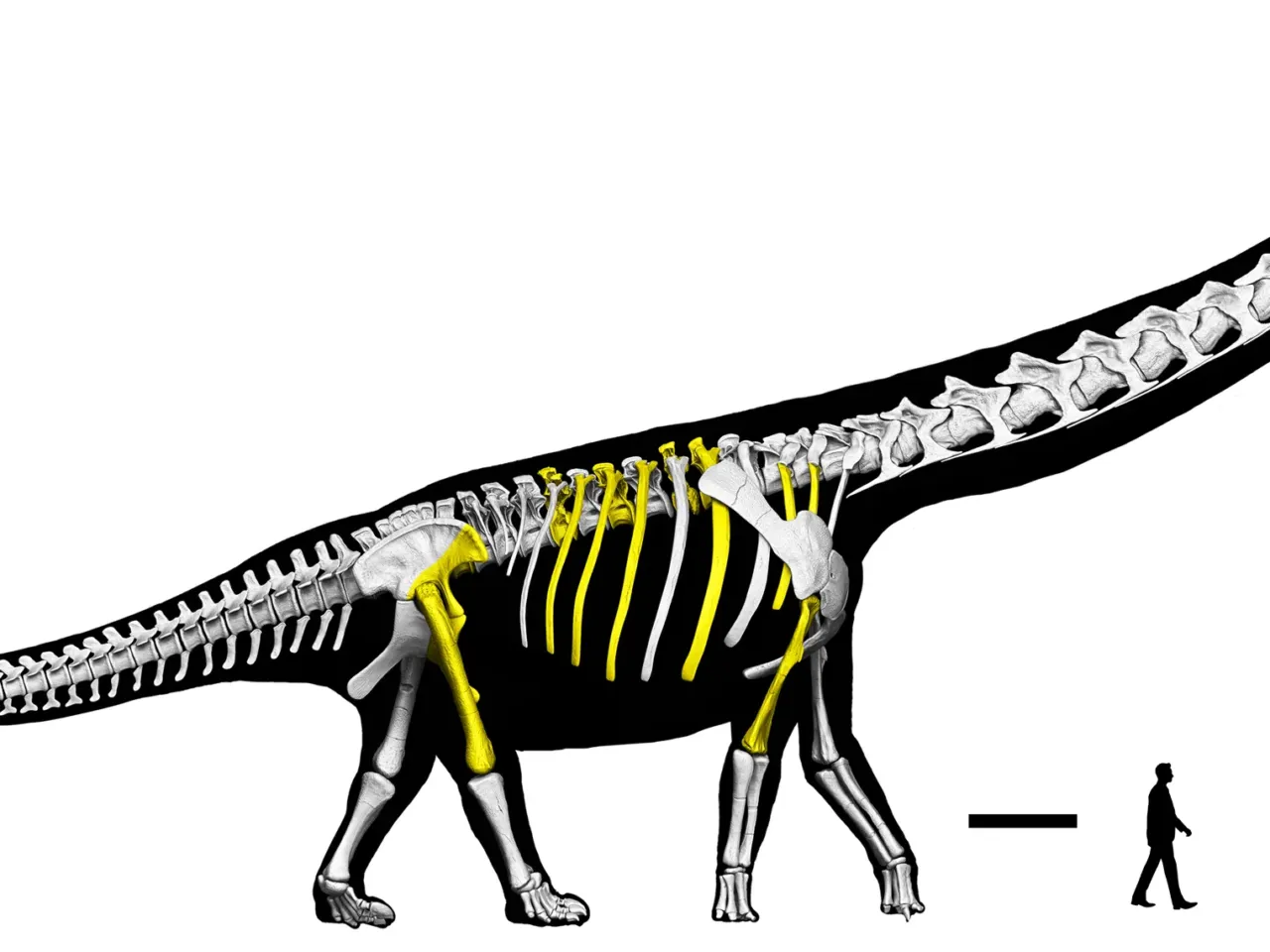
Sethapanichsakul and his colleagues named it Nagatitan chaiyaphumensis. “Naga comes from the mythological Naga [serpent creature] that is worshipped in Southeast Asia. Titan just [refers to] size,” he says. Chaiyaphumensis comes from Chaiyaphum — the province where the dinosaur was found.
The fossils were first discovered by a local resident in 2016 and initial excavation happened between then and 2019, but then funding dried up. When Sethapanichsakul’s team got new funding, the excavation restarted in 2024.
Researchers don’t have the full skeleton of Nagatitan; they are estimating its size from the spine, rib, pelvis and leg bones that were discovered. A front leg bone was nearly 6 feet long.
“This is a big critter. Pretty nice material,” says Mathew Wedel, a paleontologist and professor of anatomy at Western University of Health Sciences in Pomona, Calif., who has studied sauropods. He was not involved in the project.
He considers the quantity and quality of bones discovered to be “not bad,” as far as big dinosaurs go. “We’ve got several regions of skeleton represented. We’ve got several complete bones that aren’t distorted very much — enough to give us a lot of information.”
It’s the 14th named dinosaur discovered in Thailand, according to Sethapanichsakul. The researchers are calling the discovery the “last titan” of the country. Based on the age of rock formations and what they know about how the landscape changed over time, they don’t expect to find any more large dinosaurs in Southeast Asia. “This rock formation that we found this dinosaur in is the last formation where you’re going to find dinosaurs in Thailand,” Sethapanichsakul says.
Wedel is excited to see more fossil discoveries from Thailand. “Every country gives us a new window into a little bit different part of the past and helps us refine our ideas of what we think was going on,” he says.
Copyright 2026 NPR