Copyright © 2026 VPM, all rights reserved.
PBS is a 501(c)(3) not-for-profit organization.
VPM News Morning Edition
NEXT UP: 9:00 AM

Thanks to our sponsors – Become a Sponsor

Smokers in China are being chided by anti-smoking women

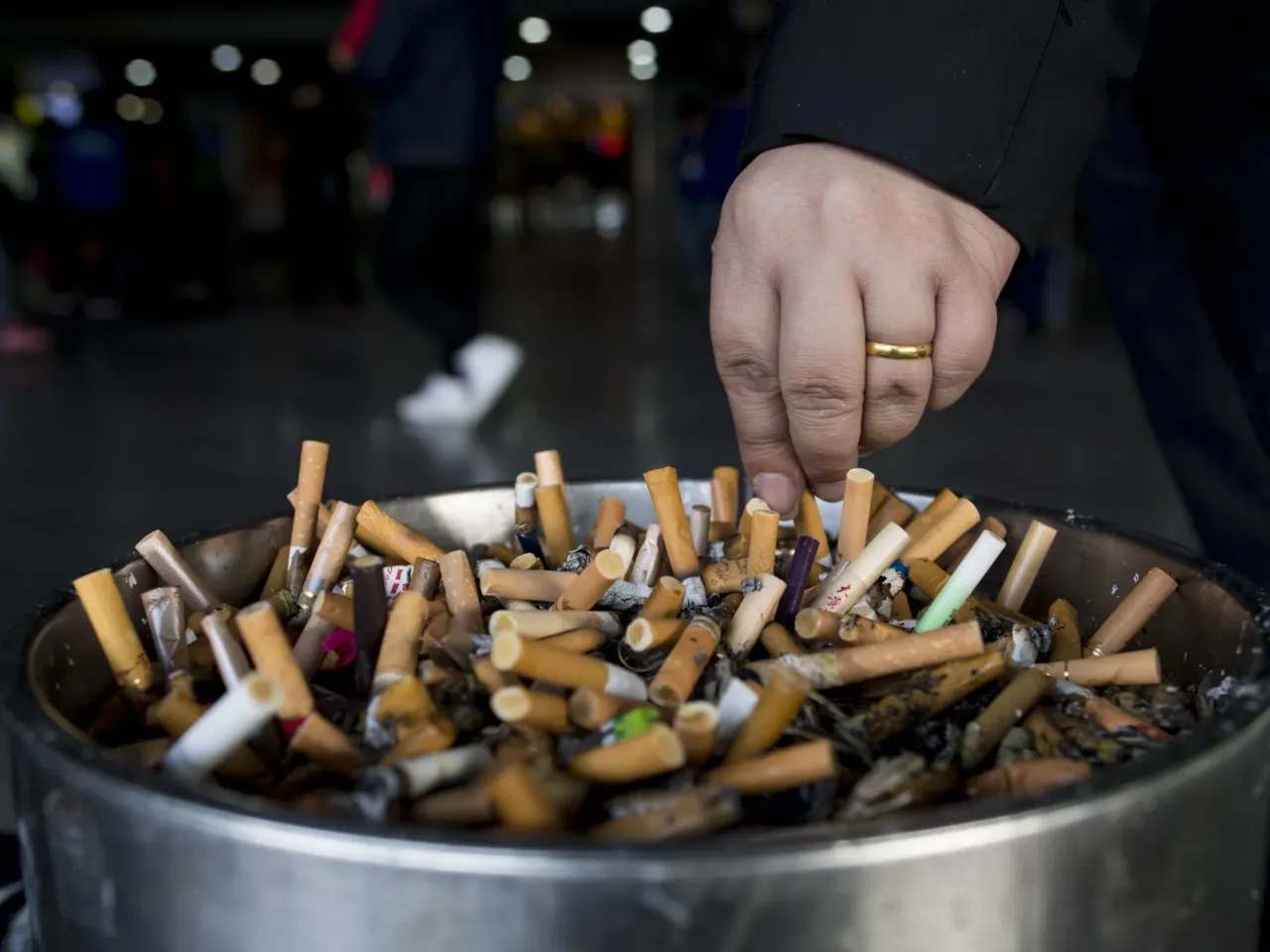
Despite public smoking bans in a number of Chinese cities, smoking is still a big thing — mainly among men.
Johannes Eisele / AFP / via Getty Images
Despite public smoking bans in a number of Chinese cities, smoking is still a big thing — mainly among men.

Hilda Wang scolds smokers and posts videos of the encounters. She says she’s a natural introvert –- but she gets so upset about smoking that her personality has changed. In a widely shared clip, she’s lecturing a man with a cigarette in hand. He says she has no right to put him on video. She tells the man he’s an embarrassment, and he walks away.

Wang comes into contact with a lot of smokers. She lives in China, a hard-smoking nation, and smoking habits tend to fall along a gender divide. According to the latest data from the World Health Organization, about 45% of males and 2% of females above the age of 15 smoke tobacco.

In Shenzhen, a densely-packed city of almost 20 million residents just north of Hong Kong, Wang is one of many women who have been confronting men smoking in public areas. Sometimes the confrontations end up on social media.

“I hate bros,” says Hilda’s friend Luno Wang, who also scolds men she sees smoking. She says “bros” are lower IQ and less civilized, and don’t respect others. She says she’s asked men: “Is your cigarette a good thing for you to suck?”
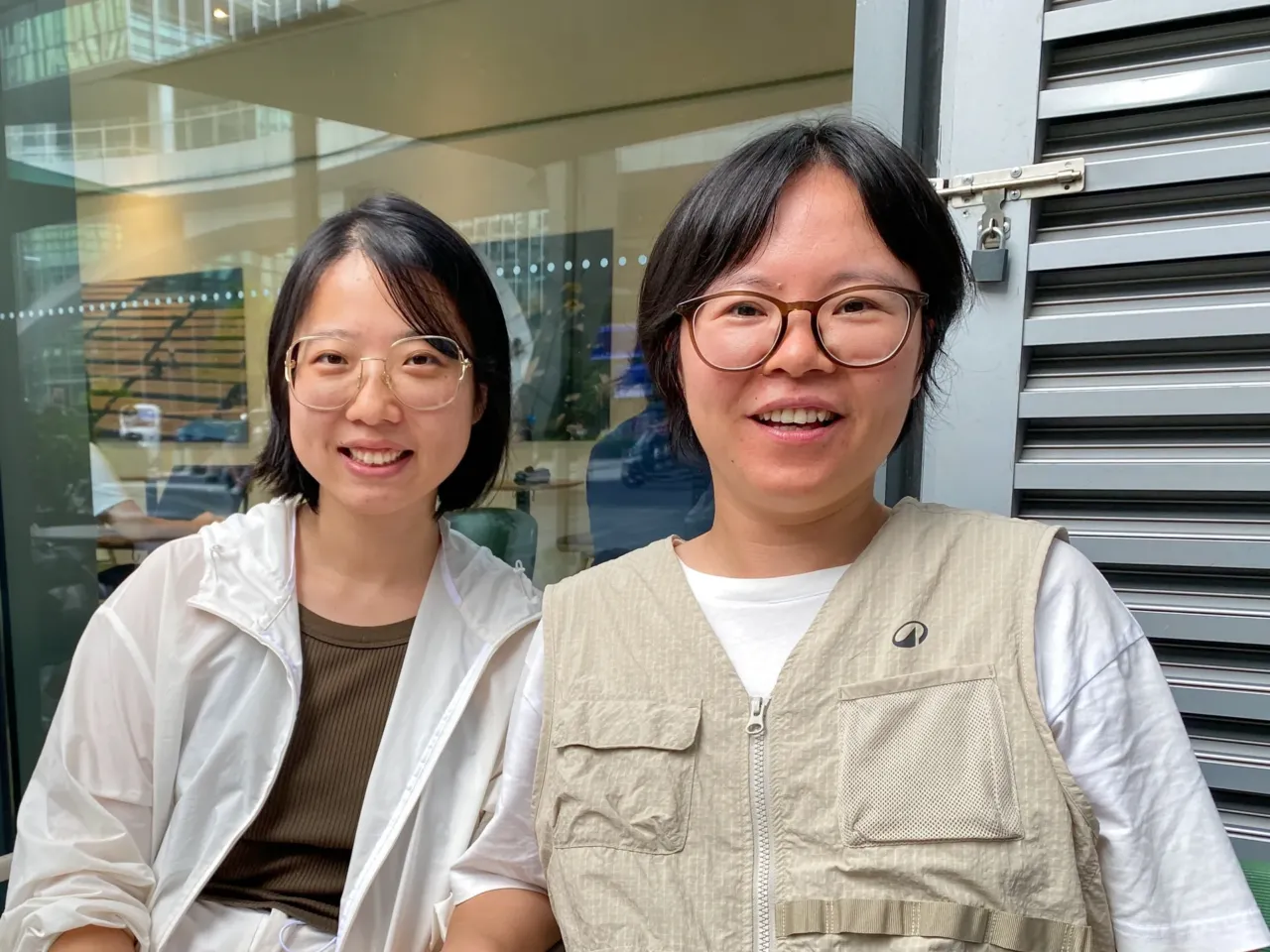
Luno Wang, left, and Hilda Wang are determined to confront folks smoking in public.
Reena Advani/NPR /

In a clip that spread on social media this spring, a woman confronted a smoker at a bus stop. When he refused to put out his cigarette, she poured juice on it. He threw the empty cup at her, and both were arrested. The woman posted afterward on China’s social media Weibo that she was strip-searched by police; her posts were later taken down. The state-owned China Daily said a female officer gave her a “safety check” in accordance with regulations. China Daily also reported that the man was breaking Shenzhen’s rules for no smoking at bus stops and he was fined.

The anti-smoking brigade has a lot of confrontations ahead of it.

“I love smoking,” says Tan Tiesheng, a restaurant kitchen worker who’s been doing it since he was a pilot in the army 40 years ago. “It’s refreshing.” Tan says he has a cough, but he’s otherwise fine. Men traditionally had the pleasure of smoking because men were in charge, he explains.

He doesn’t mind the anti-smoking activists. The women who are confronting smokers on social media are doing a good thing, he says.

Other men who spoke with NPR in Shenzhen agree. They say they wouldn’t mind a lecture if it helps them overcome their addiction.

The audio version of this story was produced by Taylor Haney.

Copyright 2026 NPR

Steve Inskeep is a host of NPR's Morning Edition, as well as NPR's morning news podcast Up First.

Known for interviews with presidents and Congressional leaders, Inskeep has a passion for stories of the less famous: Pennsylvania truck drivers, Kentucky coal miners, U.S.-Mexico border detainees, Yemeni refugees, California firefighters, American soldiers.

Since joining Morning Edition in 2004, Inskeep has hosted the program from New Orleans, Detroit, San Francisco, Cairo, and Beijing; investigated Iraqi police in Baghdad; and received a Robert F. Kennedy Journalism Award for "The Price of African Oil," on conflict in Nigeria. He has taken listeners on a 2,428-mile journey along the U.S.-Mexico border, and 2,700 miles across North Africa. He is a repeat visitor to Iran and has covered wars in Syria and Yemen.

Inskeep says Morning Edition works to "slow down the news," making sense of fast-moving events. A prime example came during the 2008 Presidential campaign, when Inskeep and NPR's Michele Norris conducted "The York Project," groundbreaking conversations about race, which received an Alfred I. duPont-Columbia University Silver Baton for excellence.

Inskeep was hired by NPR in 1996. His first full-time assignment was the 1996 presidential primary in New Hampshire. He went on to cover the Pentagon, the Senate, and the 2000 presidential campaign of George W. Bush. After the Sept. 11 attacks, he covered the war in Afghanistan, turmoil in Pakistan, and the war in Iraq. In 2003, he received a National Headliner Award for investigating a military raid gone wrong in Afghanistan. He has twice been part of NPR News teams awarded the Alfred I. duPont-Columbia University Silver Baton for coverage of Iraq.

On days of bad news, Inskeep is inspired by the Langston Hughes book, Laughing to Keep From Crying. Of hosting Morning Edition during the 2008 financial crisis and Great Recession, he told Nuvo magazine when "the whole world seemed to be falling apart, it was especially important for me ... to be amused, even if I had to be cynically amused, about the things that were going wrong. Laughter is a sign that you're not defeated."

Inskeep is the author of Instant City: Life and Death in Karachi, a 2011 book on one of the world's great megacities. He is also author of Jacksonland, a history of President Andrew Jackson's long-running conflict with John Ross, a Cherokee chief who resisted the removal of Indians from the eastern United States in the 1830s.

He has been a guest on numerous TV programs including ABC's This Week, NBC's Meet the Press, MSNBC's Andrea Mitchell Reports, CNN's Inside Politics and the PBS Newshour. He has written for publications including The New York Times, Washington Post, the Wall Street Journal, and The Atlantic.

A native of Carmel, Indiana, Inskeep is a graduate of Morehead State University in Kentucky.

Related Stories