Copyright © 2026 VPM, all rights reserved.
PBS is a 501(c)(3) not-for-profit organization.
VPM News Morning Edition
NEXT UP: 9:00 AM

Thanks to our sponsors – Become a Sponsor

‘Why not me?’: André De Shields on his Tony nomination and a life in the theatre

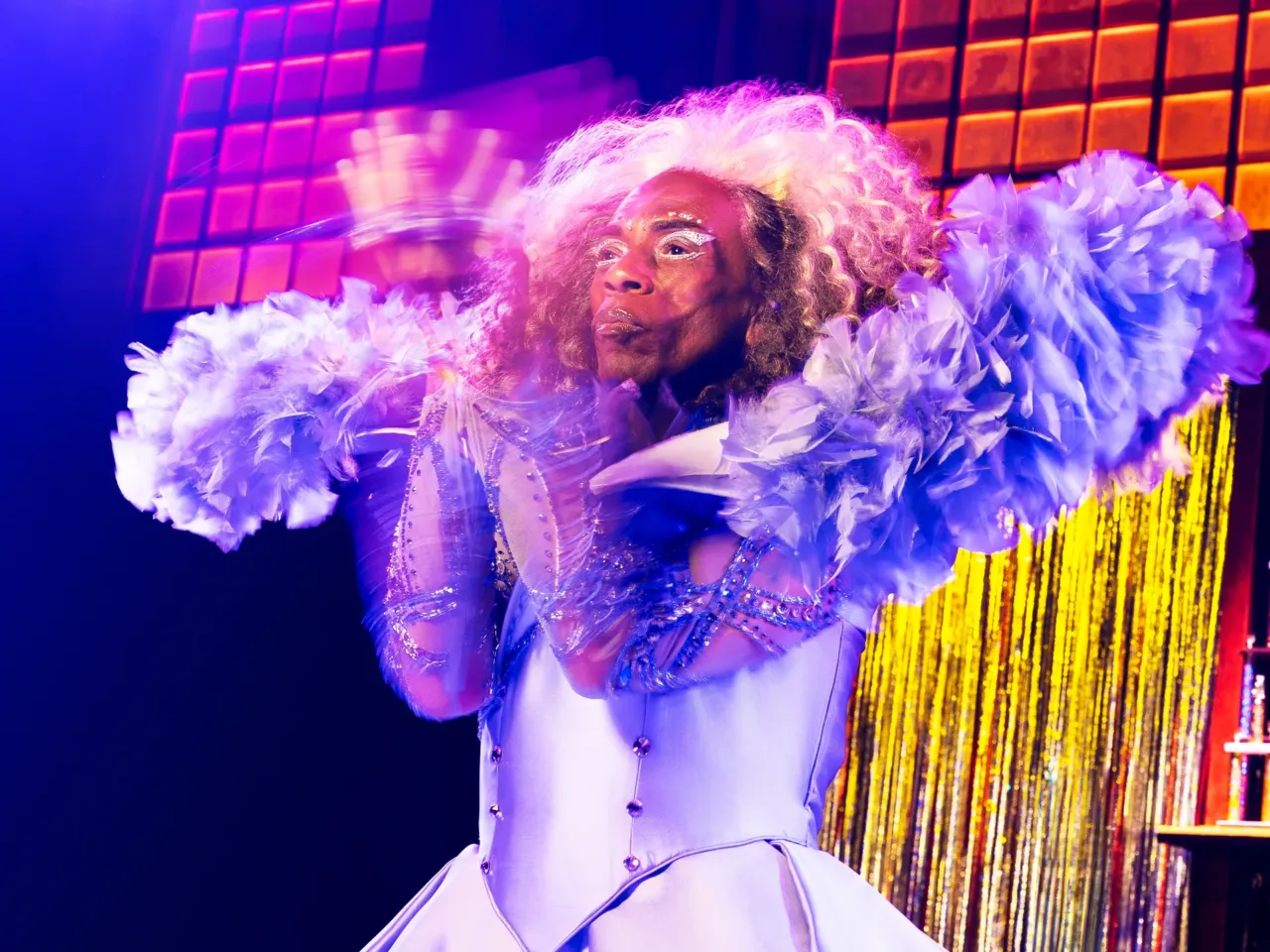
André De Shields stars as Old Deuteronomy in CATS: The Jellicle Ball, a revival of Andrew Lloyd Webber's musical set in Black and Latino LGBTQ+ ballroom culture.
Matthew Murphy and Evan Zimmerman  / MurphyMade
André De Shields stars as Old Deuteronomy in CATS: The Jellicle Ball, a revival of Andrew Lloyd Webber's musical set in Black and Latino LGBTQ+ ballroom culture.

Updated June 02, 2026 at 14:00 PM ET

André De Shields spent half a century on Broadway before winning his first Tony Award at the age of 73.

“Slowly is the fastest way to get to where you want to be,” he said in his 2019 acceptance speech.

Years later, De Shields said many people conflate the meaning.

“Most people misunderstand that and say ‘Slowly is the quickest way to get to where you want to go,'” De Shields told Morning Edition. “That is not what I said, and it’s certainly not what I meant. I remember when fast meant dependable, meant secure. That’s what I’m talking about.”

Now, at 80, De Shields is nominated for another Tony, this time for his role as Old Deuteronomy, a character from CATS: The Jellicle Ball.

T.S. Eliot’s Old Possum’s Book of Practical Cats describes Old Deuteronomy as a cat who has lived many lives. De Shields says he relates to the character in this ballroom-inspired adaptation of Eliot’s work.

“On January 12th, 2026, I reached 80 years,” De Shields said. “I embrace that in terms of the Biblical Scriptures in which it is explained that the life of man would be reduced from never death to threescore and ten. That’s 70 years. Any years an individual lives beyond that is a blessing, is a gift, and must be lived in grace. I think it’s perfection that on my 80th birthday I would start rehearsing for CATS: The Jellicle Ball.”

De Shields described the show as “the revolution of the first quarter of the 21st century” that a person must come to experience. He said the musical illustrates the replacement of competition, bitterness and intolerance with love.

“The paradigm is begging to be received, embraced. And we are very close to passing through that threshold,” De Shields said. “This is 2026 and most blatantly illustrated in CATS: the Jellicle Ball is the change that we all have been waiting for.”
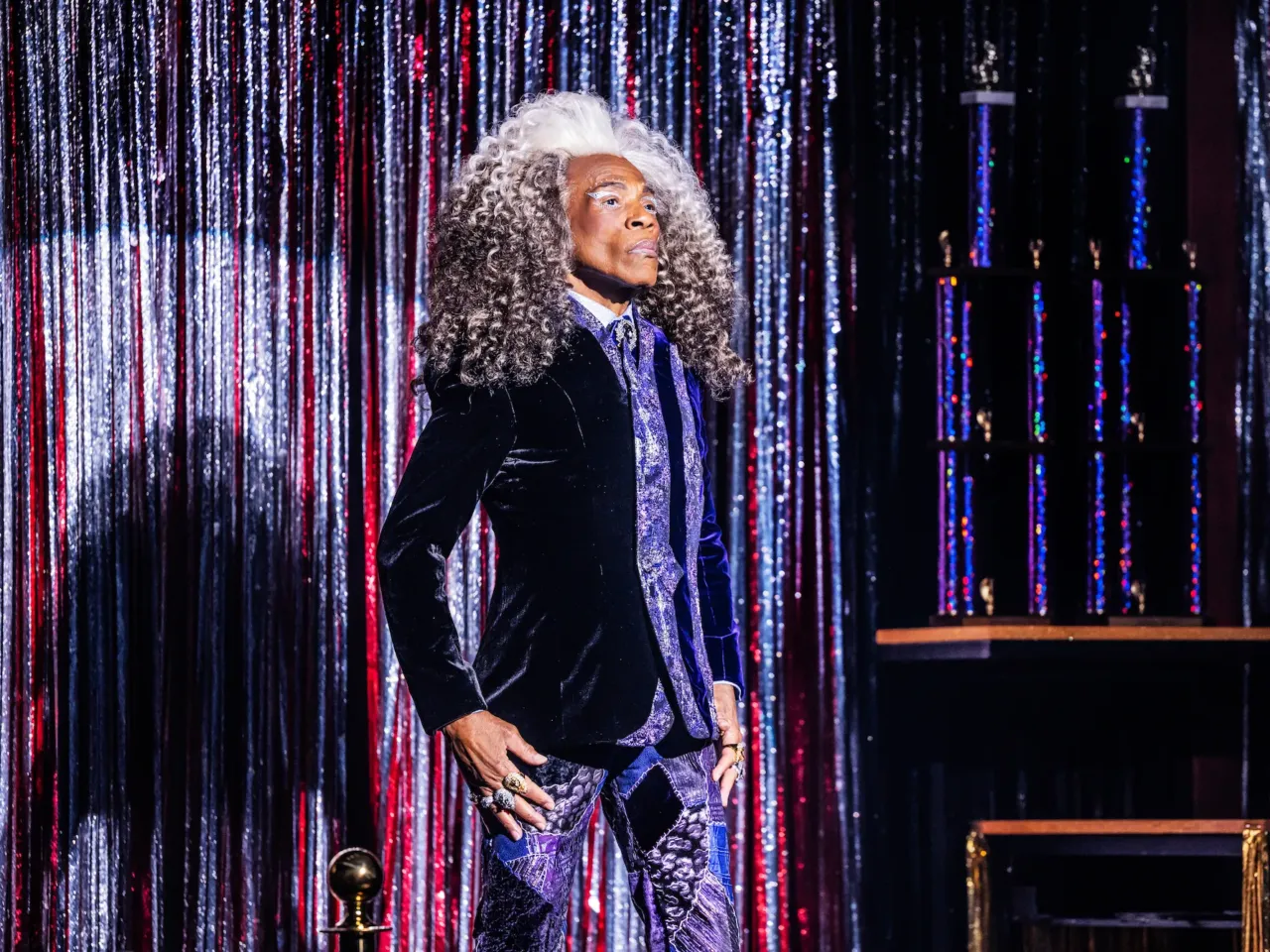
As Old Deuteronomy, De Shields leads the Jellicles as they compete for rebirth in CATS: The Jellicle Ball.
As Old Deuteronomy, De Shields leads the Jellicles as they compete for rebirth in CATS: The Jellicle Ball. Evan Zimmerman / MurphyMade

In this revival, no one is dressed as a cat. The performers vogue and strut down the catwalk, competing in the queer ballroom scene. Old Deuteronomy is the leader of the Jellicles, who are competing for rebirth.

De Shields got his start on Broadway in 1973. He said his journey has been crafted by karma.

“There were moments when I deeply wondered, ‘Why not me?'” De Shields said. “And then I learned another immutable truth. And that is one must not pursue blessings upon which one’s name has not been engraved.”

His routine is discipline.

“My mission is threefold: the first fold of which is to return Black Elegance to the Black Thespians’ toolbox,” De Shields said. “The second part of that mission is to advocate for the senior citizen who wants to continue to be active as an artist. And the third is for those of us who have been forced but blessed to survive HIV for more than 40 years.”

Diagnosed in 1991, De Shields has lived with the disease for decades. He has lost many people in his life, including his partner of 17 years, who died of AIDS.

De Shields said he believes people must not live with the idea that life is short. He wakes up every morning and says “thank you.” He said he isn’t thanking a god or the universe, but rather the cosmos.

“Too many of our species take for granted that we are somehow the paragon of animals,” he said. “We have to restore the ancient and intended relationship that we have with the cosmos. And that is the universe is only exclusively generous and we have to be grateful in return.”

The radio version of this story was edited by Adriana Gallardo. It was edited for digital by Majd Al-Waheidi.

Copyright 2026 NPR

Tags

Steve Inskeep is a host of NPR's Morning Edition, as well as NPR's morning news podcast Up First.

Known for interviews with presidents and Congressional leaders, Inskeep has a passion for stories of the less famous: Pennsylvania truck drivers, Kentucky coal miners, U.S.-Mexico border detainees, Yemeni refugees, California firefighters, American soldiers.

Since joining Morning Edition in 2004, Inskeep has hosted the program from New Orleans, Detroit, San Francisco, Cairo, and Beijing; investigated Iraqi police in Baghdad; and received a Robert F. Kennedy Journalism Award for "The Price of African Oil," on conflict in Nigeria. He has taken listeners on a 2,428-mile journey along the U.S.-Mexico border, and 2,700 miles across North Africa. He is a repeat visitor to Iran and has covered wars in Syria and Yemen.

Inskeep says Morning Edition works to "slow down the news," making sense of fast-moving events. A prime example came during the 2008 Presidential campaign, when Inskeep and NPR's Michele Norris conducted "The York Project," groundbreaking conversations about race, which received an Alfred I. duPont-Columbia University Silver Baton for excellence.

Inskeep was hired by NPR in 1996. His first full-time assignment was the 1996 presidential primary in New Hampshire. He went on to cover the Pentagon, the Senate, and the 2000 presidential campaign of George W. Bush. After the Sept. 11 attacks, he covered the war in Afghanistan, turmoil in Pakistan, and the war in Iraq. In 2003, he received a National Headliner Award for investigating a military raid gone wrong in Afghanistan. He has twice been part of NPR News teams awarded the Alfred I. duPont-Columbia University Silver Baton for coverage of Iraq.

On days of bad news, Inskeep is inspired by the Langston Hughes book, Laughing to Keep From Crying. Of hosting Morning Edition during the 2008 financial crisis and Great Recession, he told Nuvo magazine when "the whole world seemed to be falling apart, it was especially important for me ... to be amused, even if I had to be cynically amused, about the things that were going wrong. Laughter is a sign that you're not defeated."

Inskeep is the author of Instant City: Life and Death in Karachi, a 2011 book on one of the world's great megacities. He is also author of Jacksonland, a history of President Andrew Jackson's long-running conflict with John Ross, a Cherokee chief who resisted the removal of Indians from the eastern United States in the 1830s.

He has been a guest on numerous TV programs including ABC's This Week, NBC's Meet the Press, MSNBC's Andrea Mitchell Reports, CNN's Inside Politics and the PBS Newshour. He has written for publications including The New York Times, Washington Post, the Wall Street Journal, and The Atlantic.

A native of Carmel, Indiana, Inskeep is a graduate of Morehead State University in Kentucky.

Related Stories