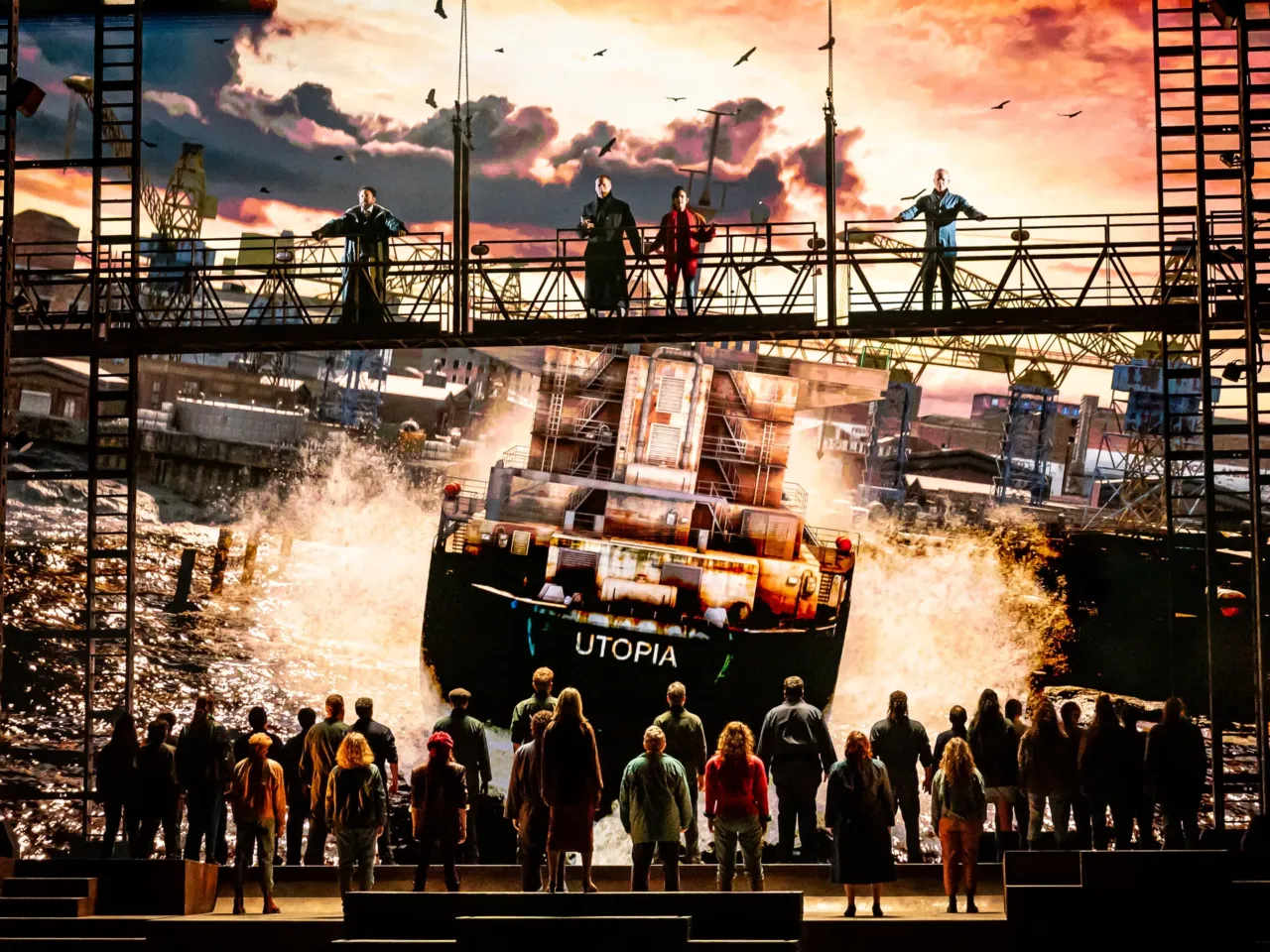
When he talks about his childhood, Sting is quick to say he grew up in the shadow of a shipyard in northeastern England.
“My earliest memories are of seeing a giant ship blocking the sun at the end of the street, thousands of men and women walking to work every morning in this dark, frightening, noisy, hellish place with a terrible health and safety record, a very dangerous place,” he told Morning Edition host Leila Fadel. “I would think as a kid, is this my destiny?”
That question and that place are at the heart of The Last Ship, which next week becomes the first musical to be staged at New York’s Metropolitan Opera, June 9-14. Following previous European and Australian stops, the show next tours in Amsterdam and London starting in late August.
When it opened on Broadway in 2014, the musical fared poorly at the box office and got sharp reviews. In the renewed version, Sting plays a lead role as foreman Jackie White, singing in his now raspy voice. He’s joined on stage by his frequent collaborator and reggae star Shaggy.
“My grandfather had been a shipwright. My father was a lathe worker,” Sting recalled, saying the character of White was largely inspired by his father. “I did everything in my power to escape this life.”
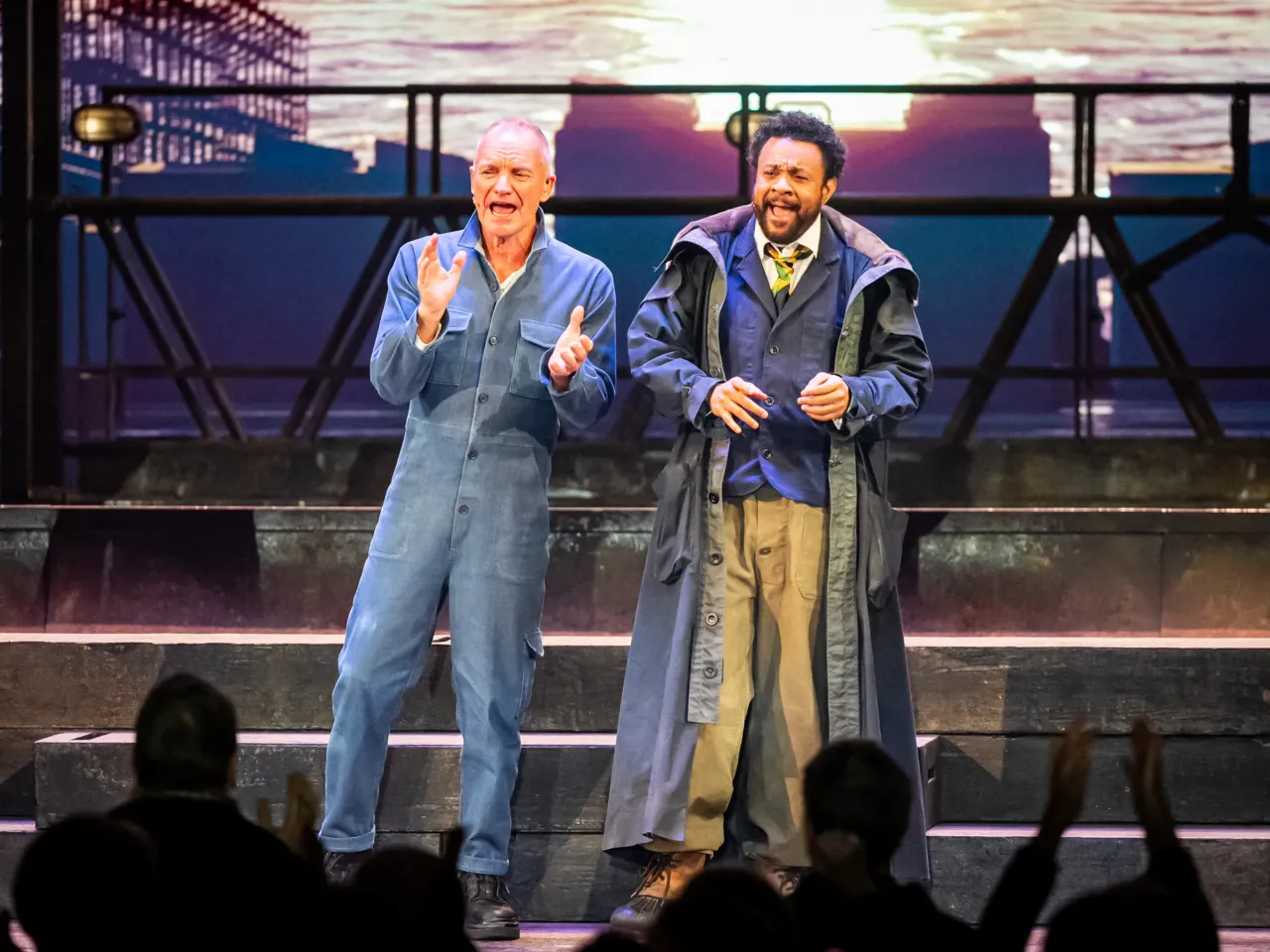
Much of the music and lyrics are based on the 17-time Grammy winner’s 1991 album The Soul Cages, weaving elements of his family’s story through ballads, Celtic folk music and the kinds of classic musical recordings his mother collected.
“We had the records of Rodgers and Hammerstein, Lerner and Loewe, and I loved those records as a kid,” Sting said. “So some of the music will have been ripped off from Richard Rodgers.”
The ship that the crew launches at the end of the musical stands for something greater. “It’s the ship of my childhood,” Sting said. “It’s the ship of my life.”
The rock star said he feels ideally suited to tell this story because he is from the community and yet feels outside of it.
That place is Wallsend, so named because it sits at the eastern end of Hadrian’s Wall, the largest Roman archeological element in Britain. When he returned there in 1990, Sting found the shipyard was closing down just as his parents were both dying.
“So it seemed like a metaphor… the death of the industry, which has sustained that community and the death of my parents seemed to be inextricably linked,” Sting said. “I’m still mourning them, but hopefully telling an uplifting story from that tragedy.”
The loss of manual, physically demanding jobs and the shift toward more sedentary lifestyles drives up toxic traits of masculinity today, according to the musician.
“I have workers’ hands,” Sting said. “They’re strong hands. I play the bass, I play the piano, I play the guitar. I’m lucky to do that. I think modern men are robbed of that attribute that we have the strength of our hands. I think that robs us of agency and I think that’s dangerous for us.”
Toward the end of the show, the shipbuilders launch a ship. “At the same time, they could look back on something that they’d built with their hands and that the pride in the whole community for those ships that they built was palpable,” Sting said. “When they were launched, it feels like the end of the world.”
He got a scholarship to study Latin, history and philosophy. “They tried to make me a gentleman, but that was only half successful,” he quipped. Years later, he became the frontman and bassist of The Police and, after they disbanded, launched a solo career.
“At one point in my life, I thought I owe a massive amount to the environment, to the surreal industrial environment I was brought up in,” Sting said. “Because it was so rich and powerful symbolism. The giant ships, the river, the sea, the church I was born next to. All of those were powerful symbols that were a gift to any kind of writer or songwriter.”
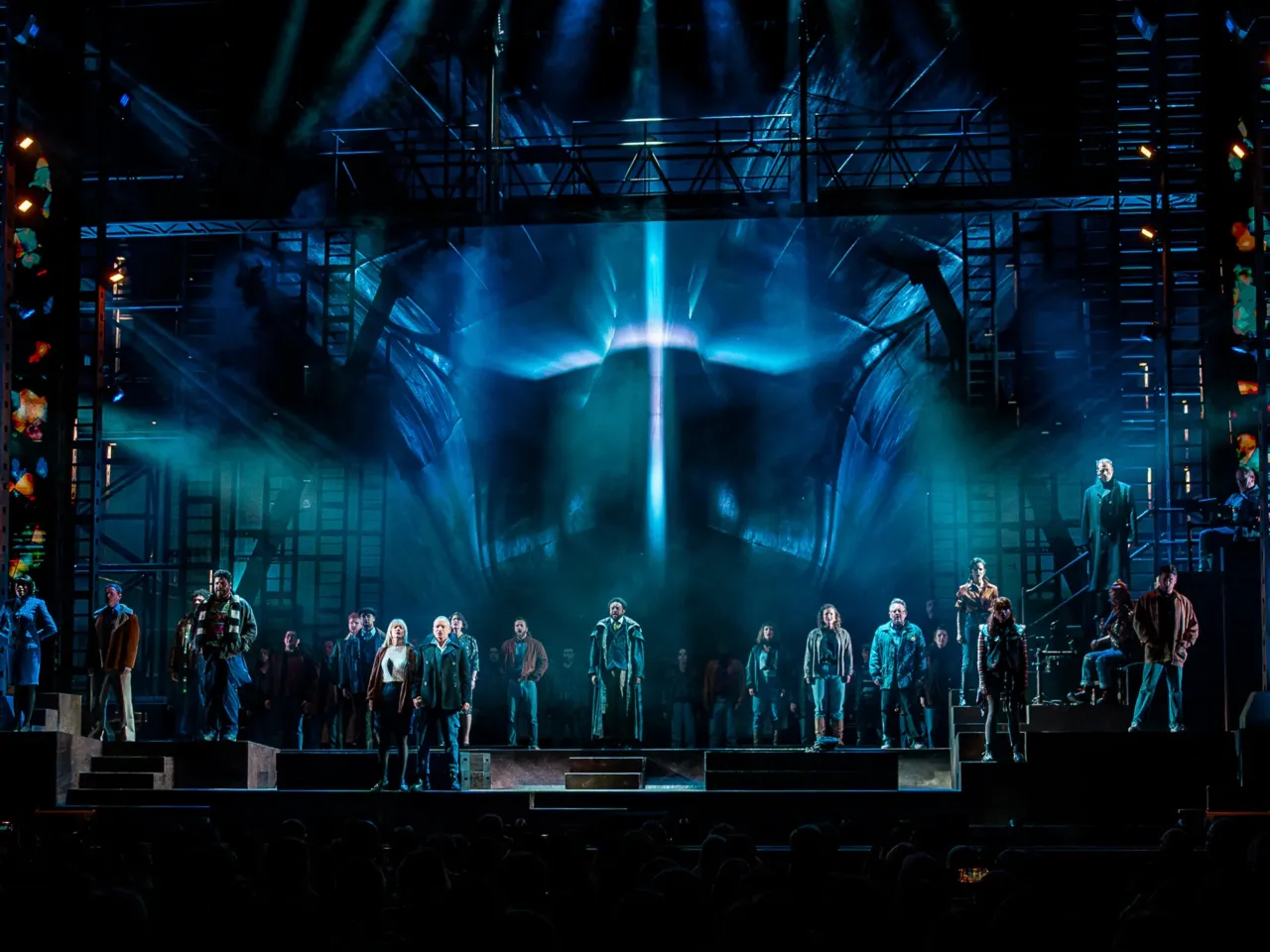
Despite the musical’s struggles in its first iteration, Sting expressed confidence about this version, which features a new book, sets and director. He is singing a leading role in all performances rather than making only select appearances.
“I never conflate commercial success or failure with excellence or, you know, inefficiency,” he said. “It takes a while for a play to find its audience, to find its voice, to find itself,” Sting said. “It’s never finished. I think it gets better every time we perform it.”
Copyright 2026 NPR