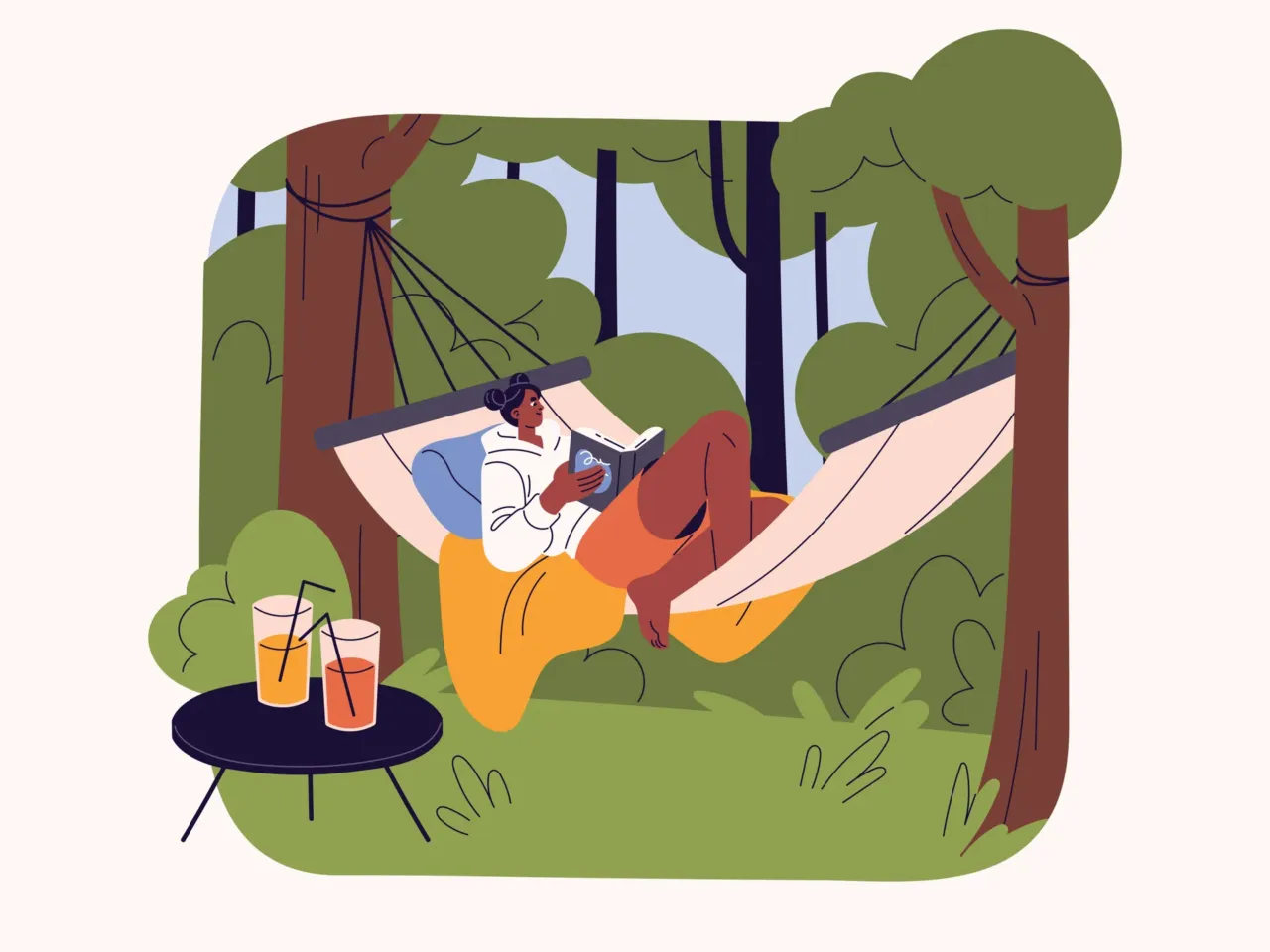
I have this daydream where I go to the park and read under a tree. The sun is shining. It’s not too hot. The ground beneath me is comfortable. I have snacks on hand, I’m hydrated, and I am captivated by the book in front of me.
The problem is it doesn’t usually pan out like this. Two minutes in, I’m sweating, my butt hurts from sitting on tree roots, I realize I forgot the snacks and I can’t focus. So I close the book, go home and turn on the TV.
Perhaps you’ve had the same experience. We think reading should feel romantic, like this landmark event in our day.
“But if you wait for all those moments, you’re never going to finish a book,” says Kevin Nguyen. He’s the author of My Documents and New Waves, and is a reading evangelist. In 2017, he wrote a popular article for GQ magazine titled “How to read a whole damn book every week.”
The point here? Allow yourself to read whenever, wherever.
There’s a lot more you can do to start or restart a reading habit. A neuroscientist, the organizer of a children’s book festival and the host of a book podcast share their best advice.
Look for smaller opportunities to read throughout the day
Standing on the train platform? There’s a few minutes to read. In a long line for lunch? You can get a few pages in! Read when you’re early to school pickup or when you’re waiting for your clothes to be done at the laundromat.
Don’t forget your commute, Nguyen says. “You’re driving to work? It’s audiobook time. You get on the subway? It’s time to open the book, not play videogames on your phone or listen to a podcast.”
Keep your books within reach
Put books all over the place and always have one with you, and “pretty soon you’ll pick one up and start reading,” says Juanita Giles, executive director of the Virginia Children’s Book Festival.
“I have an upstairs book and a downstairs book and a car book and a bathroom book and a bathtub book,” she says.
Opt for the paper version to minimize distractions
This is a tip from Maryanne Wolf, a cognitive neuroscientist at the University of California, Los Angeles, and the author of Reader, Come Home: The Reading Brain In A Digital World.
When you read on your phone, you’re just one moment away from a text, an email or a news alert. Even if you turn those off, you might go looking for other entertainment on your browser or social media, just out of habit.
You also may default to your typical screen behaviors — like skimming for information, which Wolf says “is one of the greatest disruptions of deep reading.” (For more deep reading tips from Wolf, listen to her Life Kit interview here.) So if you’re trying to get back into reading and have the option, choose paper.
Match the book you want to read with the time you have available
Because books have different textures and demand different kinds of attention, it’s smart to read something lighter when you’re at the DMV, for instance.
“Some books can be read quite quickly. Siddhartha can be read a lot faster than Narcissus and Goldmund or poetry,” Wolf says.
It’s OK to stop reading the book if you don’t like it
“If you’re falling asleep, checking your phone or rolling your eyes as you’re reading the sentences, that might be a good sign that you don’t like what you’re reading,” says Traci Thomas, creator and host of the book podcast The Stacks.
“So put the book down. Save yourself. There are too many books in the world to read. That is called ‘cultivating taste,'” she says. (Thomas shares more tips with Life Kit on how to find the perfect book. Listen to the episode here.)
This episode was produced by Sylvie Douglis. The visual editor is CJ Riculan. We’d love to hear from you. Email us at [email protected]. Listen to Life Kit on Apple Podcasts or Spotify, and sign up for our newsletter.
Copyright 2026 NPR