Copyright © 2026 VPM, all rights reserved.
PBS is a 501(c)(3) not-for-profit organization.
VPM News Morning Edition
NEXT UP: 9:00 AM

Thanks to our sponsors – Become a Sponsor

Inside Ebola country: NPR reports from eastern DR Congo’s outbreak zone

AILSA CHANG, HOST:

We’re about to hear the sounds of a city at the center of an Ebola outbreak. That city is Bunia in the Democratic Republic of Congo. The outbreak includes more than 800 confirmed cases and almost 200 deaths. It has been hard for reporters to gain access to Bunia, but Emmet Livingstone and photographer Arsene Mpiana are there for NPR.

EMMET LIVINGSTONE: In Bunia, people no longer greet each other with a handshake. Although the streets are lively and most people are carrying on as before, there are moments of discordance. A Jeep packed with health workers in full protective suits and goggles speeds down the road. And within hours of arriving, the scale of the crisis becomes impossible to ignore.

I’m looking at the tiling in front of a shop, which is covered in greenish liquid. A disinfectant team has just turned up and taken a body away. According to the story that locals are telling, it was an ill patient who was on the back of a motorbike being transported to hospital who projectile vomited and then died on the spot.

Fear is creeping into everyday life, and hospitals, for the most part, aren’t considered safe.

I’m here in a hospital called Clinique Universelle. It’s been completely shut down because just a few days ago, a patient was discovered to have had Ebola. Now a full disinfection team has been deployed. And I’m standing in front of a team of three women who are preparing large basins of chlorine solution. This is then going to be taken by another team and going to be sprayed on every single surface of this hospital.

We were inside for only a few minutes. Health workers recommended we leave, saying it wasn’t worth the risk. The hospital director is Dr. Patient Mazirane (ph).

PATIENT MAZIRANE: (Non-English language spoken).

LIVINGSTONE: He says, “doctors are not just afraid, they’re very afraid. There isn’t enough protective equipment.” So far, there are only a handful of places where Ebola patients are being treated at the recommended standards. One of them is in Rwampara, just outside of Bunia.

(SOUNDBITE OF BEEPING)

LIVINGSTONE: Eighteen patients with confirmed infections are receiving care here.

I’m here in Rwampara Ebola Treatment Center, and I’m in an Ebola ward with doctors going from isolated room to isolated room checking on Ebola patients. All of us are in full protective gear, which includes a bib, two layers of clothing, several layers of gloves, goggles, a mask. It’s difficult to describe the level of discomfort wearing one of these suits. It’s very hot in Ituri. The sun is bright. It’s very difficult to breathe inside the suit, and on top of that, the goggles fog up, so it’s also difficult to see. These are the conditions under which doctors have to work.

(SOUNDBITE OF COUGHING)

LIVINGSTONE: The Ebola patients themselves, some of them appear to be in a great deal of pain. We heard some people crying out. The doctors said that at a certain stage of the Ebola virus disease, the whole body aches, and it’s extremely painful.

Emergency health workers say this patient is severely ill and needs a respirator. It’s been ordered but hasn’t yet arrived. Dr. Richard Kojan is a specialist in critical care and emerging infectious disease.

RICHARD KOJAN: (Non-English language spoken).

LIVINGSTONE: Dr. Kojan says what patients are going through is extremely difficult. The species of Ebola virus circulating has no vaccine. But with proper care, the disease is not necessarily a death sentence, and there are glimmers of hope. In Rwampara, about a dozen patients are on their way to making a full recovery. The outbreak was caught late, which is causing much of the suffering here. Health workers are desperately trying to catch up. For NPR News, I’m Emmet Livingstone in Bunia.

(SOUNDBITE OF DEBBIE SONG, “COUSIN’S CAR (FEAT. BERWYN)”) Transcript provided by NPR, Copyright NPR.

NPR transcripts are created on a rush deadline by an NPR contractor. This text may not be in its final form and may be updated or revised in the future. Accuracy and availability may vary. The authoritative record of NPR’s programming is the audio record.
Tags

Inside Ebola country: NPR reports from eastern DR Congo’s outbreak zone

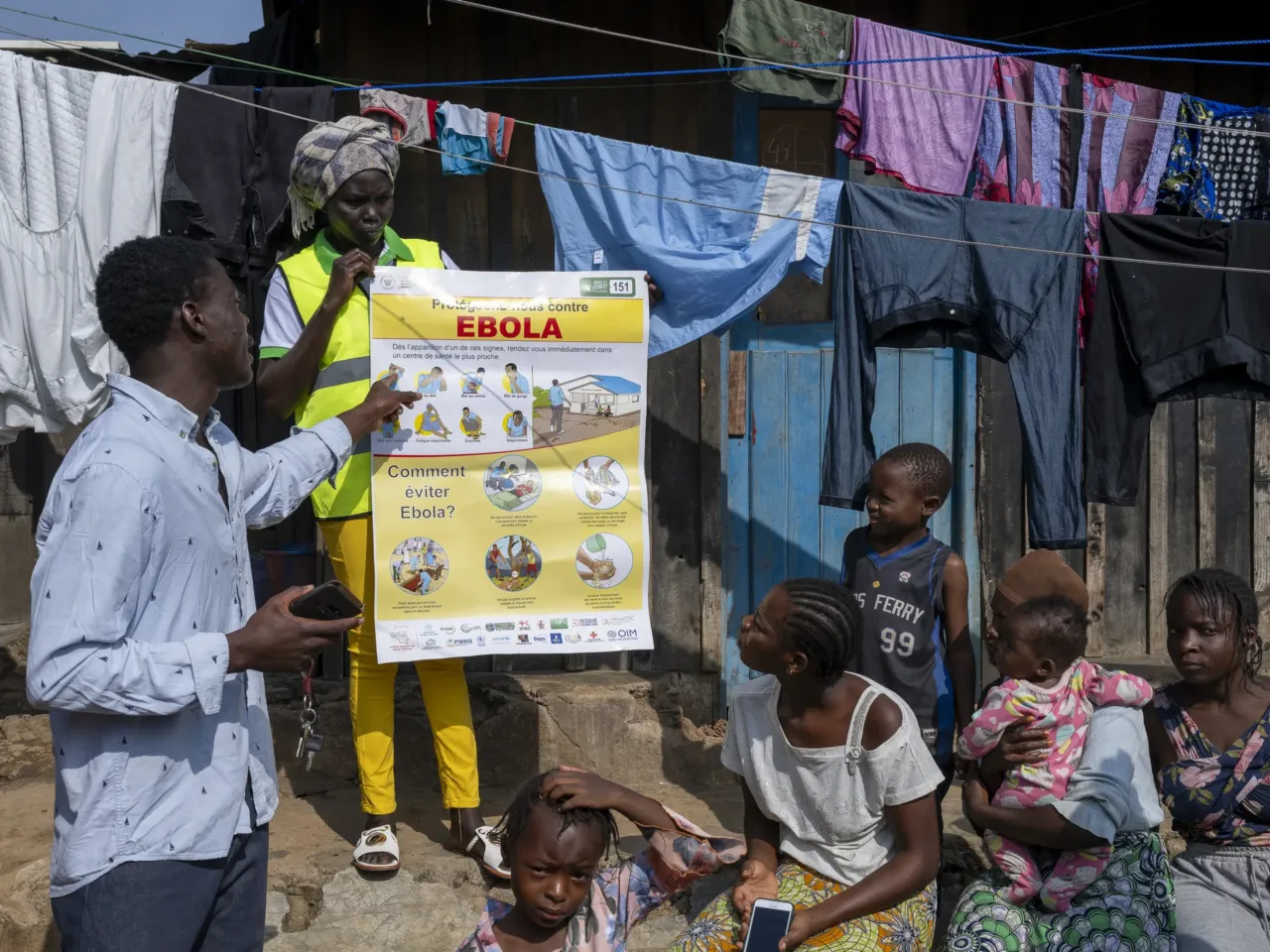
Eliezer Kasongo, president of REMEDE Bunia, raises awareness among residents about Ebola prevention measures during a community outreach event on Ebola Awareness Day in Bunia, Ituri Province, Democratic Republic of the Congo.
Arsène Mpiana Monkwe for NPR
Eliezer Kasongo, president of REMEDE Bunia, raises awareness among residents about Ebola prevention measures during a community outreach event on Ebola Awareness Day in Bunia, Ituri Province, Democratic Republic of the Congo.

Updated June 15, 2026 at 05:01 AM ET

BUNIA, Democratic Republic of Congo Eliezer Kasongo thought the Ebola epidemic would blow over in a few weeks.

Then the crisis began to unfold before his eyes.

“We started to see people die in the neighbourhood and we began to understand,” said Kasongo, a community volunteer in Bunia, the capital of Ituri province, in eastern Democratic Republic of Congo.

Despite once being a doubter, the 25-year-old now spends his days going door to door to try to raise awareness about the disease.

Ituri is the epicenter of Congo’s Ebola outbreak, which the government declared officially on May 15. The virus had likely been circulating for weeks before then, with cases clustered in a remote mining town called Mongbwalu.

Official figures show there are now 782 confirmed Ebola cases in eastern Congo as of June 13, and 181 confirmed deaths. Those numbers are an underestimate, according to health and aid officials, who point to testing delays as well as unnoticed deaths in villages and far-flung suburbs.

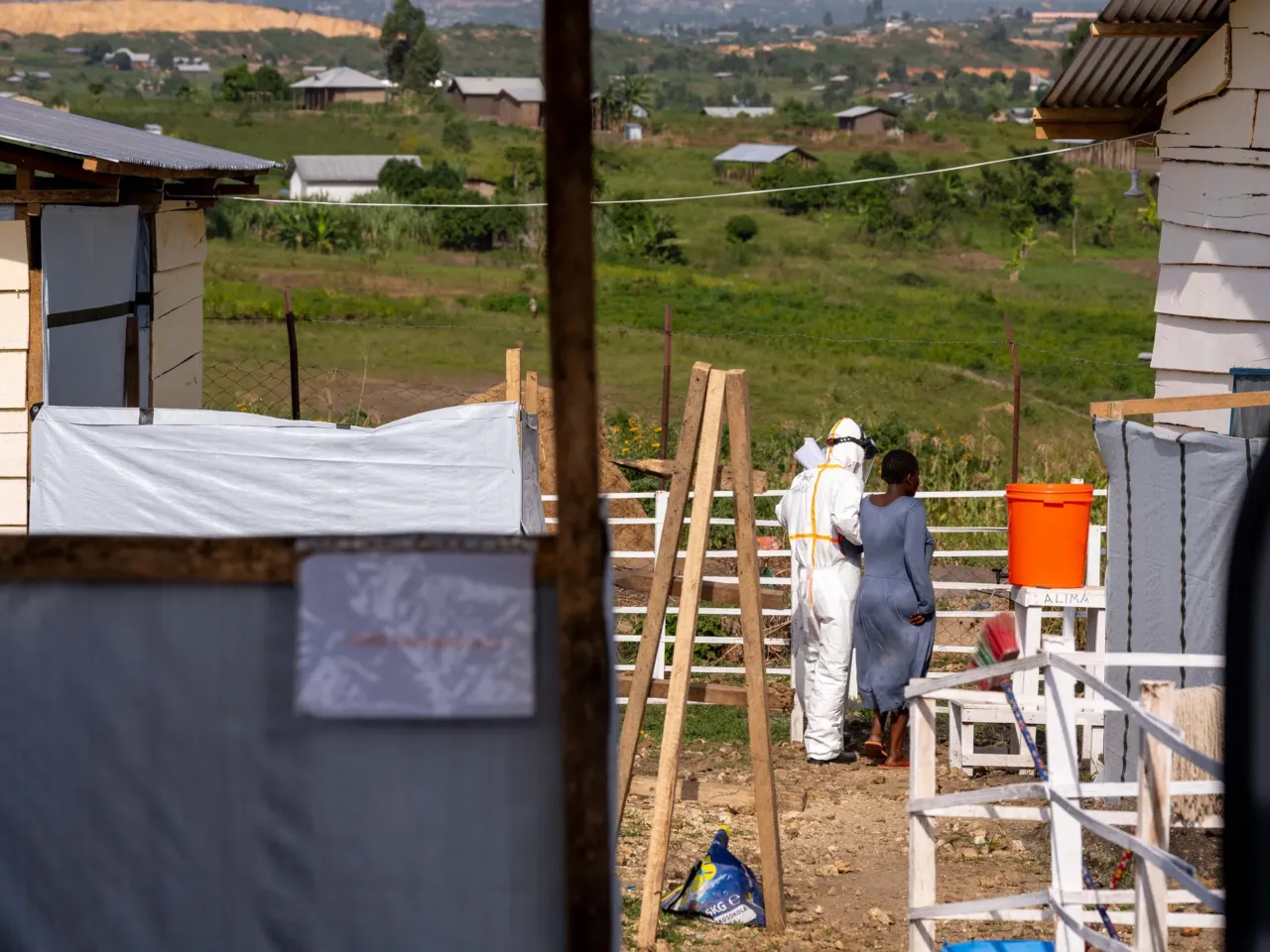
A nurse accompanies a patient inside an isolation unit at the Rwampara Ebola Treatment Center, where Ebola patients are being treated, in Ituri Province, Democratic Republic of the Congo, June 14, 2026.
A nurse accompanies a patient inside an isolation unit at the Rwampara Ebola Treatment Center, where Ebola patients are being treated, in Ituri Province, Democratic Republic of the Congo, June 14, 2026. Arséne Mpiana for NPR /

One month on from the outbreak’s announcement, signs of the Ebola response are everywhere in Bunia. Handwashing stations are ubiquitous and the central square blares announcements telling the people of Ituri not to panic.

A city of over 1 million people, Bunia now has the single largest number of cases — 212 — according to the official figures. Many residents are receptive to advice, according to Kasongo, but he and other volunteers sometimes meet resistance.

“There’s fear,” says Kasongo, “people are dying every day.”

On the day we arrived in the city, a sick man on a motorbike taxi vomited blood on his driver in the center of the city, and then died on the spot. Specialist teams came to retrieve the body and decontaminate the roadside, while his family members stood around and wept.

The driver fled the scene, according to witnesses. The incident underscores the difficulties health workers face in tracking down suspected cases — one of the most critical steps in stopping the spread of the disease.

Only 56% of contacts have been traced so far across the three Congolese provinces with active Ebola transmission, according to the Congolese health ministry. The task is particularly difficult in an environment where armed groups operate, roads are mostly unpaved, and towns and cities are densely populated.

The Democratic Republic of the Congo, despite its vast reserves of copper and cobalt, remains one of the world’s poorest countries. According to the World Bank, more than 85% of the population survives on about $3 a day.

Ituri, like much of eastern Congo, has also been devastated by decades of armed conflict. Its health system is severely underfunded. It is now coming under even more severe strain.

In a Bunia hospital called Clinique Universelle, a decontamination team spent the weekend scrubbing walls with chlorine solution. Several days prior, a patient at the hospital had tested positive for Ebola. The hospital then shut down.

The hospital director, Patient Mazirane, said that he and his colleagues had been working without personal protective equipment (PPE). Aid organizations have airlifted hundreds of metric tons of medicines and PPE to Ituri, but it’s still not enough. Many items, such as protective gloves, have to be changed regularly.

Dr. Mazirane, 38, said he wanted to leave the medical profession: if he dies, no one will look after his children. He says that several medical workers had already died.

“We’re not afraid, we’re very afraid,” he said.

Copyright 2026 NPR

Related Stories
Related Stories