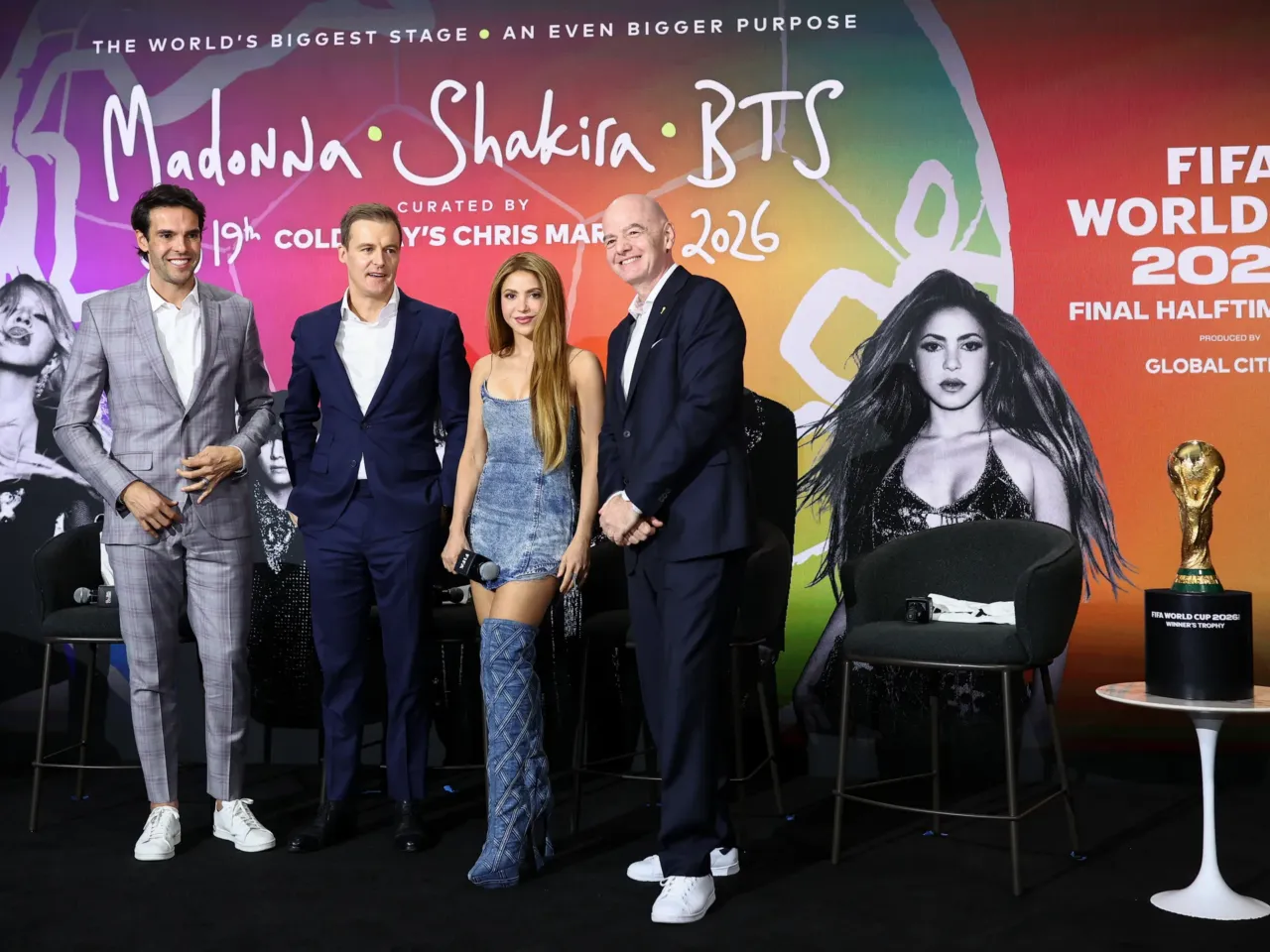
For the first time, the World Cup final will include a halftime show – featuring celebrities from six continents to celebrate the “beautiful game.” The show, which will begin somewhere around 3:45 PM ET, will air in the U.S. on Fox, Fox One and in Spanish on Telemundo, as well as on the Fox Sports app and streaming in Spanish on Peacock. It’s expected to run for about 11 minutes.
With the artists selected by Coldplay frontman Chris Martin, it’s a powerhouse lineup with big mass appeal: Justin Bieber, Madonna (whose new album just debuted at No. 1 on the Billboard 200), Shakira (the undisputed World Cup queen), Burna Boy (who duetted with Shakira on this year’s official World Cup song – and who is one of the most popular African artists of all time), the global sensation BTS, Coldplay (who brought an inspiring backup choir to their Tiny Desk), the eternally lovable Muppets Kermit and Miss Piggy, conductor Gustavo Dudamel with musicians from the New York Philharmonic and the Simon Bolivar Symphony Orchestra of Venezuela, the viral dance troupe Ghetto Kids from Kampala, Uganda, the Iraq-born Australian singer Emmanuel Kelly, and – whew! – the kids from Staten Island’s PS22 Chorus. (How will they all be crammed into an 11-minute spectacle? A fair guess would be lots of arm-in-arm singalongs and Grammy Awards-style mashups aspiring to virality.)
In its press materials, FIFA says that the halftime show will support its charity arm, the FIFA Global Citizen Education Fund, whose goal is to raise $100 million to expand education and soccer access to children worldwide. FIFA says that it’s already raised half that money, including $1 from every ticket sold by FIFA for this Cup – not much of a percentage, considering that FIFA originally put final game tickets on sale for nearly $3,000 for the cheapest seat, and prices have only skyrocketed since.
Soccer is, of course, already the most popular sport in the world; according to the Library of Congress, “estimates suggest that there are over 240 million registered players worldwide with fan participation in the billions.” FIFA has already been boasting about record viewership during the 2026 World Cup. Earlier this month – even before the quarter-final matches had taken place – FIFA had already logged an eye-popping 20 billion video views worldwide across all digital platforms. By contrast, the last Super Bowl attracted some 125.6 million viewers. And it’s worth noting that soccer is gaining in popularity in the U.S.: per a recent survey published by The Economist, Americans now rank it as their third favorite sport, having edged out the all-American pastime of baseball.
Still, FIFA may well have taken a (literally) very valuable page out of the NFL playbook, whether or not they specifically have a U.S. audience in mind: Don’t like or care about (real) football? Here’s an unmissable diversion midway through the match to keep you buzzing about – and your eyeballs focused on – what’s happening on the pitch.
Copyright 2026 NPR