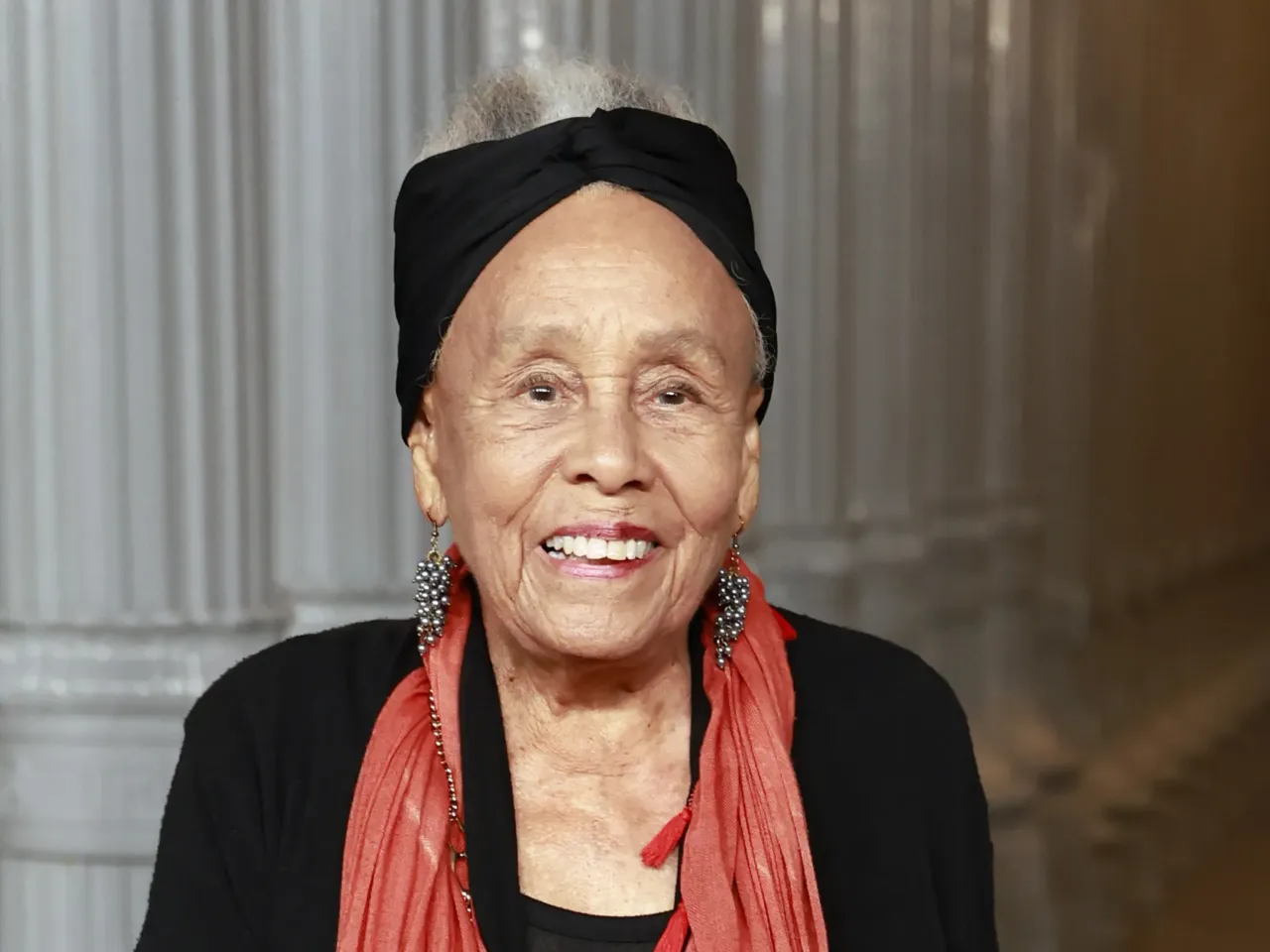
The artist Betye Saar has died. Saar made three-dimensional art with found objects, tackling stereotypes about Black identity and women. Her longtime gallery, Roberts Projects in Los Angeles, said she died in her sleep in Los Angeles on Sunday — just days shy of her 100th birthday.
Saar was already in her mid-40s and the mother of three daughters when she created the artwork that put her on the map.
Her 1972 mixed media artwork “The Liberation of Aunt Jemima” forcefully invokes the worn Black “mammy” tropes of movies, TV shows and ad campaigns. It centers on a grinning “mammy” figure wearing a knotted headscarf and a loud floral dress. Posing against a wall of repeating vintage Aunt Jemima pancake mix labels, she holds a broom in one hand and a rifle in the other.
“It was about the way African American women were treated as a sex object, as a domestic soldier,” Saar told NPR in 2006.
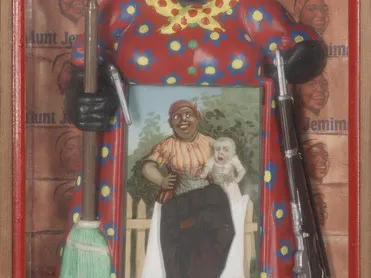
Saar was a defining figure of the Black Arts Movement and a pioneer of assemblage art — the practice of creating 3D artworks using found objects and everyday items. She said “Aunt Jemima,” inspired her to launch a series of works aimed at reclaiming negative images of Black people.
“I’m the kind of person who recycles materials. But I also recycle emotions and feelings,” Saar told NPR. “And I had a great deal of anger about the segregation and the racism in this country. And so this series sort of evolved.”
Museum of Modern Art director Christophe Cherix said he got to know Saar over the last decade. The New York museum hosted a solo show of her work in 2019.”All her life, Betye dismantled racist imagery, transforming it into a monument of black empowerment, resilience and resistance,” Cherix said.
Betye Saar was born in 1926 in the Watts neighborhood of Los Angeles. Her father died when she was five years old. She grew up in Pasadena with her mother, who worked as a seamstress. It was on the many visits to see her grandmother in Watts that Saar said she first encountered real art. She looked on as the artist Simon Rodia assembled his monumental set of sculptures, the “Watts Towers.”
“He had a big car and he would see these piles of rubble and he would go through it,” the artist told NPR of witnessing Rodia at work. “He put these steel structures up and covered them in cement and pressed shards of ceramics, of plates. I’ve seen corn cobs in there. I’ve seen tools. I think that was the beginning of my becoming an assemblagist or a recycler.”
Saar majored in design at the University of California, Los Angeles, and after graduating in 1949, worked as a designer of greetings cards, jewelry and houseware. She then launched her career as a professional printmaker. “Most of the content of my work was mystical: palmistry charts, phrenology, astrological things, signs and symbols,” she said of her printmaking practice in an article for Frieze magazine in 2016.
Since making her name in assemblage art in the 1970s, the artist has been featured in group and solo shows at some of the country’s most prestigious museums, including the Los Angeles County Museum of Art, the Whitney Museum of American Art and the Institute of Contemporary Art, Miami.
Around the time of her 80th birthday 20 years ago, Saar told NPR she stopped thinking of the milestone as a big deal after seeing a spry, 104-year-old woman in a TV commercial. “And I’m saying, ‘now that’s a cool lady!'” Saar joked.
She continued to create art in her home studio well into her late 90s.
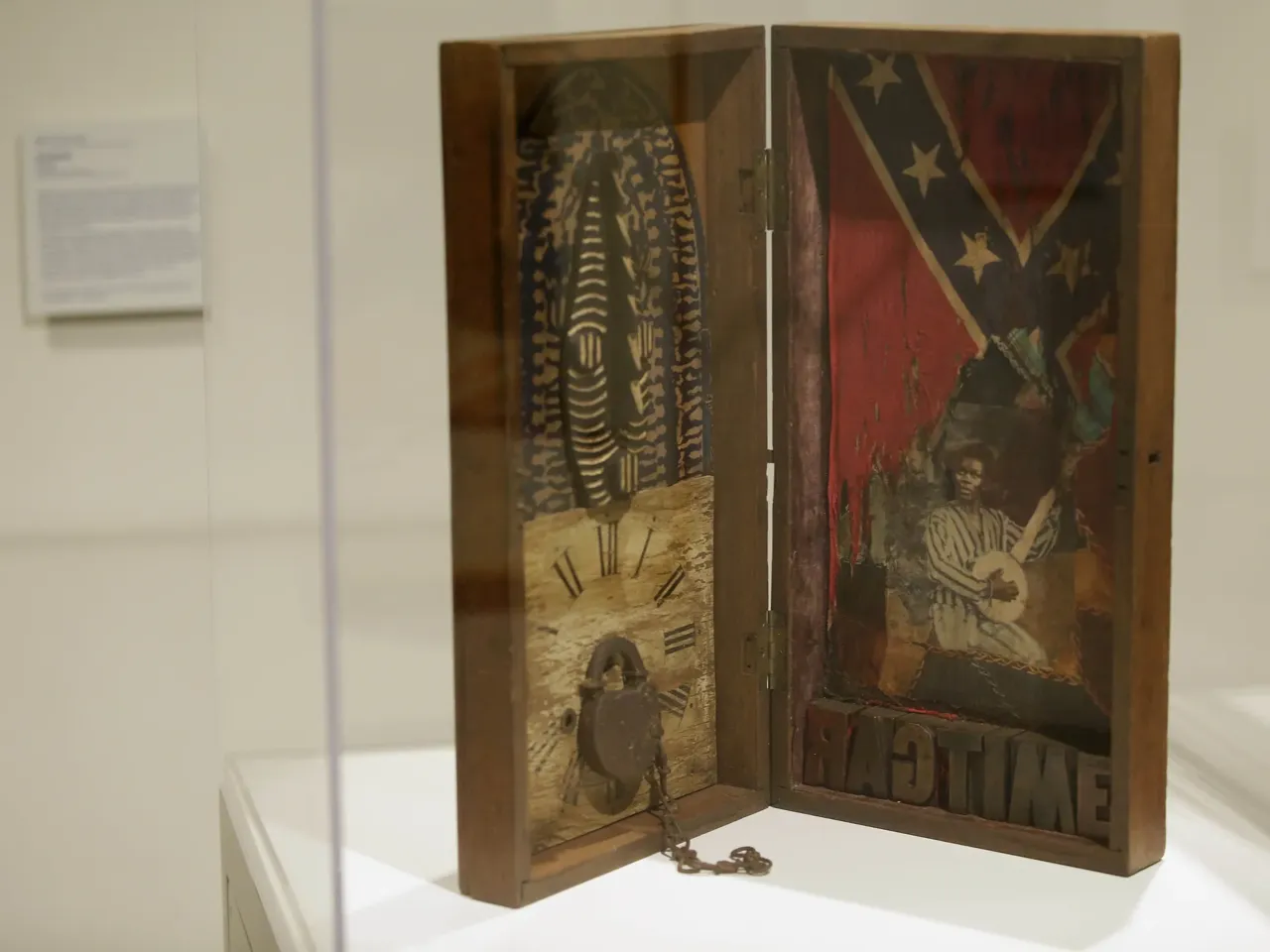
“Visits to her studio were always inspiring,” said Lizzetta LeFalle-Collins, an independent curator who put together several exhibitions of Saar’s works. “Being in her workshop, enjoying a cup of tea surrounded by assemblages of developing or finished pieces, always allowed me to view her work in new ways.”
Multiple exhibitions on display this year are celebrating the artist, including at the New York Historical and the Huntington Library in San Marino, Calif.
“Betye was a true magician,” said Rebecca Klassen, curator of the exhibition “Betye Saar’s Black Dolls” at the New York Historical. “She seemed to suggest through her work that we could all become magicians in our own ways by doing what she did — by looking into the past lives of objects, seeing their energies and working them so that they could construct better futures, better worlds, and mystical imaginations.”
Copyright 2026 NPR