Copyright © 2026 VPM, all rights reserved.
PBS is a 501(c)(3) not-for-profit organization.
VPM News Morning Edition
NEXT UP: 9:00 AM

Thanks to our sponsors – Become a Sponsor

University of Michigan won’t use letter grades for some freshmen next fall

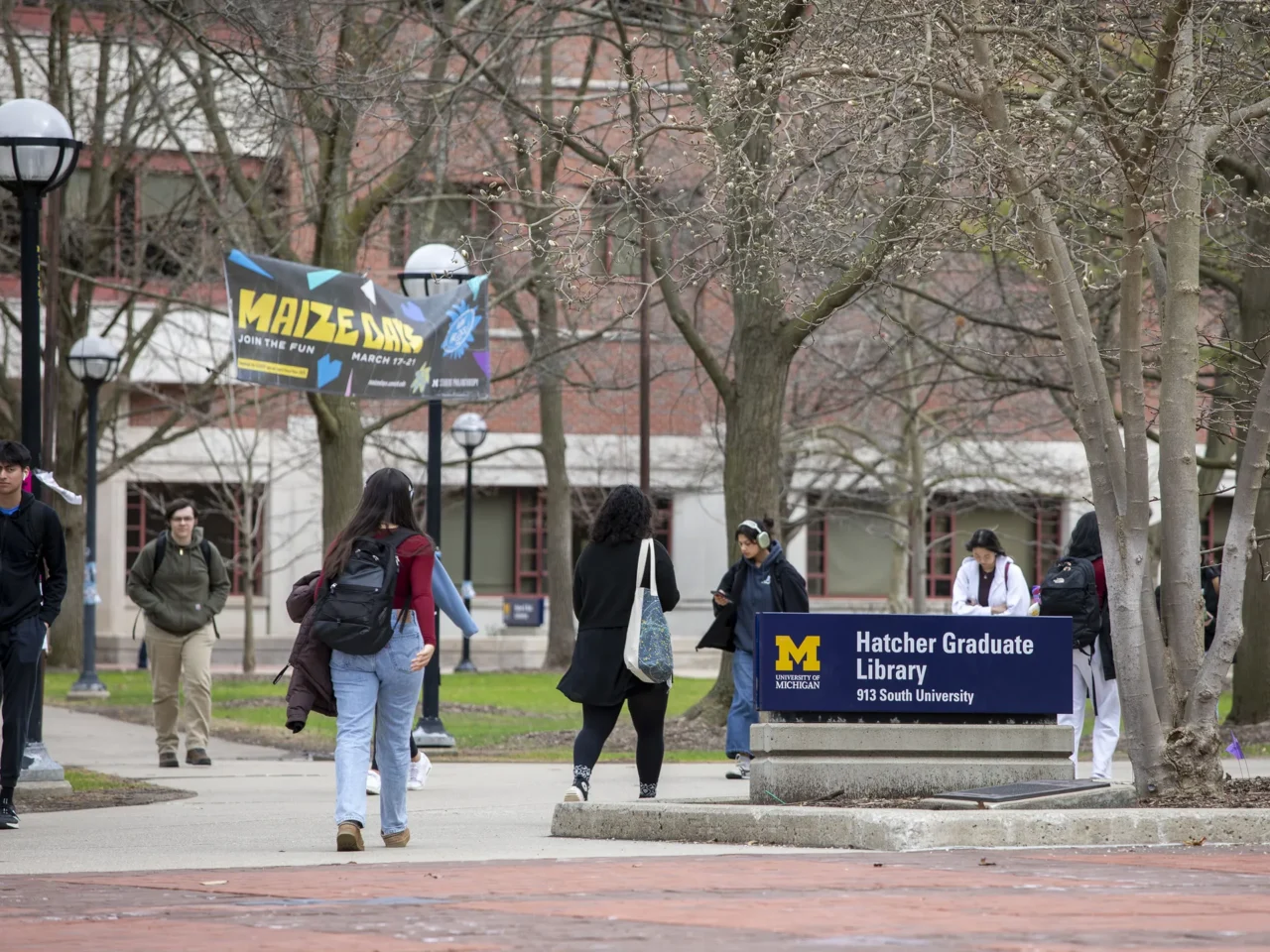
University of Michigan students walk on campus in Ann Arbor, Mich., on April 3, 2025.
Bill Pugliano / Getty Images
University of Michigan students walk on campus in Ann Arbor, Mich., on April 3, 2025.

Updated August 12, 2026 at 10:30 AM ET

The University of Michigan is trying a new approach to curb the mental health crisis among college-age students: covering freshmen’s letter grades during their first semester.

Starting in fall 2027, students entering the university’s College of Literature, Science, and the Arts will receive pass or no-credit marks on their transcripts for the first semester, instead of traditional letter grades. Their actual grades will still be kept internally.

The university says the pilot program is intended to ease academic pressure, helping freshmen adjust to college and helping them “start strong and curb the mental health crisis unfolding among college-aged individuals.”

Shea Vance, a reporting fellow for The Chronicle of Higher Education, told NPR’s Leila Fadel that the university doesn’t want a tough first semester to send students into a spiral — or make them think a C or D has ruined their chances of a good GPA, graduate school or a job.

The university also hopes the policy will encourage students to try harder subjects without worrying as much about grades.

But Vance says some teaching and learning experts worry the change could demotivate freshmen or add to grade inflation. Others see it as part of a bigger question about whether colleges are moving away from grading for excellence and toward grading for competency.

Similar policies exist at a small group of schools, including the Massachusetts Institute of Technology, which has used one for incoming freshmen since 1968.

Listen to the full interview by clicking the play button above.

The digital version of this interview was edited by Suzanne Nuyen.

Copyright 2026 NPR

Leila Fadel is a host of Morning Edition, as well as NPR's morning news podcast Up First.

As a national correspondent, Fadel consistently reported on the fault lines of this divided nation. She flew to Minneapolis in the midst of the pandemic as the city erupted in grief and anger over the killing of George Floyd. She's reported on policing and race, on American Muslim communities and on the jarring inequities the coronavirus laid bare in the healthcare system. Her "Muslims in America: A New Generation" series, in collaboration with National Geographic, won the prestigious Goldziher Prize in 2019.

Previously, she was NPR's international correspondent based in Cairo and covered the wave of revolts in the Middle East and their aftermaths in Libya, Tunisia, Egypt, and beyond. Her stories brought listeners to the heart of a state-ordered massacre of pro-Muslim Brotherhood protesters in Cairo in 2013 when police shot into crowds of people to clear them and killed between 1,000 and 2,000 people. She told the tales of a coup in Egypt and what it is like for a country to go through a military overthrow of an elected government. She covered the fall of Mosul to ISIS in 2014 and documented the harrowing tales of the Yazidi women who were kidnapped and enslaved by the group. Her coverage also included stories of human smugglers in Egypt and the Syrian families desperate and willing to pay to risk their lives and cross a turbulent ocean for Europe.

She was awarded the Lowell Thomas Award from the Overseas Press Club for her coverage of the 2013 coup in Egypt and the toll it took on the country and Egyptian families. In 2017 she earned a Gracie award for the story of a single mother in Tunisia whose two eldest daughters were brainwashed and joined ISIS. The mother was fighting to make sure it didn't happen to her younger girls.

Before joining NPR, Fadel covered the Middle East for The Washington Post as the Cairo Bureau Chief. Prior to her position as Cairo Bureau Chief for the Post, she covered the Iraq war for nearly five years with Knight Ridder, McClatchy Newspapers, and later the Washington Post. Her foreign coverage of the devastating human toll of the Iraq war earned her the George. R. Polk award in 2007. In 2016 she was the Council on Foreign Relations Edward R. Murrow fellow.

Fadel is a Lebanese-American journalist who speaks conversational Arabic and was raised in Saudi Arabia and Lebanon.

Related Stories