Loading…
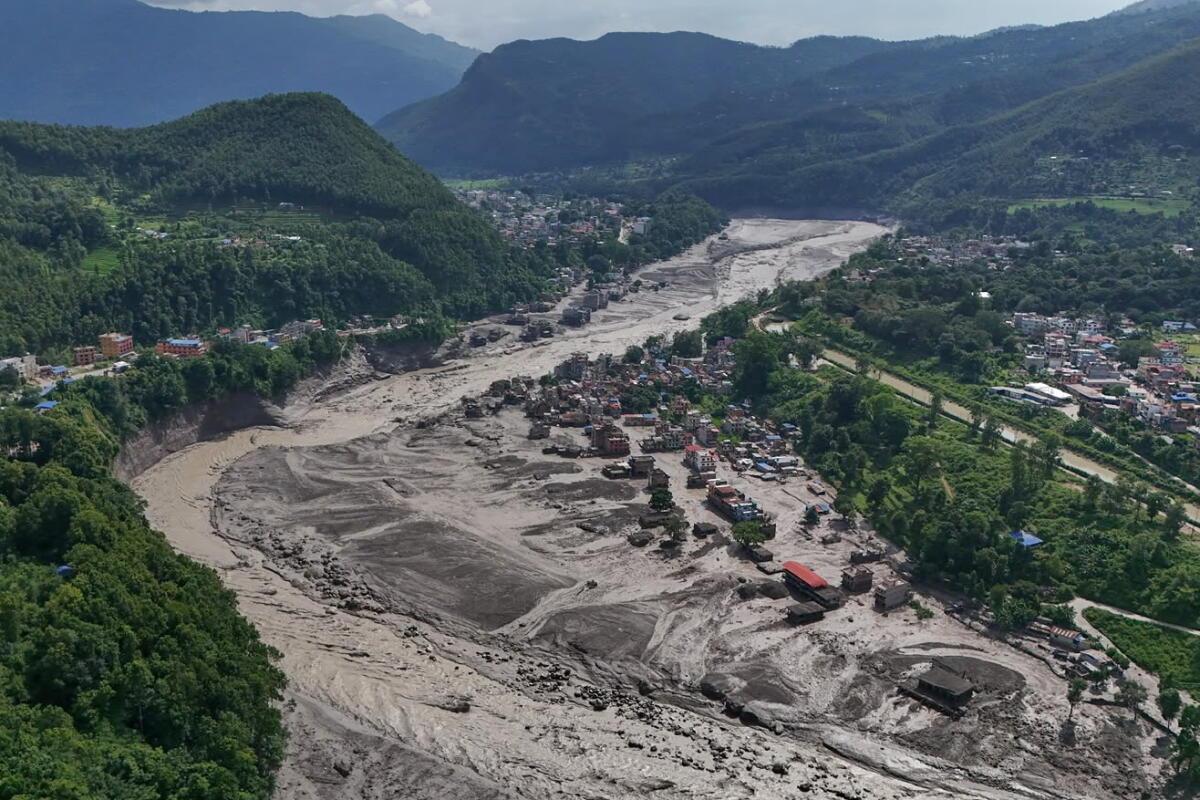
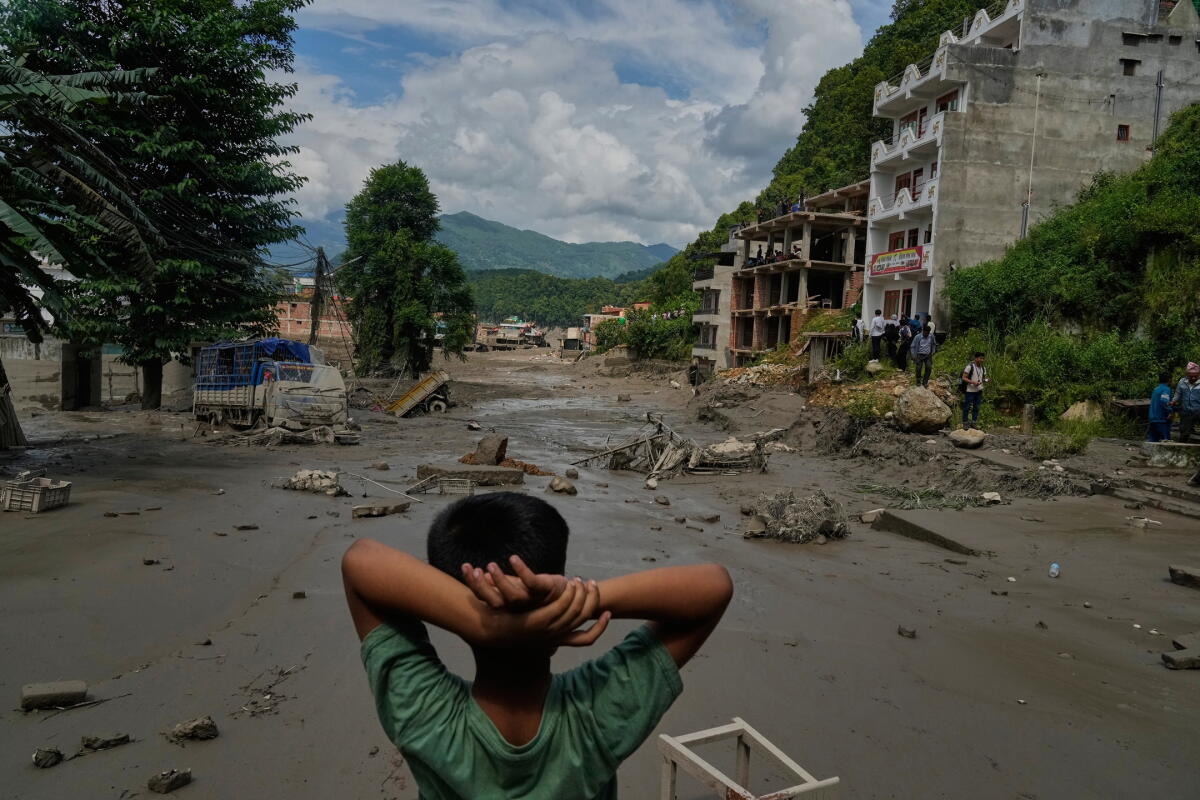
More than a thousand people are missing and at least 400 people are dead after flash flooding tore through Nepal and Tibet early Wednesday. According to initial assessments, a massive chunk of ice snapped off a glacier and tumbled thousands of feet into the valley below. Rock, ice and mud plunged down for miles, washing away communities along the river.
Scientists say glaciers in this region, and around the world, are increasingly unstable because of human-caused global warming. Across the mountains of Nepal and Tibet, climate change is causing glaciers to melt at an alarming rate.
Planet-heating emissions from burning fossil fuels such as oil, gas and coal are the primary driver of climate change. Scientists say that in addition to reducing climate pollution, renewable energy and battery technologies are increasingly price competitive with traditional energy sources.
“There’s no question that this event was made more likely because of climate change and that we’re seeing more likely other similar glacier hazards occurring,” says Twila Moon, deputy lead scientist at the National Snow and Ice Data Center at the University of Colorado Boulder.
Footage from the Chinese-administered Tibet side of the border with Nepal shared on local media showed a massive gush of water sweeping over a port building as people fled.
Loading…
As the water barrelled down, residents filmed it sweeping away a bridge and washing away riverside settlements.
The flooding was made more severe because it happened during the heavy rains of the monsoon season, says Mohammad Farooq Azam, an expert at ICIMOD, an environmental advocacy group that focuses on Asia’s high mountains. “Everything is fully saturated already,” Azam said. “The rivers are swollen.”
This flood is part of a trend, said Arun Bhakta Shrestha, an expert on climate change and the Himalayan glaciers.
“If you look at the whole Hindu Kush Himalayan region,” he said, “it seems like the frequency, the types of those hazards are increasing.” Shrestha said everything points to climate change as the reason.
The world will see “more and more events like this,” says Alton Byers, a faculty research scientist at the Institute of Arctic and Alpine Research at the University of Colorado Boulder. “Things are getting warmer,” he says.
Permafrost on the mountains, the continuously frozen soil and sediment, is now changing, said Byers. He uses the analogy of a stick of butter left out of the refrigerator. “It’s going to get softer,” he says. “And it’s going to lose its structural integrity.”
Preliminary reports indicate that Nepal’s flood warning system wasn’t equipped to handle these floods. That’s despite significant government investment in flood warning systems over the last decade in Nepal. Many flood-prone valleys in the country have warning alarms, but as NPR has reported, the government has struggled to keep up with the cost of maintaining the systems.
NPR’s Rebecca Hersher contributed to this reporting.
Transcript:
AILSA CHANG, HOST:
Now, these deadly flash floods on the border of Nepal and Chinese-administered Tibet are not a surprise to many climate scientists. NPR’s Julia Simon joins us now to explain why. Hi, Julia.
JULIA SIMON, BYLINE: Hello, Ailsa.
CHANG: So the way I understand it, this flooding – it came from a glacier – right? – that collapsed. Is that correct?
SIMON: Yeah. So the reports are still preliminary, but many scientists think this was a glacier collapsing – this giant chunk of ice that snapped off triggering the floods. This mass of ice and rock and mud and water – it started ripping down this Himalayan river valley, down through these villages, destroying communities. If you’ve seen the videos, you can see it’s this avalanche of deadly debris.
CHANG: Yeah. And I mean, these glaciers, they’ve been around for thousands of years, right? So…
SIMON: Right.
CHANG: …To have a chunk of glacier just snap off now seems like a huge deal.
SIMON: It does. But sadly, many scientists are not so surprised that this could happen, Ailsa, and that’s because of human-caused climate change. These glaciers that were once stable, they’re disappearing. NPR has been reporting on Nepal’s glaciers for years. A team from NPR traveled to Nepal in 2022. They were climbing up a moraine. That’s a massive pile of boulders created by a glacier. But when NPR’s Rebecca Hersher got to the top, there was no glacier in sight.
(SOUNDBITE OF ARCHIVED NPR CONTENT)
REBECCA HERSHER: Oh, wow.
(SOUNDBITE OF WATER SPLASHING)
SIMON: That’s the sound of water. There was only water – this huge lake – where a glacier should have been, Ailsa. The glacier had melted, and glacial lake floods are a growing threat. In recent years, multiple glacial lake floods have displaced and killed people. Scientists warn that an estimated 15 million people around the world are at risk from such floods.
CHANG: Wow. So just how unstable are these melting glaciers?
SIMON: Yeah. So NPR spoke with Alton Byers about this. He’s at the Institute of Arctic and Alpine Research at the University of Colorado at Boulder. He says he’s surprised how fast the permafrost – that’s the continuously frozen ice, soil and rock that’s held the mountains together for millennia – it’s now changing.
ALTON BYERS: The analogy I and my colleagues use is take a stick of butter out of the refrigerator and put it on the counter. It’s going to get softer, and it’s going to lose its structural integrity.
SIMON: Yeah. So these melting glaciers – they pose deadly risks to the communities in their path.
CHANG: I mean, we’re seeing it right now. So what are…
SIMON: Yeah.
CHANG: …Some solutions here to prevent the kind of disaster that we are seeing in Nepal, for example – a disaster that is caused by melting glaciers?
SIMON: Well, the first thing is better alert systems. It seems right now, like Nepal’s flood warning system wasn’t equipped to handle this, despite quite a bit of investment in those warning systems over the last decade or so. And it’s important to mention this area has seen flash floods before. But we also know the primary driver of global warming is the burning of fossil fuels, like oil, gas and coal. The solutions to transition away from fossil fuels are out there, Ailsa. They are scalable. They’re affordable. They’re reliable. They include solar energy, wind energy and batteries.
CHANG: That is NPR climate and energy correspondent, Julia Simon. Thank you, Julia.
SIMON: Thank you, Ailsa.