As a kid in the Smoky Mountains of East Tennessee, Dolly Parton always had what she called “a country girl’s idea of what glamour was.”
In her 2001 appearance on Fresh Air, Parton told Terry Gross about a woman in her hometown who wore bright red lipstick and had peroxide-blonde hair piled atop her head. Though her mother dismissed the woman as “trash,” to Parton’s young eyes, she was the epitome of beauty.
“I thought, ‘Ooh, that’s what I want to be when I grow up — trash,'” Parton said. “So that’s where my look came from.”
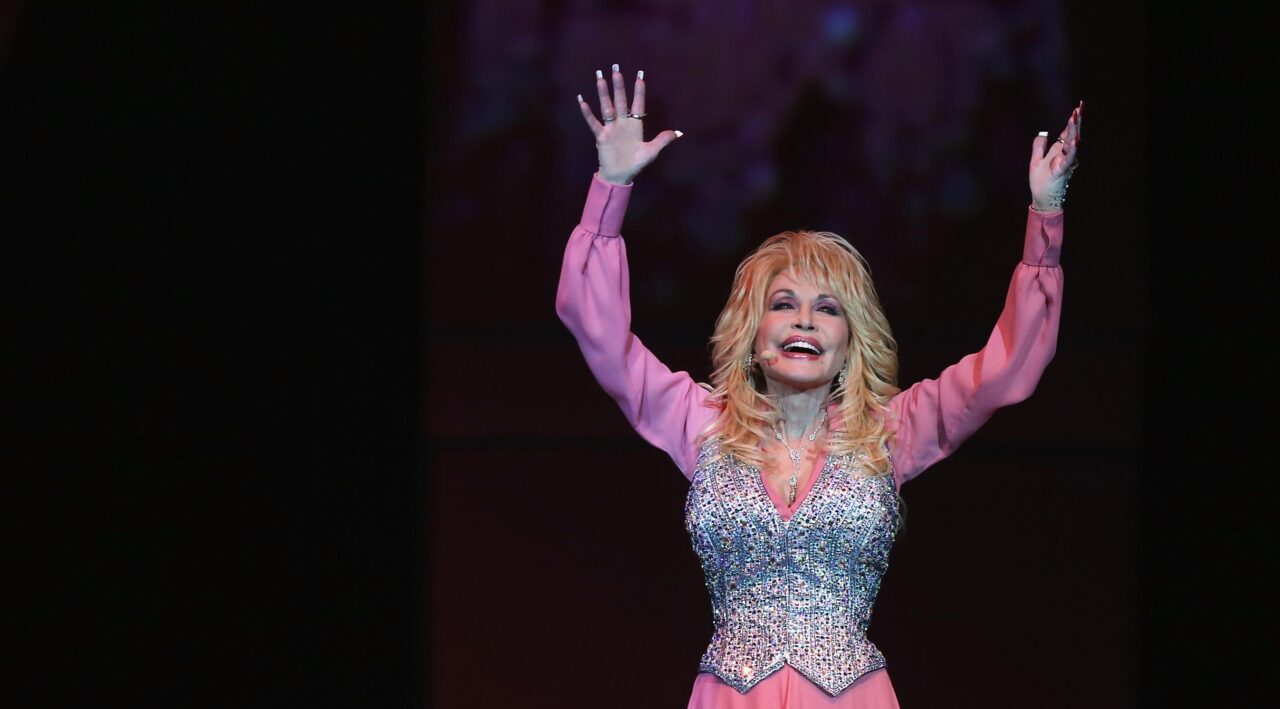
As Parton went on to become the world-famous singer, songwriter, actor, entrepreneur and philanthropist we knew, she leaned into her signature look, which she described as “all the flash and the glitter.”
“When they say ‘Less is more,’ that’s not my motto. Mine is, ‘More is more,'” she said. “I’ve always believed that a part of my magic, if there was any, was the fact that I look so artificial — but I am so totally real. And I think when you hear these kinds of songs, I think you know that has to come from the heart.”
Parton died in Nashville on Aug. 25, after a brief battle with cancer. She was 80 years old, and had been writing music nearly all her life.
I’ve always believed that a part of my magic, if there was any, was the fact that I look so artificial — but I am so totally real.
Dolly Parton
“I started playing guitar and writing serious songs when I was about 7 years old,” she said. “My mother was always fascinated with the fact that I could rhyme so much stuff.”
The fourth of 12 children, Parton says she knew early on that she’d go to Nashville to pursue music.
“It wasn’t that I wasn’t proud of who I was and where I was from,” she says. “But I had a dream. … I wanted to do something with my music. I knew I was going to leave when I was 18 years old. And I graduated from high school on a Friday night, and I left for Nashville on Saturday morning. I was ready to go.”
Interview highlights
On learning to sing in church
We [attended] one of those shouting, healing, holy-roller churches, and it was high-powered, which was great. I really learned to sing in church. … It was a free-spirited church, and if you wrote a song — a gospel song, of course — you could get up and sing it and play your guitar and whatever.
There was a lot of that hellfire, brimstone and scaring you to death. … They had me so scared of God, I was afraid to talk to him. … [But] I really, through the years, found my own place with God. And it was when I did that my life has been so peaceful and so rewarding.
On writing tragic songs as a kid
I wrote a song, I can’t remember exactly how it goes, but it was about a boy getting killed in the war, because we used to hear all those stories back home. And if they weren’t singing those sad-ass songs, they were telling stories about it, and that makes an impression on a little child. So I thought that you needed to write songs of tragedy. I thought you had to do that in order to be a mountain singer.
On her early TV appearances, before her family owned a TV
To me it was the same as singing on radio. I didn’t even know really what all it meant about singing on television — I just knew it was another place to go singing. They had microphones and it was a show, so I was going to do the show. I don’t think I thought about whether or not [my family] couldn’t watch me.
After I did start being like a regular, I bought the TV — but it didn’t last long in the house. Nobody around our area had a television, so everybody would come down and sit on our floor and sit on our couch, watch Gunsmoke and Wagon Train and Woody Woodpecker and all the shows that were on. Daddy couldn’t get them out of the house to get ready to go to work. So he said, “This damn television’s out of here.” It didn’t matter if I was on television or not … me and Woody Woodpecker had to go.
On leaving home at 18 to pursue music in Nashville
I vowed that I wouldn’t go home until I had something to show for it, and I didn’t. But I was very, very homesick. … And then I got lucky: I had a Top 10 record, on a song called “Dumb Blonde.” “Just because I’m blonde, don’t think I’m dumb / ‘Cause this dumb blonde ain’t nobody’s fool.” That was my first Top 10 record …. so I just knew that that’s what I had to do, and that was my destiny.
I know now how lucky I was, ’cause I know a lot of people that got there about the same time I did, had twice the talent — still ain’t made it. I know how lucky I’ve been, and I’m grateful for it every day.
On what she learned working on The Porter Wagoner Show for seven years
I learned how to talk to an audience, and how to be comfortable in front of a camera. I had done TV back home when I was a kid — I had grown up singing on radio and TV back in Knoxville, Tenn. But you have to learn how to not do silly things, not pick your nose and stuff like that, not to scratch your head or nothing, no other parts of your body. You have to kind of just learn how to be aware that you’re on, because people are aware of you. … I’m just like a sponge, I just gather up everything. You don’t really realize what all you are learning just by watching professional people work.
On writing “I Will Always Love You” for Wagoner when she left the show
I had plans to have a solo career of my own. I hadn’t planned to get caught up with another group. But Porter’s show was very successful, and it was a thing to do. … I told him that I would [do the show] for five years, because I wanted to go on. But I stayed two years longer. I kept staying and staying, and I kept wanting to go, because I felt like I needed to go out on my own if I was ever really going to have a solo career.
Porter was dead against it. He wouldn’t hear of it, and he had a fit. We fought a lot. There was a lot of problems going on. And no matter how I would try to talk to him, I could not make him understand. And I thought, well, why don’t you just write a song about him? Just say you appreciate him and you appreciate everything he does, and that you’ll always love him for everything he’s done.
So out of a broken heart, of not being heard or anything, knowing I had to make major decisions that would ultimately change my life forever — and his, for that matter — I wrote that song one night out of great grief and depth, just trying to say the right things to say goodbye.
Sam Briger and Monique Nazareth produced and edited this interview for broadcast. Bridget Bentz, Molly Seavy-Nesper and Daoud Tyler-Ameen adapted it for the web.