My daughter called me from college yesterday, and as soon as I heard her voice, I knew something was wrong. “Oh no,” she said. “You don’t know yet, do you?” Immediately, I started to sob — I knew that either Dolly Parton or Stevie Wonder had passed. I’d been preparing myself for the loss of both legends, but hearing that Dolly was dead at age 80 still flayed me whole.
Right before the call, I’d been getting ready to pitch an idea for a TV show on Zoom. Now, my makeup was destroyed. I had sad raccoon eyes of mascara running down my snotty face, my plum eyeliner was a road map of bereavement. How would I possibly be engaging and funny for this pitch when we had just lost one of the most original souls to ever grace our planet? But then I thought about Dolly and how she’d inevitably respond to this moment with moxie, and I pulled myself together. I put on my “What would Dolly do?” t-shirt, re-did my damn eye makeup — which, like Dolly’s, always leans more southern than SoCal — and I smiled for the camera. Because that’s what Dolly would have done.
I grew up in Iowa — far from Dolly’s hometown in the Great Smoky Mountains of Tennessee. But like Dolly, I was a theatrical child, always singing and putting on shows. Making people laugh made me feel like I had sunshine in my soul, and I never missed an opportunity to push furniture out of the way to do a bit. Movies and music and books and TV were like siren calls to me — glowing cathedrals to emotion and light and laughter. But Hollywood was so, so far away it seemed unobtainable. Still, I vowed somehow, someday, I’d be a part of it.
In 1980, the movie “9 to 5” charged onto the screen and into my heart. I was obsessed. It was delicious and laugh-out-loud funny. It celebrated female friendship and clever women who outsmarted their unethical, egotistical male boss. (Dabney Coleman, I’ll love you forever, too.) “9 to 5” introduced me, and much of America, to Dolly Parton. I worshipped the movie so much my mom finally told me she’d only go see it again if I paid for my own ticket — and hers. Parting with my allowance had never been so sweet. I adored Dolly’s character, Doralee Rhodes, who was unlike anyone else I’d ever seen on screen. Doralee was as tough as her acrylic nails — and funny as hell. Who was this magnetic creature with the giant bazongas whose smile literally had a wink? And wasn’t she also the one singing that infectious song that started the movie? How could I shine like that?
How could I be like Dolly? It’s a question I’ve been thinking about ever since.
I took the assignment seriously and did my research. I read her autobiography and bought her albums. I watched her show, “Dolly,” every Sunday night. I even went to see “Rhinestone” — the 1984 musical-comedy film with Sylvester Stallone that was no “9 to 5.” I basically inhaled all things Dolly. In a world where everyone pines for the same “it” handbag, Dolly was a dazzling original, as legendary for her kindness as she was for her unique style. (“I kinda patterned my look after Cinderella and Mother Goose – and the local hooker,” she once quipped.)
Dolly preached tolerance and advocated for gay rights long before it was fashionable. She adored literature and created the Imagination Library, which started as a local effort in her home county in Tennessee and has now served 3 million children in five countries. Through this effort, Dolly gave away more than 330 million books. She didn’t do this for applause, she did this because she knew the power of books and in memory of her father, who never learned to read or write. When a global pandemic hit in 2020, Dolly donated $1 million for COVID-19 research at Vanderbilt University.
Oh, Dolly.
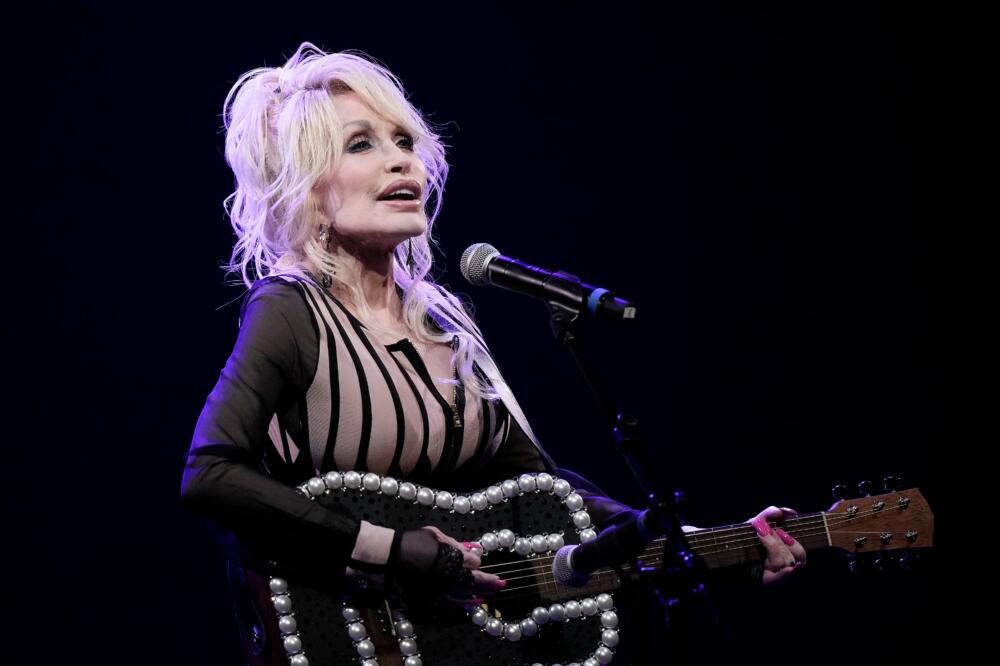
I am but one of many who sits on the ash heap today. Friends keep calling me to ask if I’m okay. The truth is, I’m not. But I’d be so much worse off if Dolly’s radiance hadn’t reached out to me from the screen when I was 9 years old and changed me forever. Dolly taught me not only about grace, but about grit.
She inspired me to be resilient and follow my dreams. After getting divorced, I turned my tragedy into a win by becoming a screenwriter. Like Dolly, I didn’t give up. Like Dolly, I wrote my way out of grief. I even got to write the book for the musical “Legally Blonde,” a movie and message I’d like to believe Dolly loved because she, of all people, understood that blondes should never be underestimated. Dolly taught me that loving makeup and clothes and shoes and jewelry was okay — that I could be smart and creative and like the color pink. Being a buxom blonde and having writing chops aren’t mutually exclusive. Bottom line: Dolly taught me how to be myself.
Dolly, you made this world brighter and more loving. You seamlessly steered your progressive platforms with a kind heart and somehow avoided becoming a political lightning rod. I suspect you did it because you believed all people are the children of God. Maybe because God blessed you so abundantly, you could see the holy in others more clearly. You helped us all find our better angels.
I don’t know how to say goodbye. So I won’t. I will, however, vow that every time I head to karaoke, I’ll request “9 to 5.” I’ll try not to cry, but I can’t make any promises.
Mostly, just know this — I will always love you, Dolly Parton.
This article was originally published on WBUR.org.