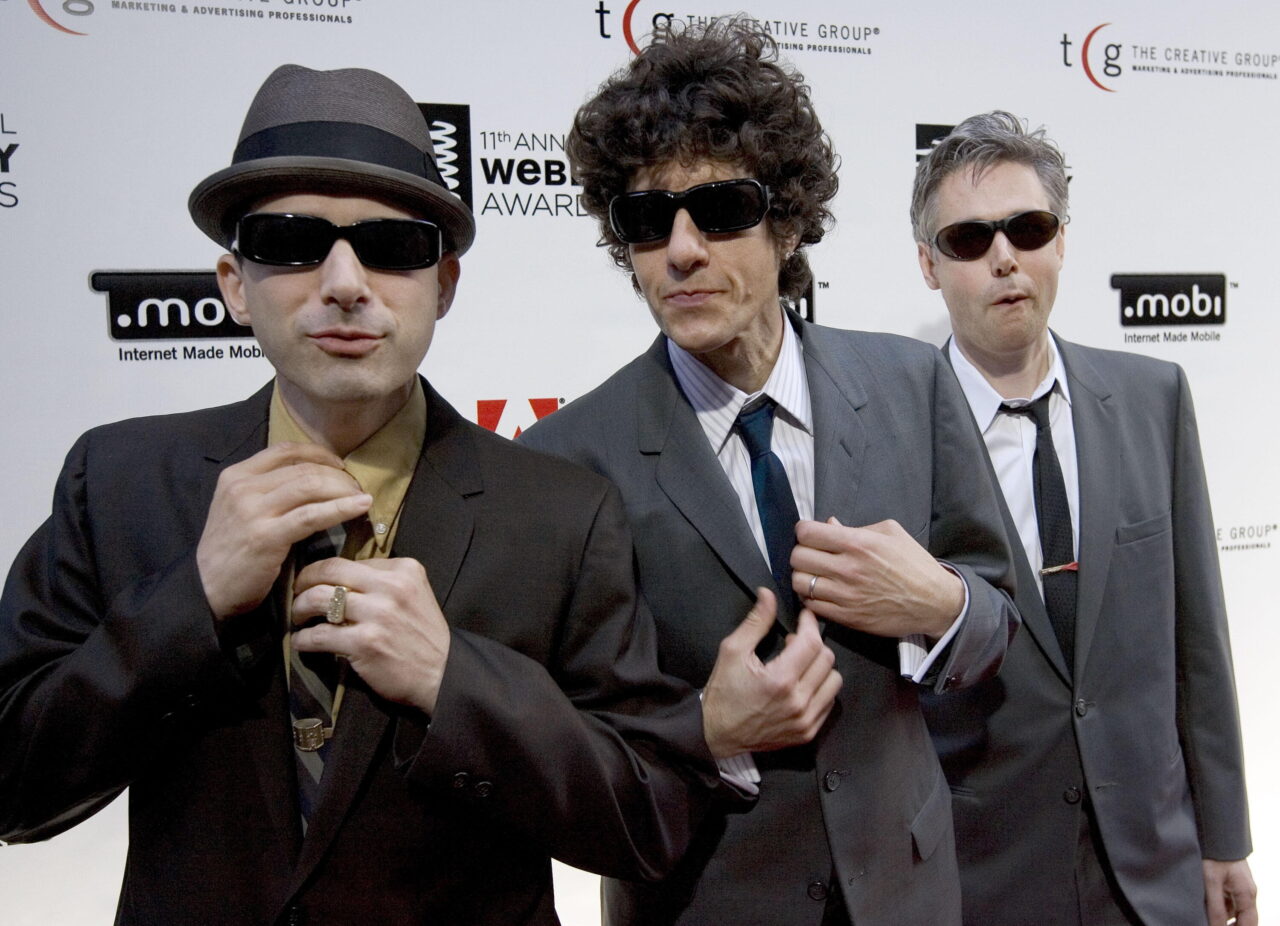
Beastie Boys rapper Mike D did not expect to make another record. For a long time, even opening his computer to work on music could bring him back to grief over the loss of his bandmate Yauch, one of three members of the Beastie Boys, who died of cancer in 2012.
“Pretty soon after Yauch’s death, I would open my computer and I would start to try to work on music because that just seemed like, OK, that’s what I do,” Mike D told Morning Edition.
But for a long time, he said, he would keep attempting to create music and “keep feeling really sad.”
Mike D said he was grieving not only “someone that I loved so much,” but also “this whole identity that we created together.”
Now, 15 years after the last new music from any member of the Beastie Boys, Mike D has made Thank You, his first solo album.
He shares a home studio with his sons, Davis and Skyler. Davis, he said, is a gifted producer and arranger. And he praised Skyler’s talent for coaxing synthesizers and drum machines made decades apart “to all speak to each other.”
His sons came of age making music on computers, with Mike D describing their comfort with the technology as “literally their natural language.” Mike D’s own musical vocabulary began with a Tascam four-track cassette, a tool he said is “a great machine” he still stands by.
But the thread running through his music is collaboration. Mike D says he likes arriving with an idea and watching it change in the hands of other people.
“We never end up making what I had in my head originally,” he said. “But I’m actually happier with it.”
NPR’s A Martínez spoke with Mike D about creative freedom, what changes with time and why the best ideas don’t always end up where they started.
Listen to the full interview by clicking the play button above.
The digital version was edited by Treye Green.
Transcript:
A MARTÍNEZ, HOST:
He has one of the most iconic voices in all of hip-hop.
(SOUNDBITE OF SONG, “PASS THE MIC”)
MIKE D: (Rapping) M-I-K-E to the D. You come and see me, and you pay a fee. Do what I do professionally. To tell the truth, I am exactly what I want to be. Now, Ad-Rock…
MARTÍNEZ: That is the high-pitched, nasally voice of Mike Diamond, better known as Mike D, one-third of the genre-bending group the Beastie Boys.
(SOUNDBITE OF SONG, “FIGHT FOR YOUR RIGHT”)
BEASTIE BOYS: (Singing) You got to fight for your right to party.
MARTÍNEZ: Now you can let that voice worm back inside your brain with Mike D’s new album, titled “Thank You.” It’s the first new music from any member of the Beastie Boys in 15 years. And he sat down with me at NPR’s studio in Culver City to talk about it. So, Mike, let’s start with the name of the album, “Thank You.” Let’s hear a bit of that title track.
(SOUNDBITE OF SONG, “THANK YOU”)
MIKE D: (Singing) Thank you for having me. Thank you for hospitality ’cause we were like family. Thank you for asking me. Thank you for having me.
MARTÍNEZ: So, Mike, I mean, right off the bat, when I see an album that’s called “Thank You” and you got a song called “Thank You,” I want to know who you’re thinking.
MIKE D: So it has to be a who? Has to be one person?
MARTÍNEZ: I guess I assumed. And you know what happens when someone assumes.
MIKE D: No comment from me.
MARTÍNEZ: (Laughter).
MIKE D: It’s interesting. So when we made this song, it was late in the record. We were at our home studio that I share with Davis and Skyler, my two sons. And then – so I think a lot of my feeling in that moment was, you know, I was very grateful, very thankful. I never expected to sort of just even be making this record and that I get to do it in this way that is exactly how I want to do it. I’m very lucky in my art. I’m not having to do some very compromised sort of art meets
MARTÍNEZ: Yeah.
MIKE D: …Commerce situation. And…
MARTÍNEZ: Yeah. It’s a weird feeling I think, right? Having to basically do your art knowing that you have to sell it, right? I mean, does it change the artistry?
MIKE D: Well, that. And I just wonder – because it always historically been the case that just the world is not particularly kind to an artist – right? – on a business level. It’s just becomes harder and harder for people to just literally just exist and get by making what they’re really supposed to be making on this planet and aligning with their passion.
(SOUNDBITE OF SONG, “I DON’T CARE”)
MIKE D: (Rapping) We all have a role. I didn’t see mine. Start with a goal then lost in the deadline. Just see the road ahead, responsibility, try to please everyone. It’s killing me.
MARTÍNEZ: Fourteen years ago, the world may have thought that they would never hear another release of new music from the Beastie Boys. The death of group member Adam Yauch to cancer in 2012 hit Mike D and Adam Horovitz hard. At the time, they said they were disbanding, that they weren’t going to perform or make any more new music. Mike D says, yeah, he just wasn’t inspired.
MIKE D: Pretty soon after Yauch’s death, I would open my computer, and I would start to try to work on music because it just seems like, OK, that’s what I do. And there was a long, long time where I would keep sort of trying to do that. And I would keep feeling really sad, you know, because I was still just very much grieving not only this person who was such a huge part of my life and was such someone that I loved so much, but also part of, like, this whole identity that we created together.
MARTÍNEZ: Yeah.
MIKE D: I think grieving is kind of like this – what’s the right term? It’s a behemoth, in a way…
MARTÍNEZ: Yeah.
MIKE D: …I think, emotionally for us as humans, because there is no right, there’s no wrong, there’s no time. And mostly, we really want it to be linear, and that’s not how it works.
MARTÍNEZ: When you were recording this album, was MCA in your heart somewhere?
MIKE D: That’s a complicated question. I don’t – I guess I would say this. I don’t know what having somebody else in my heart means. I’m just being real.
MARTÍNEZ: Yeah.
MIKE D: But there were definitely numerous moments in making this record where I felt like – you know, Yauch was always – how do I explain? He was incredibly supportive of not just us, but kind of, like, everybody really pursuing what they wanted to do, because he would do that himself. So I would just say I would tap into that. And it would just feel like I know that Yauch would be like, yeah, this is time well spent.
(SOUNDBITE OF SONG, “WHAT WE GOT”)
MIKE D: (Rapping) What we got. What we’re not. Hospitality takeover, celebrity makeover. We’re here to take over.
MARTÍNEZ: Collaboration is still a big part of Mike D’s work. And his album brings some new collaborators into the spotlight, including his sons, Skyler and Davis.
MIKE D: I love coming in with ideas. I love executing them. But I love doing it where you’re in collaboration with others. And pretty much always, we never end up making what I had in my head originally, but I’m actually happier with it.
MARTÍNEZ: Did they help, like, with crafting a sound maybe that maybe you weren’t used to, but you were like, OK, they think it’s pretty cool – let me give this a shot?
MIKE D: I wouldn’t say so much sound. But they definitely both had profound influence. So if I had to get more specific is Davis, my older son, is just really, really gifted as a producer, arranger. And then my younger son, Skyler, is just rhythmically really good and really good with getting these different synthesizers and drum machines from – literally made in different decades to all speak to each other. You know, I think there’s also just a reality in terms of age that their computer…
MARTÍNEZ: Oh, yeah. They’re at that age, right? Yeah, yeah.
MIKE D: That’s the first thing that they ever recorded on. It’s just literally their natural language in terms of where music lives and how you make it and the creation of it. Whereas, I grew up on – I’m going to date myself. But, like, the first recording device I owned was a Tascam four-track cassette…
MARTÍNEZ: Oh, wow, that is – yeah.
MIKE D: …Which is still – I stand by – a great machine.
MARTÍNEZ: Yeah. So I don’t want to pin you down for another album. But what is this for you? Is this something you needed to get out, and that’s it, or do you see yourself making another one?
MIKE D: No, I do – listen, I loved making this record. But for right now, I’m loving, collaborating, working on music with…
MARTÍNEZ: With your sons. I mean, you’re working with your kids, yeah.
MIKE D: With the multiple 5Ds of the world…
MARTÍNEZ: Yeah.
MIKE D: …My sons being part of it.
MARTÍNEZ: That is Mike D. His first solo album is titled “Thank You.” Mike, thank you.
MIKE D: All right. Thank you, man.
(SOUNDBITE OF SONG, “MAKE IT STOP”)
MIKE D: (Rapping) What stays is always change. Redo, rearrange. Start, start, start again.