
SPOKANE, Wash. — Just weeks after wildfires destroyed hundreds of homes in some of the worst blazes in Washington state history, most evacuees have been allowed to return to the burn zones in and around Spokane.
But there are mounting questions about whether it’s safe yet.
“It is a very challenging thing,” says Sarah Nuss, the city’s director of emergency management. “While folks are allowed to go back into those areas there is still a hazmat situation going on. The burned houses and damaged places are going to have things like lithium ion batteries, hazardous chemicals.”
Before any rebuilding can begin, wildfire recovery starts with the dirty work of removing all the toxic debris left behind, which can also include lead paint siding, exploded propane tanks and other potentially dangerous hazards that litter the burn zone. The federal Environmental Protection Agency is just arriving here to begin that typical first phase of toxic debris removal. The entire debris removal process can take months, if not years.
Nuss says a lot of the city’s work right now is educating people about the potential risks.
“We have no legal ability to keep people out,” she says. “What we are trying to do right now is really understand and document all the risks across what kind of household people are going back into.”
Survivors say it looked like a bomb went off
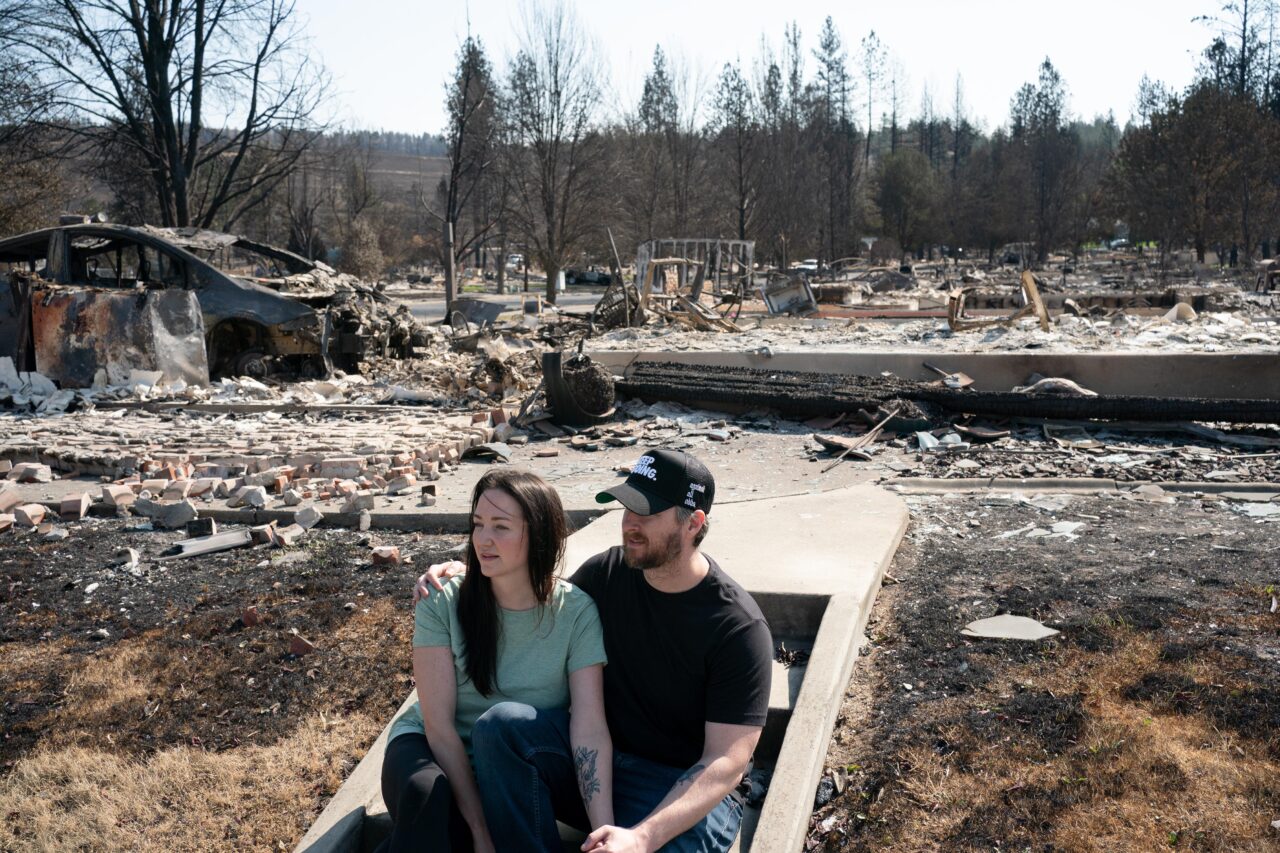
The Old Trails Fire was one of three wildfires that ignited here in an extreme heat and wind event in early August. Suspected to have been started by an arsonist, it leveled whole neighborhoods when the flames jumped the Spokane River. For Melissa and Chris Matthews, the devastation is jarring as they survey their destroyed property.
“When we turned onto our road, Old Fort Drive, I said it looked like a bomb went off here,” Melissa says as Chris adds: “Yeah it looked like a war zone is what you said.”
They lost almost everything. All that remains of their Prius is a twisted hunk of metal. The home, built some thirty years ago, is now rubble. They’ve filed their insurance claim and hope to rebuild. But for now, they’re in limbo.
“It’s daunting,” Chris says. “I’m expecting it to be like three or four years before anything happens.”
Matthews is probably right. A year after deadly urban wildfires in Colorado and Hawaii, no homes had been fully rebuilt. One study showed that three years after the Camp Fire in Paradise, California, only 14% of the burned zone was rebuilt. In each case, the full scope of the public health risks didn’t emerge until people started moving back in and cleanup got underway.
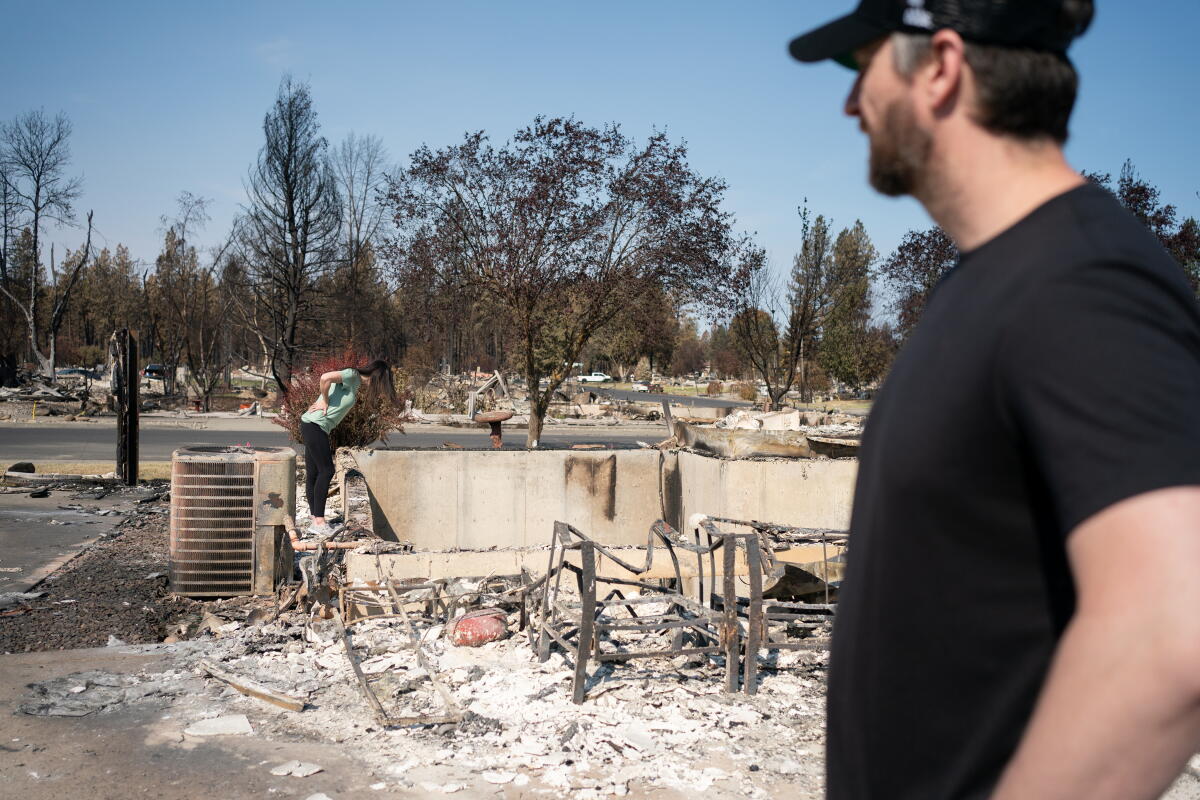
A few lots over from the Matthews, someone in a Hazmat suit is combing through the debris. The couple, in street clothes, says they haven’t even started looking for anything to salvage. Near them is a box with a wood and mesh sifter to comb through the debris. There are also masks, gloves and other PPE recently dropped off by good samaritans.
When the wind kicks up even just a little, it’s hard to endure the dust and smells.
“Yeah the air is not good,” Chris Matthews says. “I’ve had a sore throat for the last few days because of coming down here and everything.”
Playbooks for recovery
Not even a football field away from the Matthews destroyed neighborhood, many homes look unscathed. Nearby, a memory care center, surrounded by a big green watered lawn, is reopening. A sign reads, “welcome home, we missed you,” as buses pull up to move patients back in.
City officials posted signs throughout these neighborhoods alerting people whose homes are still standing to wear protective gear, have their properties inspected by the city and to flush their water pipes.
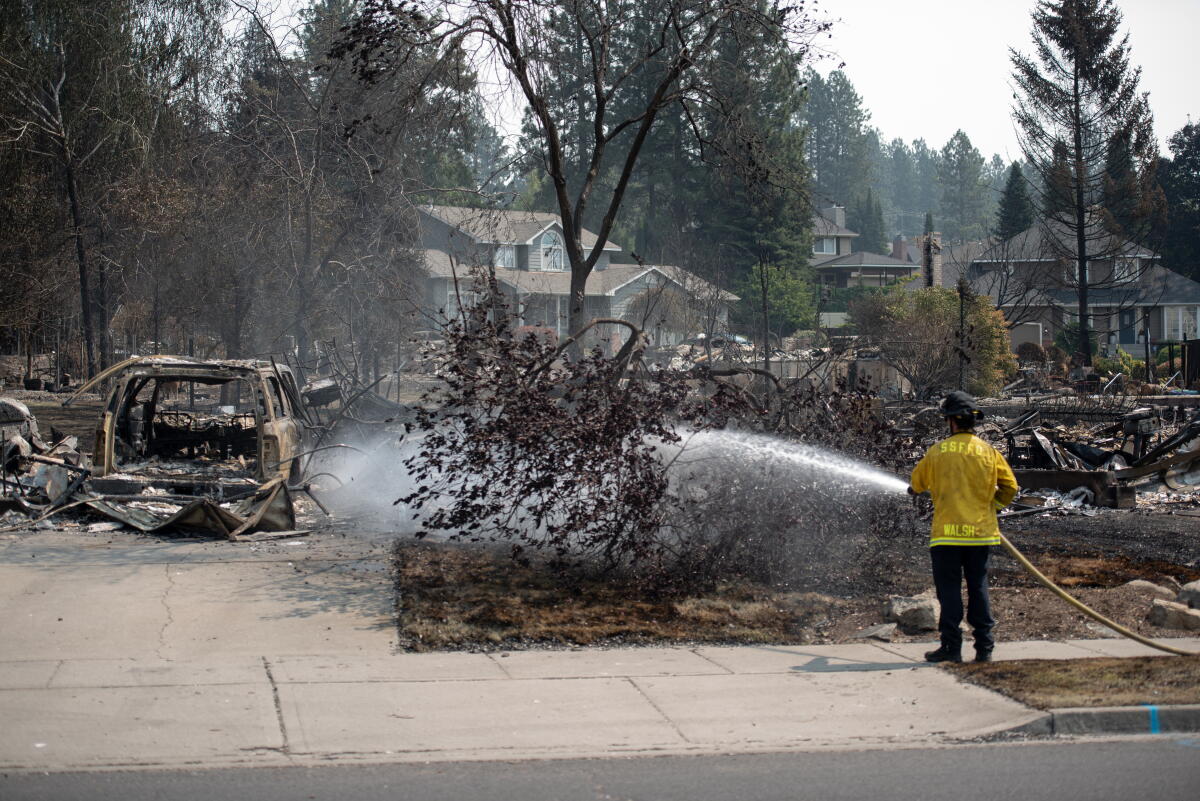
Disaster recovery experts warn contamination of city water sources or the underground lines that feed out from them are common after wildfires. Nuss says the city is still testing Spokane’s water and has yet to find any problems. But the work is ongoing because the level of devastation is staggering.
“It is alarming and I look back, especially across California, and you would just think there’s a manual on this at this point,” Nuss says. “We know what to do.”
If there’s one bright spot amid the West’s recent wave of devastating wildfires, it’s that Spokane isn’t recovering alone. Other communities can pass on their hard-won lessons as Spokane’s daunting recovery begins.
Other urban fires offer lessons for a long recovery
Andrew Whelton, an environmental engineer at Purdue Univ., has been pushing for more stringent soil testing for dangerous chemicals even after all the debris is removed from wildfire burned lots. Whelton helped water managers in Paradise rebuild their contaminated system after the 2018 Camp Fire and he is advising Los Angeles recovery leaders in the wake of the devastating Eaton and Palisades fires.
“If you don’t test for it, you won’t know that there’s a hazard still on your property,” Whelton says. “That is what Spokane should take away from these past disasters.”
But even just a basic recovery timeline still feels overwhelming for many fire survivors. The trauma is still fresh across the burned zones of Washington’s second largest city. And with most of the affordable hotels booked and federal aid yet to arrive, many people have no choice but to move back in if their home didn’t burn.
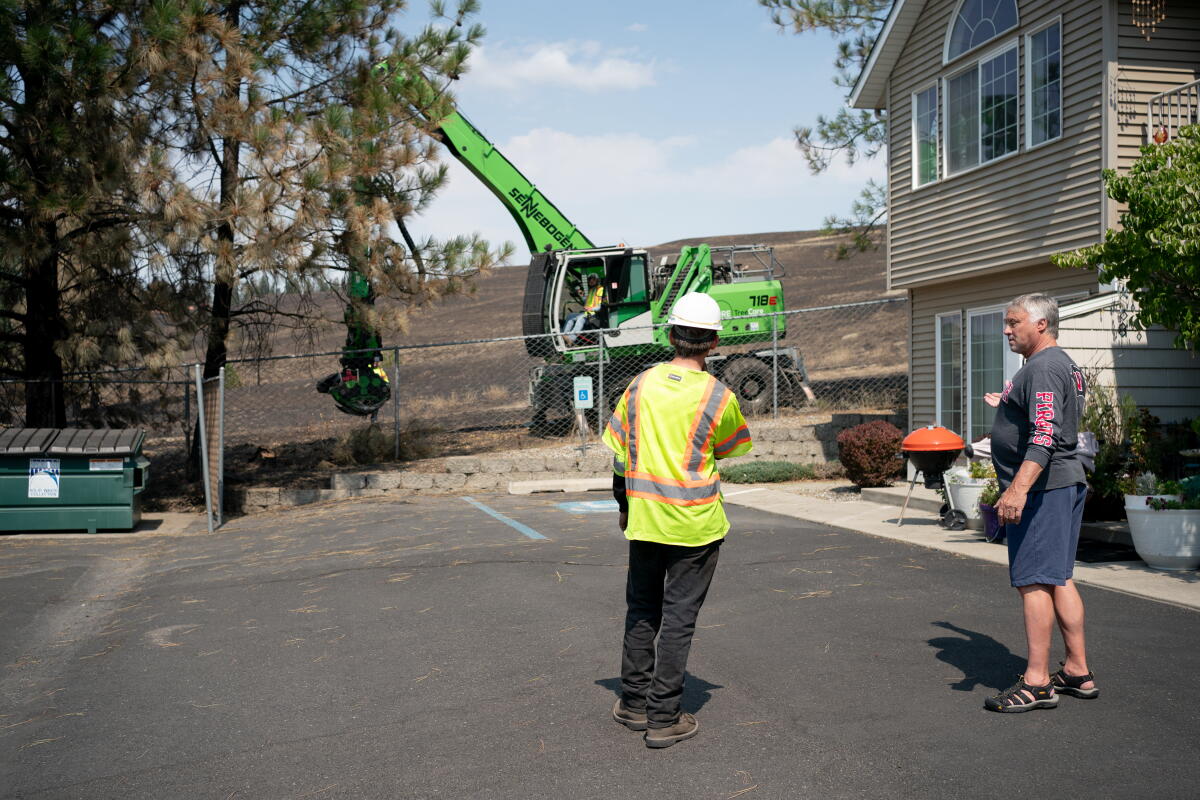
“Everything I love about this place is gone,” says Don Simpson, as a fire crew sawed down a badly charred ponderosa pine next to his apartment. He’s still trying to process the magnitude of the tragedy. Just before he escaped that Saturday afternoon in early August when the fire started, he tried to hose down his yard and front entryway. But then things got too dicey.
“The way this thing was going and the way that all burned, I thought this was all gone,” he says, gesturing to a burned area two hundred yards away.
Simpson lives across the street from the memory care center that is reopening. When he evacuated, he and some police officers loaded some of the center’s patients into the back of his pickup, abandoning their wheelchairs on the sidewalk.
“And by that time it was either propane or something that just started blowing and shooting in the sky,” he recalls.
Long term, Simpson doesn’t know if he’ll stay. He wants to see his community rebuild, and he’s been moved by the support and resiliency he’s witnessed up close. Still, he and countless other fire survivors know it may be years before any of it looks or feels normal again.
Transcript:
LEILA FADEL, HOST:
It’s been a brutal summer season for wildfires in much of the West. Only a few weeks after a fire destroyed hundreds of homes in Spokane, Washington, people are already returning to damaged neighborhoods. But there are big questions about whether it’s really safe to go back in. NPR’s Kirk Siegler reports.
KIRK SIEGLER, BYLINE: The wind-driven Old Trails Fire, suspected to have been started by an arsonist, levelled whole neighborhoods when it jumped the Spokane River. Melissa and Chris Matthews say it’s jarring. As they walk up their street, Melissa is seeing their destroyed property for the first time.
MELISSA MATTHEWS: I even told my husband, Chris, when we turned onto our road, Old Fort Drive – I said, it looks like a bomb went off here.
CHRIS MATTHEWS: Yeah. It looked like a war zone, is what…
M MATTHEWS: Yeah.
C MATTHEWS: …You said.
SIEGLER: They lost pretty much everything. There is a twisted hunk of metal that looks like a car.
M MATTHEWS: Yeah.
C MATTHEWS: My Prius did not make it.
M MATTHEWS: No.
SIEGLER: That’s the Prius we see right there on the left?
C MATTHEWS: Yeah.
SIEGLER: OK.
Their home, built some 30 years ago, is obliterated. They’ve already got their insurance claim filed and hope they can rebuild one day, but they’re in limbo.
C MATTHEWS: It’s just daunting. And I’m expecting it to be, like, three to four years before anything…
M MATTHEWS: Yeah.
C MATTHEWS: …Happens.
SIEGLER: Matthews is probably right. A year after deadly wildfires in Colorado and on Maui, no homes were fully rebuilt. One study showed that three years after the Camp Fire in Paradise, California, only 14% of the burn zone was rebuilt. First off, you have to make sure it’s safe from toxins. Think lead paint from siding, exploded propane tanks, melted batteries and plastics.
C MATTHEWS: Yeah. The air’s not good, you know?
M MATTHEWS: No.
C MATTHEWS: And I’ve had a sore throat for the last few days because of coming down here and everything.
SIEGLER: A few lots over, someone in a hazmat suit is combing through burned, potentially hazardous debris. Then a couple blocks away, where a crew is cutting down a burnt pine tree, the structures look untouched.
(SOUNDBITE OF SAW WHINING)
SIEGLER: And right here is a dementia care facility with a sign that says, welcome home. We missed you. Some buses just pulled up. And they’re bringing the residents and patients back in here, right kind of in the middle of a burned area.
(SOUNDBITE OF TRUCK RUMBLING BY)
SIEGLER: Is it safe, especially for vulnerable populations? It’s a question Sarah Nuss is fielding a lot. She’s Spokane’s director of emergency management.
SARAH NUSS: I think a lot of the work right now is going to be on helping people understand risk.
SIEGLER: People want to go back in. That’s the tension, ’cause it’s their house.
NUSS: Yeah.
SIEGLER: And maybe they don’t have anywhere else to go.
NUSS: Sure.
SIEGLER: But do we know it’s safe?
NUSS: It is a very challenging thing. While folks are allowed to go back in those areas, there is still a hazmat situation going on. The burned houses and damaged places are going to have things like lithium-ion batteries, hazardous chemicals – all those things that could be…
SIEGLER: The city has posted signs everywhere alerting people whose homes are still standing to wear PPE, have their properties inspected and flush their water pipes. Nuss says they’re still testing Spokane’s water.
NUSS: We have no legal ability to keep people out, nor are we trying to do that, let’s say. So I think what we are doing right now is just really trying to understand and document all the risks across what kind of household people are going back into.
SIEGLER: But is everyone listening? One bright spot is there have been so many devastating fires now in the West, Spokane has a recovery playbook to turn to. Andrew Whelton is an environmental engineer at Purdue University. He helped water managers in Paradise rebuild their contaminated system. In Los Angeles, after the Eaton and Palisades fires, he’s been pushing for more stringent soil testing for dangerous chemicals, even after all the debris has been officially removed from burned-down lots.
ANDREW WHELTON: If you don’t test for it, you won’t know that there’s a health hazard still on your property. And that is what Spokane should take away from these past disasters.
SIEGLER: Spokane isn’t there yet. The EPA is only just arriving here to begin removing toxic debris. That’s an arduous process that will likely take months, and the trauma is all still raw for survivors like Don Simpson.
DON SIMPSON: This started burning, so I took the hose and tried to stop it. But then this caught on fire – these trees and this.
SIEGLER: He lives right by that memory care center, which was unscathed. With minutes to evacuate, he loaded patients into the back of his pickup, abandoning their wheelchairs on the sidewalk.
SIMPSON: And by that time, it was either propane or stuff started blowing and shooting in the sky.
SIEGLER: Simpson has already moved back into his apartment. The building also survived. He didn’t have many other options.
SIMPSON: But I’ve learned the hard way. I try not to open my window too much. And at night, when the smoke comes in, it just fills the apartment up.
SIEGLER: Simpson’s not sure he’ll stay long-term. Everything he loved about this place, he says, is gone.
Kirk Siegler, NPR News, Spokane.
(SOUNDBITE OF A SOUND FOR YOU’S “HEIDI”)