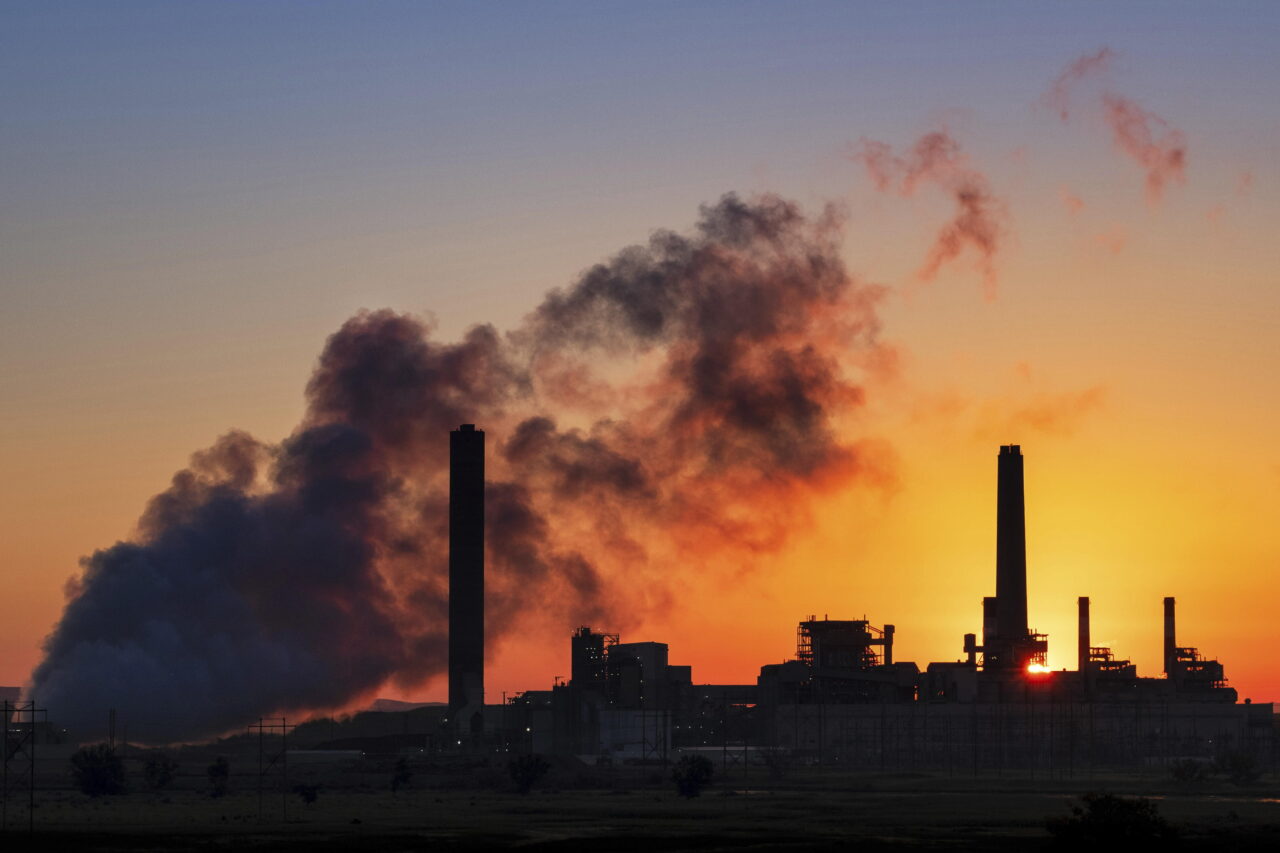
The Trump administration is repealing limits on greenhouse gas emissions emitted by the nation’s fossil fuel-fired power plants. The head of the Environmental Protection Agency called it the largest deregulatory action of the U.S. power sector in history.
This action eliminates rules the EPA finalized during the Biden administration that required existing coal and new natural gas-fired power plants to significantly reduce their carbon dioxide pollution, starting in the 2030s. Carbon dioxide from human activity is the main driver of global warming.
Power plants are the second largest source of planet-heating carbon dioxide emissions in the U.S., behind transportation.
At a press conference on Monday, EPA Administrator Lee Zeldin said that the actions to curtail planet-heating pollution under the Biden and Obama administrations led to higher energy prices and prevented the country from reaching its full energy potential.
“The days of Biden and Obama working to destroy natural gas and coal are over,” said the EPA administrator.
Large solar and wind projects, however, provide more cost-competitive energy than natural gas and coal projects, according to financial services firm Lazard.
Zeldin made his remarks in Houston, where the U.S. is hosting the G20 Energy Summit. The administrator said that the EPA was also proposing to rescind all remaining greenhouse gas emissions standards for power plants. “All of them,” he said.
Environmental groups say the move to repeal power plant rules will increase pollutants that harm human health. “These rules are really important, not just for our climate, but also to protect public health from the dangers of local air pollution,” says Gudrun Thompson, senior attorney at the Southern Environmental Law Center.
Trump has rejected the basic tenets of climate science and has called climate change a “con job.” This is his latest effort to reverse former President Biden’s climate agenda and make it more difficult for future administrations to limit the human-caused greenhouse gas pollution heating the planet. Environmental groups plan to challenge the decision in court.
Power plant regulations that never happened
The legal basis for rules to limit climate pollution from power plants started with the Supreme Court’s 2007 Massachusetts v. EPA decision. It concluded that the EPA is required to regulate carbon dioxide and other greenhouse gas emissions under the Clean Air Act. That led to the EPA’s 2009 endangerment finding that designated greenhouse gas pollution as a threat to human health.
In 2014, the Obama administration proposed the “Clean Power Plan” aimed at cutting carbon dioxide emissions from power plants by 32%, from 2005 levels, by 2030. That plan faced legal challenges and never went into effect. Still the country met that goal well before 2030, as coal-fired power plants were replaced by natural gas plants that emit less carbon dioxide and renewable energy projects began producing more electricity.
Five years later, Trump replaced the Obama-era Clean Power Plan with his Affordable Clean Energy rule, which allowed power plants to emit more climate pollution.
Then Biden came into office in 2021 with the most ambitious plan to address climate change of any major party candidate in U.S. history. The administration set a goal of eliminating climate pollution from the power sector by 2035.
In 2022, the U.S. Supreme Court weighed in again and restricted the EPA’s options for regulating power plant emissions. Justices said that without a specific law, the agency cannot force the entire power generation industry to move away from fossil fuels toward less-polluting energy sources.
So, instead, the EPA created regulations governing individual power plants. The agency and environmental groups believed that would allow the rules to survive scrutiny from a court dominated by conservative justices. But now the Trump administration is eliminating the limits altogether.
Last month was the hottest ever recorded month globally, because of human-caused climate change and a developing El Niño climate pattern.
The EPA’s decision to repeal emission regulations on power plants comes at a time when the world needs to be limiting planet-heating greenhouse gas emissions, not allowing more emissions, says Michael Gerrard, law professor at Columbia University and director of the Sabin Center for Climate Change Law.
“ 2026 is shaping up to be the warmest year in recorded history,” Gerrard says, “and we ain’t seen nothing yet.”