If you’re a big, big whale with a gigantic tail swimming through water, nothing gets in your way, not the water, not the other fish, not nothin’. You are so much bigger than the water molecules around you, you move through the sea the way humans move through the air on a calm day — you just go. Whales, I imagine, don’t think much about water.
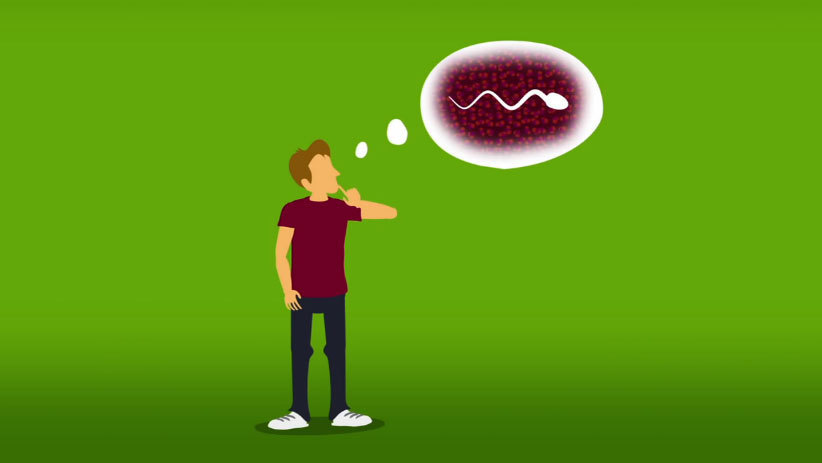
But now, imagine yourself smaller. Much, much, much smaller. Instead of a sperm whale, let’s make you, say — a human sperm, a teeny little critter with hardly any mass, and a very skinny, beating tail. All of a sudden you are much closer to the size of the water molecules around you.
Now that you’re little, getting through water is a huge headache. You are wedged in among equal sized H2O thingies that slow you way, way down. A human sperm in water is like a car in an enormous traffic jam — barely able to move.
So how do the littlest things in life — sperm, bacteria, pond scum — get where they need to go? How to they find food? Cows don’t sit in meadows waiting for grass to grow next to their mouths …
No, little things are cleverer than that. Much, much cleverer, as you will see in this video, elegantly illustrated by Brad Purnell, narrated by Addison Anderson and thought up by Aatish Bhatia, here’s how they do it.
I guess of all the moving strategies I’ve ever encountered, this one — used by a little Broadway billboard-ish critter that dazzles trills of rainbow colored light in the shallow ocean — is the craziest. It uses the same strategies Brad and Aatish describe … but it seems to think it’s a Rockette at Radio City Music Hall.

And I wrote about it here.
Copyright 2023 NPR. To see more, visit https://www.npr.org. 9(MDM3NjYwMjA5MDE1MjA1MzQ1NDk1N2ZmZQ004) "Comparing Sperm Whales To Sperm: A Swimming Contest 3")