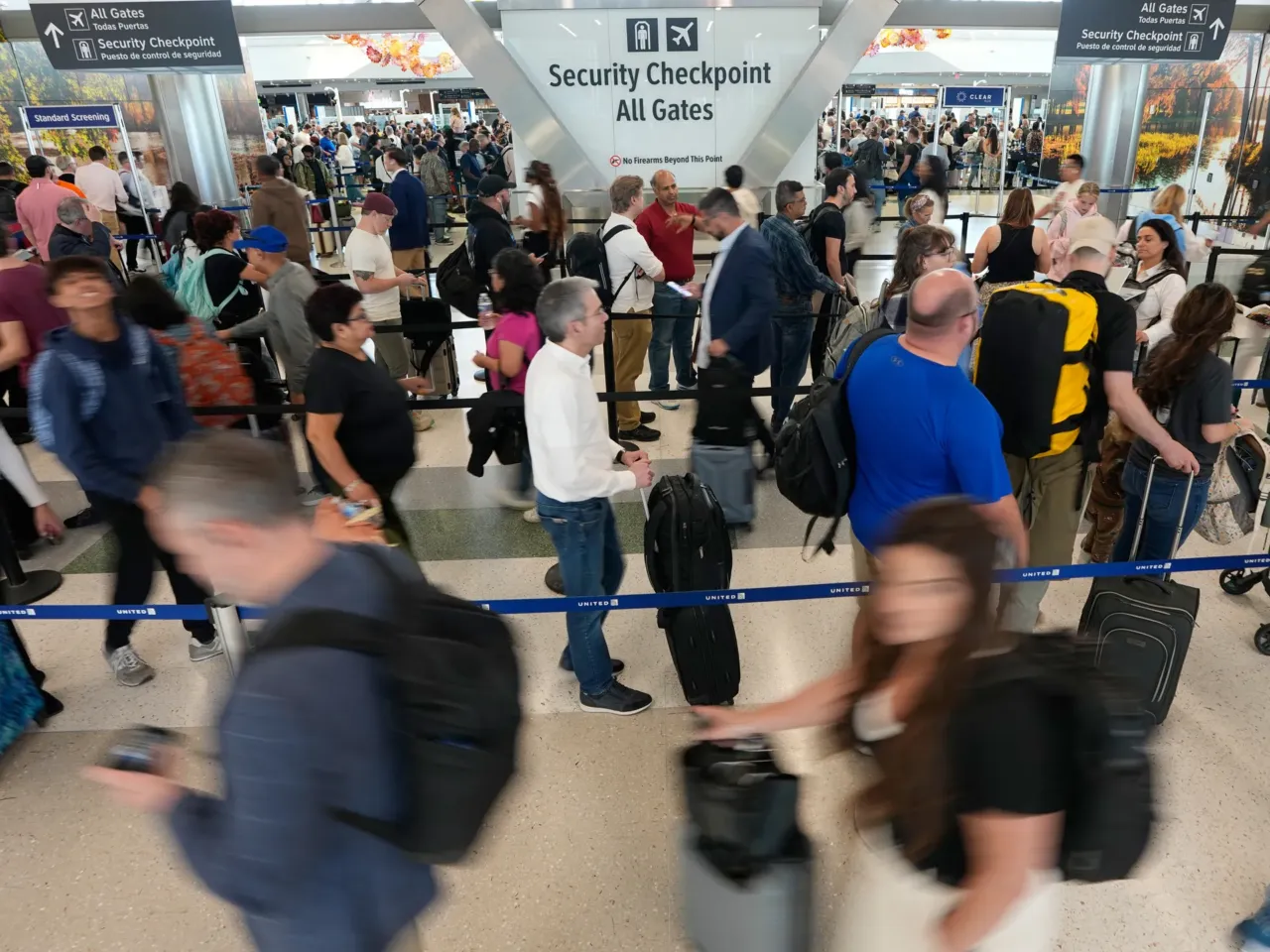
Immigration and Customs Enforcement agents could remain at U.S. airports even after Transportation Security Administration workers receive their paychecks, according to White House border czar Tom Homan.
Asked if ICE agents will leave airports once TSA workers begin receiving pay again, Homan said on Sunday “we’ll see.”
“It depends on how many TSA agents come back to work [and] how many TSA agents have actually quit and have no plan [of] coming back to work,” Homan told CNN State of the Union host Jake Tapper.
Homan also said he spoke with Department of Homeland Security Secretary Markwayne Mullin, adding that there is a plan to get TSA workers paid “hopefully by tomorrow or Tuesday.”
“It’s good news… because these TSA officers are struggling. They can’t feed their families or pay their rent,” Homan told Tapper.
NPR reached out to DHS for additional comment on the timing of when workers would get paid but the department has not responded. A DHS social media post on Friday indicated TSA had begun the process of paying its workforce and that paychecks could arrive as early as Monday. That announcement came after President Trump signed a memo ordering that workers get paid from existing funds, even though Congress has not allocated the money amid an impasse over passing legislation to fund DHS. It remains unclear where the money would come from to fund the paychecks as NPR previously reported.
It’s been a week since the president ordered ICE to send agents to airports around the country to help TSA with security as the DHS shutdown entered a sixth week.
ICE officers have been assisting TSA agents by “checking identification” and “plugging other security holes,” allowing remaining TSA workers to focus on tasks that require more training, such as monitoring machines that examine luggage, according to Homan.
About 50,000 transportation security workers have been forced to continue working without pay, missing multiple paychecks since disagreements in Congress led to a DHS shutdown. More than 480 TSA workers have quit, according to TSA Acting Administrator Ha Nguyen McNeill. She told lawmakers at a hearing last Wednesday that worker absences were as high as 40% at some airports. That has led to long wait times for passengers at security checkpoints.
Homan says those lines have already become shorter.
“I was in Houston — wait lines decreased in about half. We got additional agents going to Baltimore yesterday, to bring those lines down,” Homan told CNN.
A notice on Baltimore/Washington International Thurgood Marshall Airport’s web page Sunday afternoon said wait times had improved since Saturday but remained longer than normal. At George Bush Intercontinental Airport in Houston, security wait times were under two hours Sunday. But the airport warned travelers that “TSA lines could exceed four hours.”
As for when permanent funding for DHS can be reached, that remains unclear. Negotiations in Congress remain stalled as lawmakers left Washington for a planned recess. The Senate returns April 13. The House is back on April 14.
Copyright 2026 NPR