Updated April 16, 2026 at 15:23 PM ET
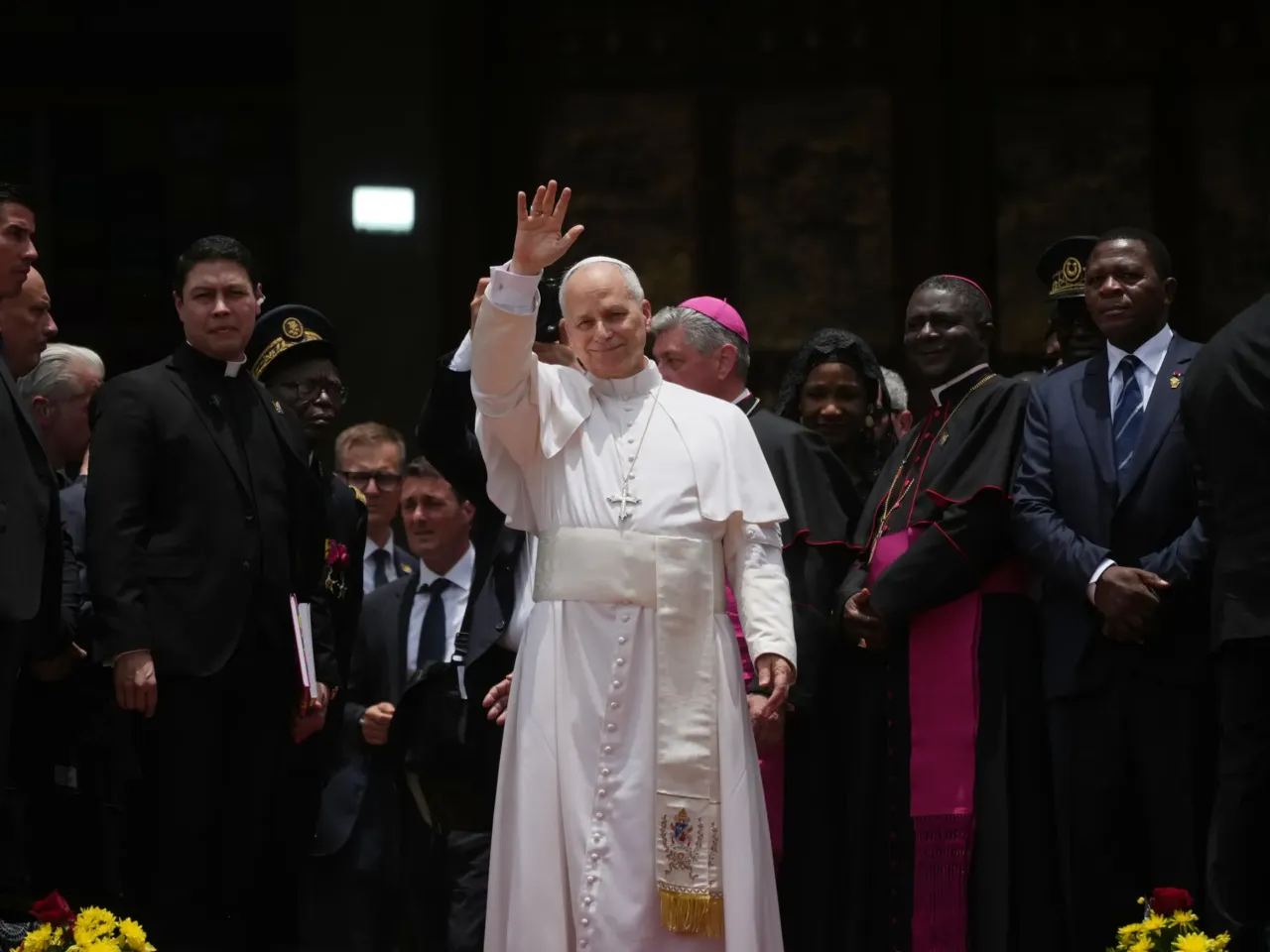
LAGOS, Nigeria — Pope Leo XIV has delivered striking remarks in Cameroon, condemning global leaders who, he said, are “ravaging the world” by spending billions on war.
The comments come amid a growing public dispute with President Trump over the ongoing war in Iran.
In a speech in St. Joseph’s Cathedral in the Cameroonian city of Bamenda, the pope sharply criticized those who use religion to justify military actions.
“The masters of war pretend not to know that it takes only a moment to destroy, yet often a lifetime is not enough to rebuild,” he stated.
“Blessed are the peacemakers!” he said. “But woe to those who manipulate religion and the very name of God for their own military, economic and political gain, dragging that which is sacred into darkness and filth.”
Some of the Pope’s remarks were directed at the separatist conflict in English speaking regions in Cameroon, displacing more than 650,000 and killing more than 6,500 people since 2017 according to the UN. He spoke in Bamunda, a city at the heart of the crisis in the central African country.
But the pope’s broader message was undeniably global.
“The world is being ravaged by a handful of tyrants,” he said, “yet it is held together by a multitude of supportive brothers and sisters.”
Pope Leo’s African trip comes amid his strong opposition to the ongoing U.S. and Israeli-led war with Iran. His calls for peace have drawn sharp criticism from the White House.
Over the weekend, President Trump attacked the pope as “weak on crime and soft on foreign policy,” suggesting that Leo should focus on religious matters rather than politics. In one post, Trump shared an AI-generated image of himself as Christ, which he later deleted.
JD Vance, Trump’s vice president and a converted Catholic, also criticized Pope Leo, telling him to “stay out of politics” and concentrate solely on “matters of morality.”
Currently in Cameroon, Pope Leo’s African tour focuses on promoting unity, peace, and stronger interfaith relationships.
Pope Leo also met with 93-year-old Paul Biya, the world’s oldest leader, who won a controversial eighth term in October 2025, amid widespread irregularities according to human rights groups.
Before the Pope’s visit, a prominent Jesuit priest in Cameroon, Father Ludovic Lado, publicly urged him not to come. He warned the visit could be seen as an endorsement of Biya’s government which he said orchestrated “massive fraud” to extend his rule.
In a speech at the presidential palace on Wednesday, Pope Leo denounced corruption and said “the management of public resources and respect for the rule of law are essential to restoring trust.”
But the trip has been overshadowed by the escalating divide between the Vatican and Washington, as the pope’s calls for peace unfold amid a growing and increasingly personal clash with President Trump — particularly striking given that Pope Leo is the first American to lead the Catholic Church.
Copyright 2026 NPR