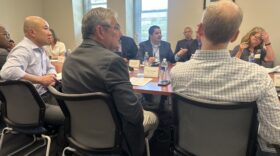

Richmond City Council on Monday approved its final proposed changes to Mayor Danny Avula’s latest spending plan, moving money around to give raises to all city employees in July and making other tweaks.
Councilors held multiple work sessions to settle on their amendments to Avula’s nearly $1.1 billion budget proposal for fiscal year 2027, which starts July 1 and runs through June 30, 2027. They also settled changes for the Capital Improvement Plan for FY 27–31.
“I commend my Council colleagues for a robust engagement process,” Avula said in a statement that also thanked residents “for their enthusiastic participation” to shape the city’s priorities.
While the city’s plan appears on track to be approved on May 11, the timeline for a final state budget is less clear, as negotiations have stalled over a tax exemption for data centers built in Virginia.
House Speaker Don Scott (D–Portsmouth) said that a deal could be reached by June, which would give local governments a short window before the 2027 fiscal year to know how much state funding they will get.
Ruth Morrison, director of Richmond’s intergovernmental affairs office, said state budget delays are not new, but they require the city to prepare for any unknowns.
“There are a few places where everybody does have to sort of hold some space and, depending on what the state does, make some changes in the details of how soon we can implement what and which funding is going to come from where,” she said in a phone interview Monday. “But I do think, overall, we have some experience in this environment.”
Morrison said she’s confident that state budget negotiators in the Virginia General Assembly will reach an agreement and said she believes city officials will be ready in July.
She also voiced optimism that state legislators were going to invest in the city’s big-ticket projects, highlighting that both the House of Delegates and state Senate passed budgets with $50 million set aside in FY27 to help pay for improvements to the city’s sewer system. Former Gov. Glenn Youngkin didn’t include any funding for the effort in his final biennial budget plan.
Avula’s spending plan for the city’s long-term capital projects proposes more than $247 million for the sewer system from FY27–31, including nearly $72.5 million in FY27.
Richmond needs to upgrade its combined sewer overflow system to meet a state-imposed deadline of 2035 to stop dumping sewage into the James River.
The city also wants state funding for improvements to its water treatment plant and infrastructure, an aging system that residents became more familiar with in the wake of multiple water issues affecting Richmond in 2025.
Richmond-area legislators in both chambers proposed including state dollars for “regional drinking water infrastructure in Central Virginia,” though only the Senate approved a proposal that includes grant money for the city’s drinking water infrastructure.
As for council’s proposed budget changes, members had to make late sacrifices to assure there was money to help pay for their priorities.
City code requires Richmond’s budget to be balanced, meaning any additional funding needs to have matching cuts. Because of this, council’s amendments are often not sweeping revisions.
This year, council funded most of its proposed amendments with more than $3 million from Richmond’s Gap Grant Program, which officials recently agreed to end. The program aimed to help low-income residents with housing costs, but only a fraction of the $3.9 million set aside for it was distributed.
One of council’s amendments gives a 3.25% raise to all city employees in July. Avula’s proposal offered a 3.25% pay bump for unionized city employees, but delayed a 3% pay increase for non-union workers until January 2027. Council also agreed to give Richmond Retirement System recipients a one-time payment equal to a 1% cost-of-living adjustment, which comes with a total cost of $716,400.
After agreeing on the salary increases, councilors were told at an April 20 budget work session that they had $222,600 extra for other proposals. Two days later, officials were told they actually needed to make up $113,092 to pay for the raises for city employees.
Administration officials initially told council that the pay raises would cost $961,000, but that figure ended up being nearly $1.3 million. To help make up the difference, 5th District Councilor Stephanie Lynch removed her budget request for $125,000 for a consultant to help redevelop the Clark Springs Elementary School property.
“Every budget year, you have to make tough decisions,” she said at council’s April 22 budget meeting while making the announcement.
In what officials described as another difficult decision, money was not set aside to help the Richmond Virtual Academy — which offers students kindergarten thru 12th grade an online learning environment — stay open. This frustrated councilors who were planning to allocate funding for the academy.
“Between Monday and today, the Richmond Virtual Academy has fallen from the list of potential amendments,” Councilor Kenya Gibson (3rd District) said on April 22. “There was $200,000 that we had agreed on as a body to put towards that and unfortunately, the miscalculation from the administration is also about $200,000, and so that line item is not here.”
Avula proposed $257 million for the Richmond Public Schools budget — an $8 million increase from last fiscal year, but about $4 million less than what the district wanted.
In March, dozens of people went in front of city council to urge them to offer more school funding so RPS could keep the virtual academy. Jacqueline Johnson Wilson said her son relies on daily support because he’s nonverbal and has mobility challenges, telling council in March that a traditional school would present constant barriers.
“Too much of his day will be spent managing the environment rather than accessing instruction,” she said at a March council meeting.
The school district decides how it spends the money it gets from the city, but Superintendent Jason Kamras told council last week that RPS can’t maintain the virtual academy without more funding. Kamras said nearly all students with disabilities are educated in person.
“The narrative that the only place that these young people can be educated is at the virtual academy is false,” Kamras said at an April 22 council budget work session.
Despite getting a record investment in Avula’s budget, Kamras said that RPS has “also tightened our belts,” including laying off 45 full-time employees.
Among other budget amendments, council is proposing to put $483,000 for transportation and security for RPS students in after-school programs and $500,000 to help redesign Westover Hills Elementary.
City residents’ last chance to comment on the final budget proposal is at council’s May 11 meeting, when councilors are scheduled to vote on the spending plan.