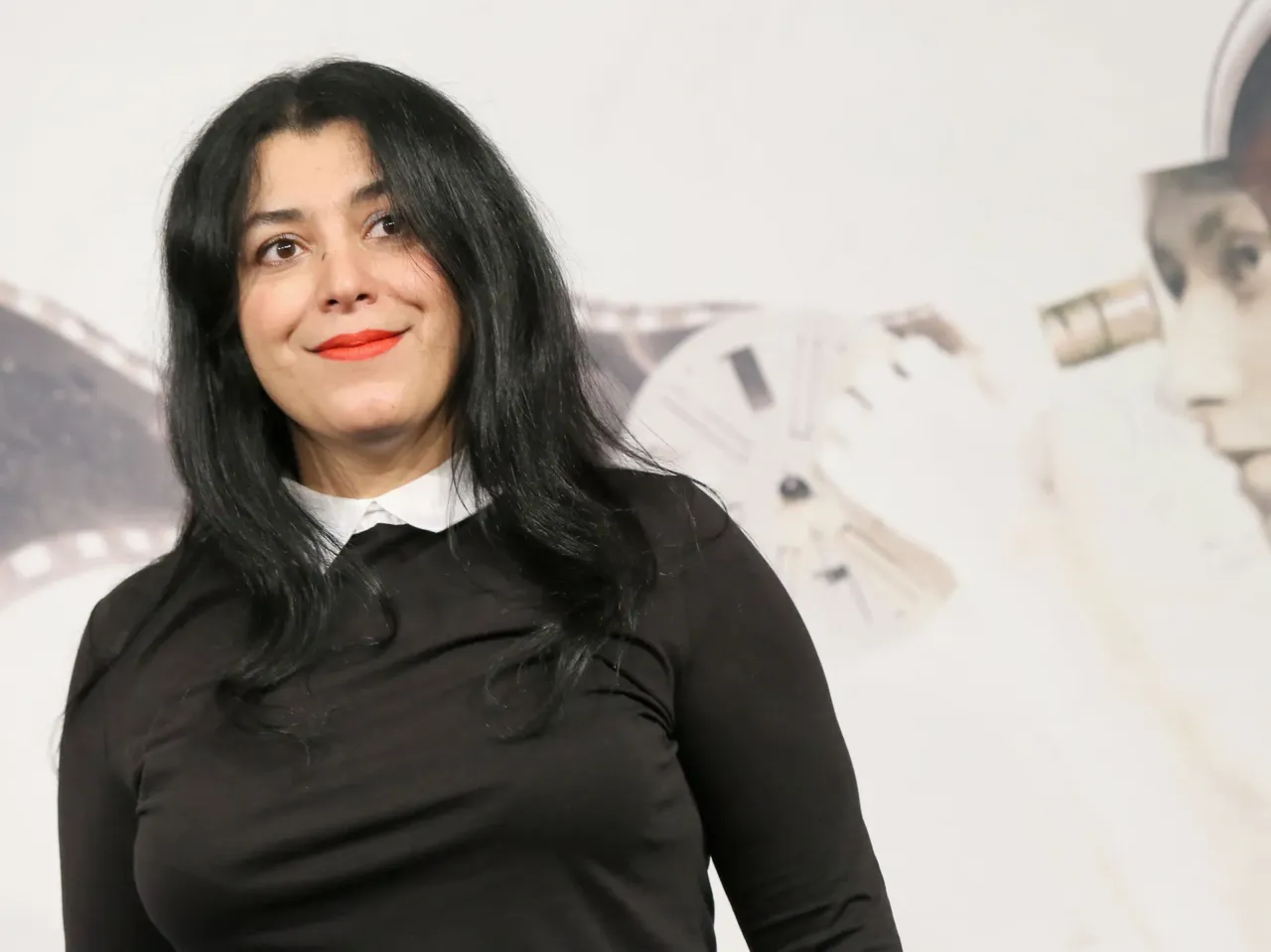
Marjane Satrapi, author of the acclaimed graphic novel Persepolis and a leading champion for women’s rights in Iran, died on Thursday. She was 56.
The office of the French presidency confirmed her death in a statement, highlighting the universal message of freedom her work carried.
Satrapi was born in Tehran in 1969. Her childhood was one shadowed by polarization: Though she grew up in a communist-leaning household and studied abroad in Vienna and France as a young adult, the 1979 Iranian Revolution and its resulting theocratic regime indelibly altered her life.
Satrapi wrote about her adolescence in the new Islamic Republic — her rebellion, exile, return, and permanent departure — in Persepolis. Published in four French volumes between 2000 and 2003, Satrapi’s autobiographical comic book became an international bestseller. It has since been translated into more than 20 languages.
“A comic has this advantage,” Satrapi told NPR in 2024. “Because the first language of the human being is drawing.”
In 2007, Satrapi co-wrote and directed an animated film adaptation of Persepolis with her creative partner Vincent Paronnaud. The film won the coveted Jury Prize at the Cannes Film Festival, and earned Satrapi an Academy Award nomination in 2008. She was the first woman in history to receive a nomination in the Best Animated Feature category.
“The real issue for me is human rights, it’s the freedom of expression,” Satrapi told NPR in 2007. “It’s the freedom of thinking, you know.”
Following the Iranian Revolution, a young Satrapi (alongside every woman in Iran) found herself forced to wear a hijab. Satrapi said the covering barred her from her right to free expression: “Having to wear something I don’t want to wear, just not being able to express exactly what I want to do, that was — that was something — I just couldn’t handle it.”
Satrapi continued to draw, write, act, direct and advocate throughout her adult life. Her last book, Woman, Life, Freedom (2024) is a collaborative anthology — assembled in just five months — bringing together works of artists and academics on the death of Mahsa Amini and the protests that followed in 2022.
Copyright 2026 NPR