Copyright © 2026 VPM, all rights reserved.
PBS is a 501(c)(3) not-for-profit organization.
VPM News Morning Edition
NEXT UP: 9:00 AM

Thanks to our sponsors – Become a Sponsor

Somali World Cup referee denied U.S. entry, hailed as hero at home

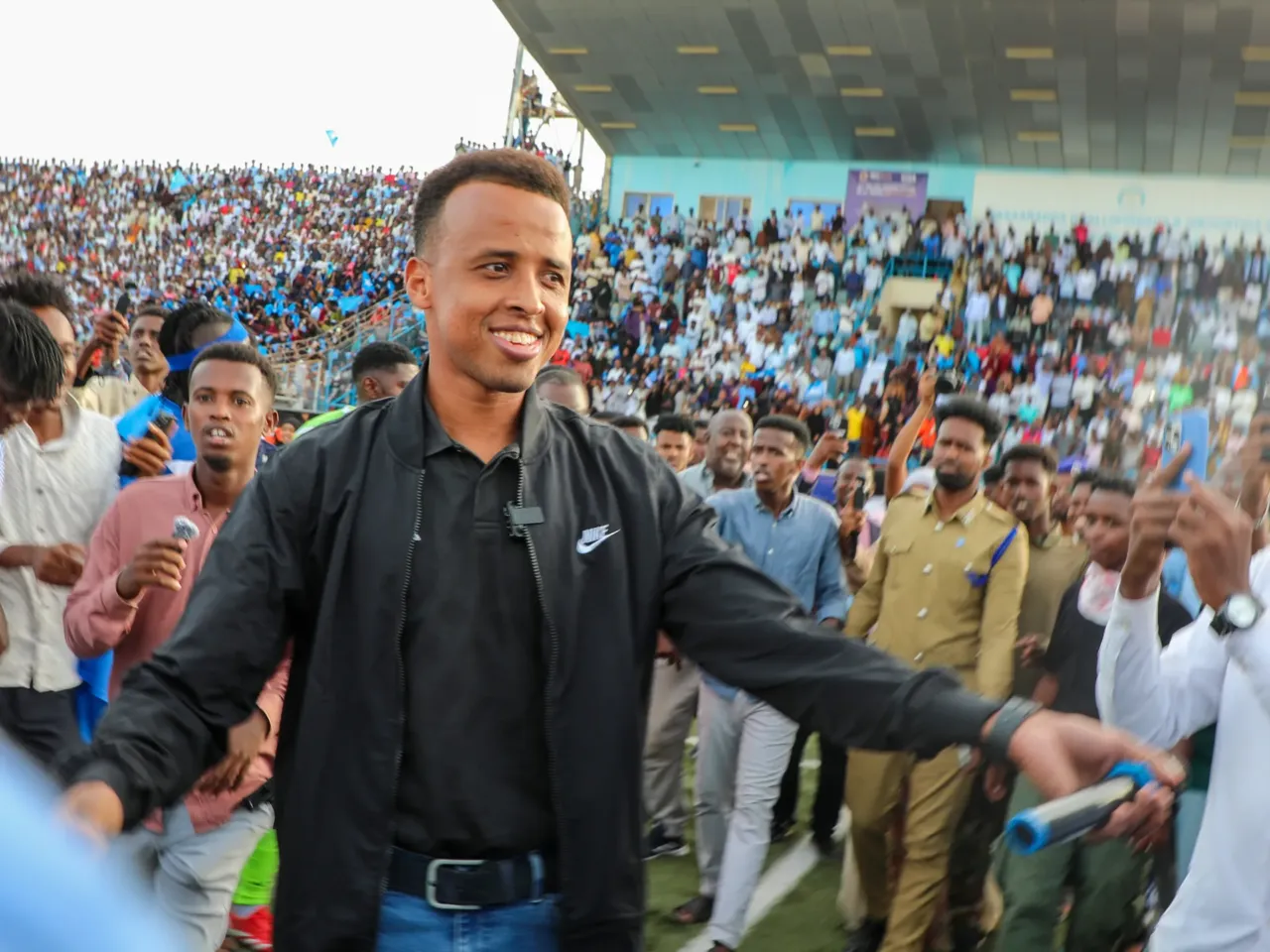
Somali referee Omar Abdulkadir Artan greets fans who show support for him, after he was denied entry into the United States where he had traveled to take part in the World Cup and was forced to return to his country, in Mogadishu, Somalia on June 10, 2026.
Abuukar Mohamed Muhidin / Anadolu via Getty Images
Somali referee Omar Abdulkadir Artan greets fans who show support for him, after he was denied entry into the United States where he had traveled to take part in the World Cup and was forced to return to his country, in Mogadishu, Somalia on June 10, 2026.

Updated June 10, 2026 at 17:45 PM ET

Days after he was denied entry to the United States, Omar Artan arrived home to a hero’s welcome. Government officials greeted him at the airport with flowers, and fans draped him in the sky-blue Somali flag.

In the capital of Mogadishu, thousands packed into a stadium—not for a soccer match, but to celebrate the referee. There, Artan was hoisted onto shoulders to the cheers of the crowd, a symbol of national pride in a country often disparaged on the world stage.

“What happened has happened and it was fate. I am grateful for the support FIFA gave me,” Artan told reporters upon his arrival in Somalia’s capital, Mogadishu.

Artan, who was poised to become Somalia’s first-ever World Cup referee, told supporters he remains determined.

“I will attend the next World Cup,” he told local media. “We should strive for our country and defend it. We should never be disappointed. I love my country, and I encourage young people to continue pursuing their goals.”

Over the weekend, Artan was denied entry by U.S. Customs and Border Protection at Miami International Airport. The decision, despite his holding a diplomatic passport and valid visa, was defended by Andrew Giuliani, head of the White House World Cup task force. “Anyone who is communicating with bad actors that plan harm against the United States of America are not gonna be admitted entrance.”

A Trump administration official, speaking on condition of anonymity, alleged Artan had associated with “suspected members of terror organizations.” NPR has reached out to Artan for comment but has yet to receive a response.

A FIFA spokesperson said Artan would now not be able to train at the tournament, which is being held in the United States, Canada and Mexico, and kicks off in Mexico City on Thursday.

In Somalia, the U.S. has been a key partner in countering the Al Qaeda-linked militant group Al-Shabaab. The U.S. accusations, however, have angered Somali citizens.

Ilham Gasser, a Somali member of parliament, said, “Many Somalians feel he has been unfairly treated. If these were genuine concerns that an individual had links to terror organizations, many Somalians are asking, why were those concerns not identified in the visa process?”

Last year, Somalia was among 12 countries subjected to a sweeping U.S. travel ban. President Trump has repeatedly disparaged Somalia, calling its people “garbage” and describing the country as “probably the worst, most dangerous country,” calling it “hell.”

Artan’s setback has instead become a moment of national pride, as Somalia celebrates one of its own on the world stage. While the World Cup may have slipped away this time, his achievement at home is impossible to ignore.

Copyright 2026 NPR

Emmanuel Akinwotu is an international correspondent for NPR. He joined NPR in 2022 from The Guardian, where he was West Africa correspondent.

He has reported in Africa since 2016, covering a wide range of prominent and under-reported stories, from the war in Sudan that has torn through the country and sparked one of the worst humanitarian crises and an exodus of refugees to neighboring countries, to the rise of military takeovers in West and Central Africa. He has covered the growing international dominance of African music, interviewing music stars from Angelique Kidjo to Tems and Davido, as well as the rise of the drill rap scene in Ghana, partly inspired by similar movements in Chicago, New York and London. He has reported on the growing flight of young people from Nigeria in search of a better life abroad, and from coastal towns in Senegal, covering the toll that widespread migration to Europe has on families left behind. In 2020, he reported from major protests in Nigeria against police brutality that, despite being violently suppressed, were a galvanizing moment for many young people seeking change.

Before The Guardian, he worked as a correspondent for Agence France-Presse news, working on misinformation and then as a general reporter on Nigeria, Ghana, Benin and Togo. Previous to that, he was a freelance reporter for The New York Times and other media. In 2018 he co-led a NYT investigation into how scores of Shia Muslim protesters were killed near the Nigerian capital, Abuja, by a special military unit directly answerable to Nigeria's president.

He is a once proud and now fairly tortured fan of Manchester United and the Philadelphia 76ers. He was born in London and moved to Lagos in 2016, in reverse to the move his parents made when they left Nigeria for the U.K. in the 1980s. Emmanuel notes his dad has gone from concern about the merits of this decision, to taking full credit for it.

Related Stories