VHG Newsletter – September 2026
When the ‘dog days’ of summer hit a crescendo in August, it is hard to believe that cooler, shorter days of fall are not far away. As my garden hits peak production for summer vegetables; peppers, tomatoes, okra, zucchini and beans, I know it is time to plan for fall. And there are so many great options for fall gardens, we just have to keep in mind a few numbers: first frost date and days to maturity.
Across Virginia, the first frost date varies immensely! If you are in the mountains, October 5-15th could be your date and down at Virginia Beach, you’re looking at November 15-25th. Check with your garden friends, local cooperative extension office and keep track of your frost dates in your garden journal. For more information on garden zones and approximate frost dates, go to this Virginia Cooperative Extension site.
Once you know the first frost date, it’s time to look at your seed packet. The seed companies print lots of information on the packet, and what we want to check is the date to maturity. The seed company recorded how long after you plant the seed until the vegetable matures or, in the case of flowers, how long it takes to get blooms. Here are a couple of caveats to keep in mind: the seed company might do the date to maturity in a field trial in their area (maybe not Virginia!), so the growing conditions in a trial might not exactly match your soil, weather, sunlight, etc. I often find the date to maturity is ‘optimistic,’ meaning it will take longer in my garden than the packet says it will to get what I want! I make notes about those differences in my garden journal, so I have that for future reference. One more thing about ‘date to maturity’ is that it’s usually for spring or summer growing seasons, meaning more sunlight from the spring equinox to the summer solstice as days lengthen. In fall gardens, we are losing light every day, so this is another reason to tack on extra days from planting to harvest over what the seed packet says!
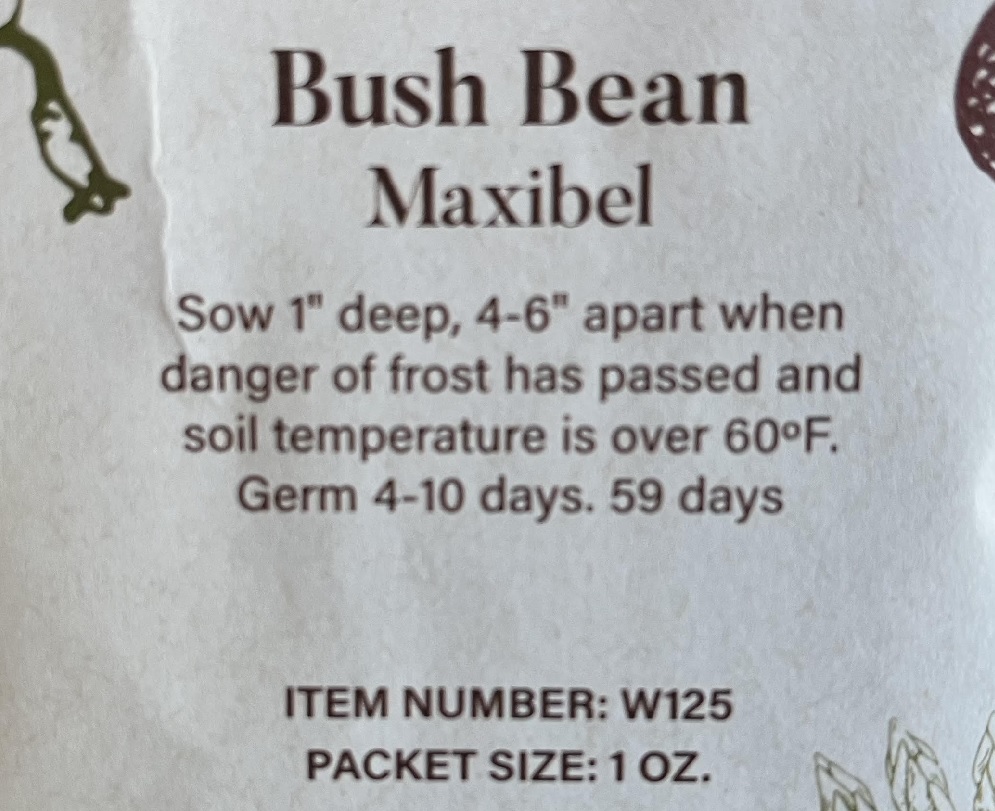
Now let’s combine these two numbers, first frost date and days to maturity, to plant our fall garden! If the first frost date in fall is October 10th, then I would expect serious damage to plants that are not cold-tolerant around that date. So, if I look at a crop like green beans (Phaseolus vulgaris), my favorite variety is ‘Maxibel’ with a maturity date of 59 days (see my picture). Now I count backward on my calendar from October 10th, landing about August 12th. If everything works perfectly, I will have beans on the plant the day it freezes! Whoops! Better build in some time for the plants to get going, set fruit and some extra days to grow. I estimated that if I plant beans closer to August 1st, I should get a late crop of green beans finishing up in early October.
There are many frost-tolerant crops – things that you plant that would take the chill, especially greens like spinach, kale, arugula, lettuce and green onions. Root vegetables like carrots and beets also do well in a fall garden. Every year, I plant garlic in early fall since it needs all winter and spring to produce heads the next summer. This is one of my favorite fall crops, and I dry the garlic I harvest in summer to last me nearly the entire next year! One more tip, try sowing cilantro in the fall. It turns out cilantro, which seems like the natural summer partner of tomatoes for salsa, is not a plant that loves the super heat and humidity of Virginia’s July and August. I harvest much more cilantro that self-seeds in early spring from the seeds I plant in the fall. Try it out and see if cilantro does better for you in the fall than the summer.
I live in the Shenandoah Valley, where frost comes earlier than other parts of the state, and some years the winter is harsh with temperature dips that last long enough to freeze my greens. I put up hoops with row cover to try to give my plants a bit of protection, and some years I have spinach all winter, some years I replant in February to March to start over. It is all part of the learning process in the garden. A fall garden is a great time to experiment with seeds you have left, and if you don’t have seeds, check out your local library – many now have seed banks where you can get seeds for free! I love staying in the garden for the fall, when the cooler temperatures and lower humidity are so welcome, with the benefit of fresh food up until frost. Hope this inspires you to put in some late seeds to see what will grow into your fall.
Happy gardening!
Robyn