Asters are amazing; to me they are the late-season queens of the garden. With some types starting to show their colors in July, they carry the garden to the first hard frost with the blossoms of Aromatic Aster, Symphyotrichum oblongifolium, and a few other very late bloomers. Their colorful blooms celebrate the season and range from soft hues of white, light blue, lavender and baby pink to the more saturated colors of purple, deep pink, blue and burgundy.
The variability of these plants don’t stop with color; the growth habit of these herbaceous perennials range from growing prostrate along the ground, like Purple Wood Aster, Eurybia spectabilis, to strong-stemmed upright growers that can grow to seven feet tall with the right conditions. Asters tolerate a variety of growing conditions. In the shade, with some morning light, White Woods Aster, Erybia divaricata, makes a statement even in dry soil once established, while Swamp Aster, Symphiotrichum puniceum, does best in moist to boggy conditions in full sun or partial shade.
Asters are in the Asteraceae family, the same plant family as daisies, sunflowers, chrysanthemums and more. This is a massive plant family also referred to as the composite family. The flowers have a center disc and what are commonly called petals, are actually individual ray flowers. The ray flowers are grouped to create what most people refer to as the flower. Regardless of all that botanical stuff, the blooms are very pretty and popular with birds, bees and other insects because it’s easy for them to access the nectar and pollen.
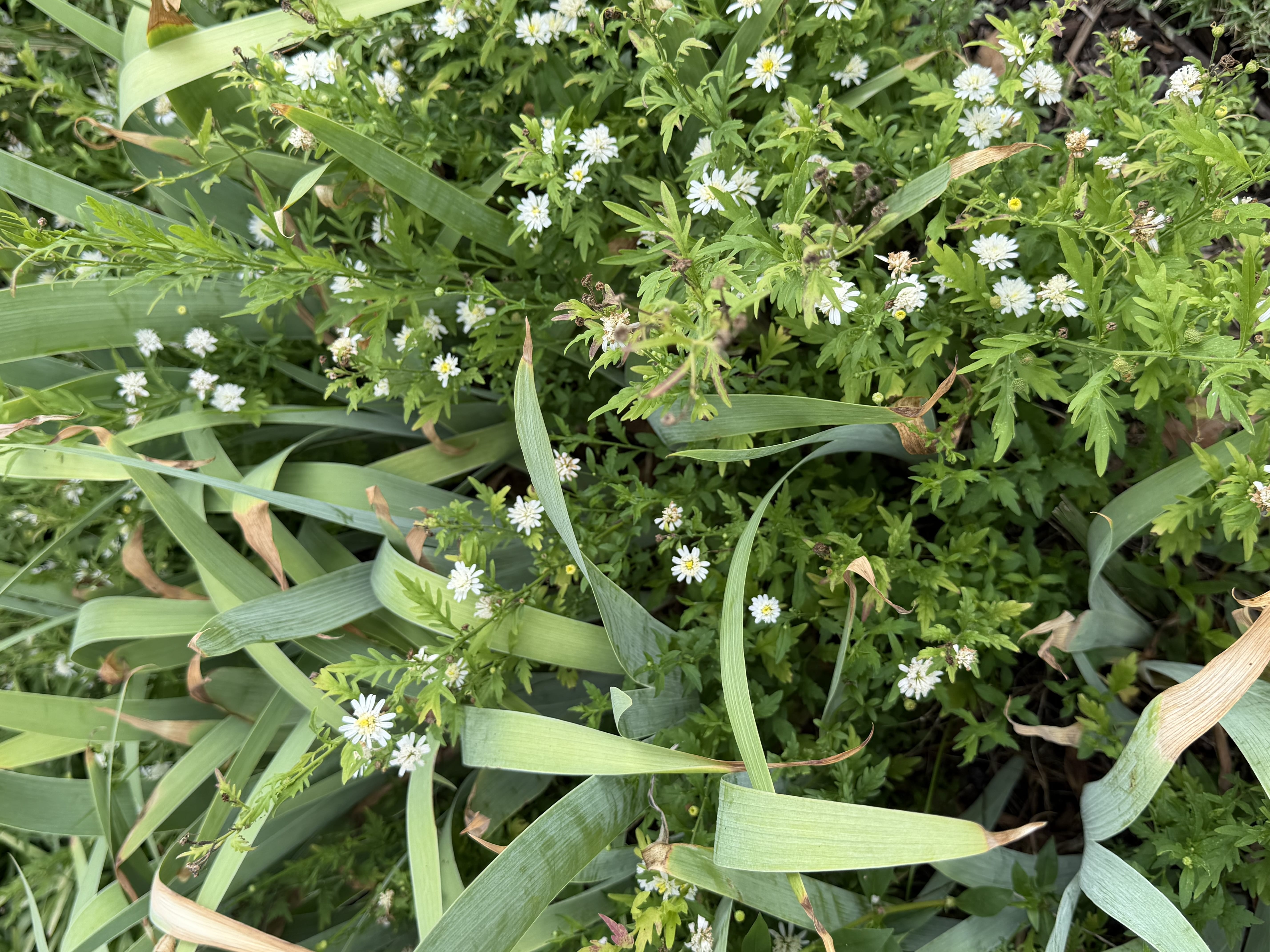
Asters have a reputation as wanderers in the garden. While some have earned the title, others are found guilty by association. While I cannot list all of the spreaders, Heath Aster, Symphyotrichum ericoides, is one that immediately comes to mind. This low grower is known for its abundance of small white flowers, which are a valuable resource for pollinators late in the season. This plant is also capable of spreading one foot within a growing season!
Conversely, the clump-forming Smooth Blue Aster, Symphyotrichum laeve, is an example of tighter-growing asters. This herbaceous perennial will produce blue lavender to purple flowers over bluish-green foliage in both sun and part shade. Smooth Blue Aster grows to a height of 2-4’ but will typically spread only 1-2’ wide in soil that ranges from average, well-drained to dry. A favorite cultivar is ‘Bluebird’, the soft blue flowers typically bloom from September to October.
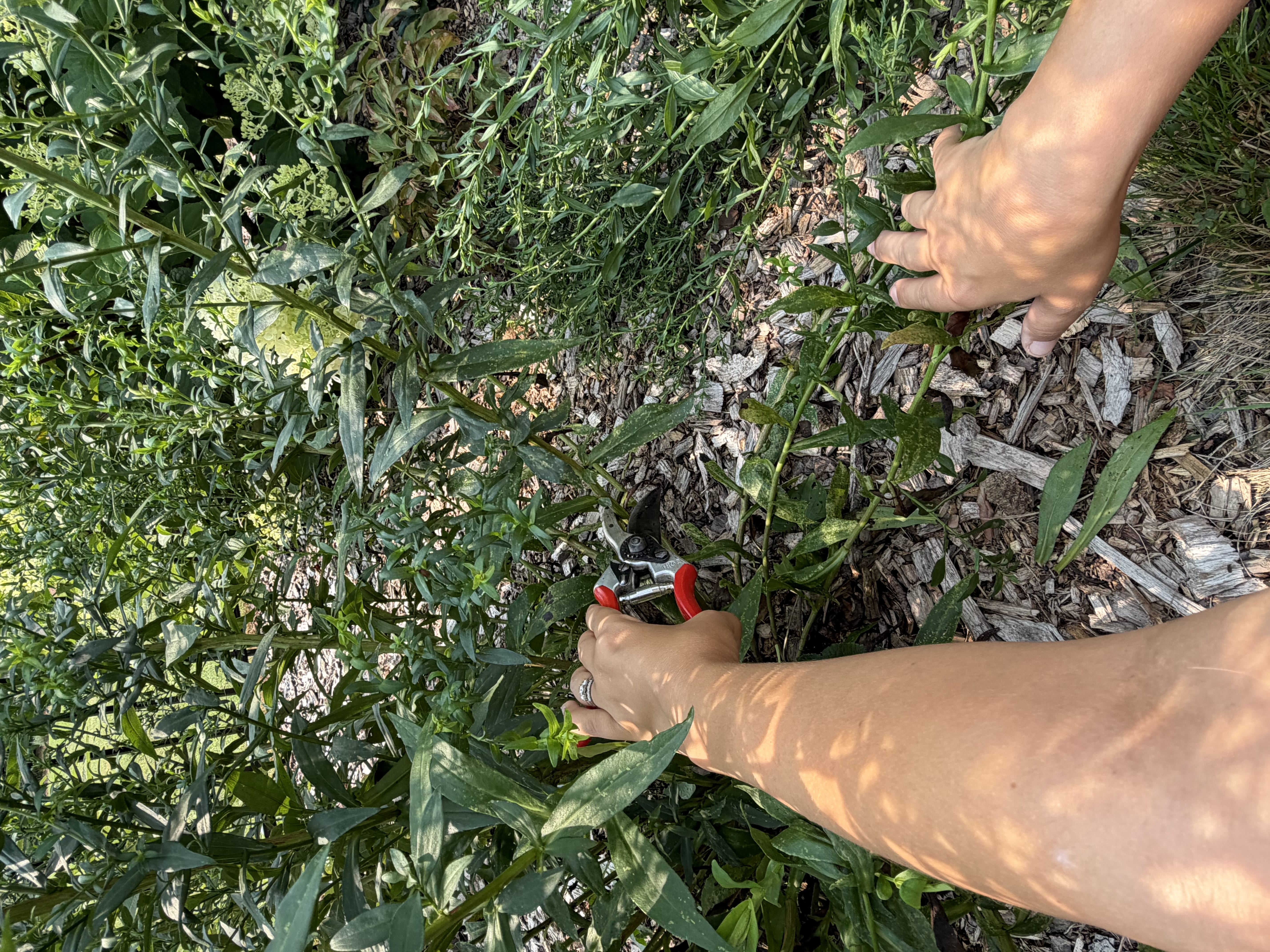
Asters are prone to powdery mildew and rust. While both diseases mar the foliage and flowers, only powdery mildew will cause the plant to eventually die. Rust will not kill a plant because for it to survive, the infected plant needs to remain alive. Some asters that are less prone to disease are the Aromatic and Heath asters previously mentioned, plus the Tartarian aster, Aster tartaricus ‘Jin-dai’, Calico Aster, Symphyotrichum lateriflorum types and varieties of Aster x frikartii. Thinning the plant by removing 1/3rd of the stems will increase air circulation, which reduces the opportunity for disease.
Rather than grab and go, take a few minutes to check out the many asters available at the local garden center and choose the best one suited for your site and your garden design. Celebrate fall with asters.
Happy Gardening!
Peggy