
The Richmond School Board voted to approve a budget Tuesday night that restores raises and programs previously slated for cuts. While the vote signals confidence, much of the plan still hinges on projected funding expectations.
Board members ultimately voted 6–2 to approve a roughly $549.9 million spending plan for the upcoming 2027–28 fiscal year. (7th District’s Cheryl Burke was not present due to her husband’s recent death.)
The operating budget reflects a projected $261 million contribution from the City of Richmond — an increase of over $12 million from fiscal 2026.
When it comes to the Capital Improvement Plan budget, the district is requesting $10.3 million from the city. Last year, RPS received $2.5 million in funding for this separate fund that covers major facility expenses.
When introducing the budget for vote, Superintendent Jason Kamras said: “I do believe this is a budget that reflects our values in that under very tight fiscal constraints we have upheld our commitments, we have prioritized schools to the best of our ability and we have been fiscally responsible which is our duty to the public.”
The approved FY27 operating budget rolls back some earlier cost-saving measures, contingent on final funding. It now funds:
- All existing union-bargained commitments
- A 2% raise for all units currently in negotiations (including teachers)
- A 75–25 split on the increase in health insurance costs (replacing a 50–50 split)
- Full funding of mental health and wraparound support contracts
- Summer school funding
- Funding for Richmond Virtual Academy (RVA)
Other proposed eliminations, including vision insurance for employees and the elimination of 46 central office positions, from Kamras’ original proposal remain. The cut full-time positions range from future center navigators to custodial services and staff accountants.
A point of contention during this budget season was the proposed closure of Richmond Virtual Academy, with the board unable to reach a consensus on whether or not to add RVA back before Tuesday’s vote.
Pleas to include funding for RVA dominated Tuesday’s public comment session. Teachers, students and parents outlined how the synchronous virtual learning option has been a lifeline for families facing crisis. The online learning program costs the district $3.2 million annually to maintain.
Many, including Jacqueline Johnson Wilson, spoke about how the closure would disrupt their children’s learning and outlined how the district would face rising costs associated with equipment and support needed for students with disabilities.
I don’t understand why we cannot, in this budget, allow for disabled, vulnerable children to be safely educated in their least restrictive environment, which is home.
—RPS parent Jacqueline Johnson Wilson
Johnson Wilson’s son, who requires intensive support services, has been attending Richmond Virtual Academy for five academic years.
“I just don’t understand why I would call it the post, in the post-digital age that Richmond Public Schools is not supporting this option,” she told VPM News. “I don’t understand why we cannot, in this budget, allow for disabled, vulnerable children to be safely educated in their least restrictive environment, which is home.”
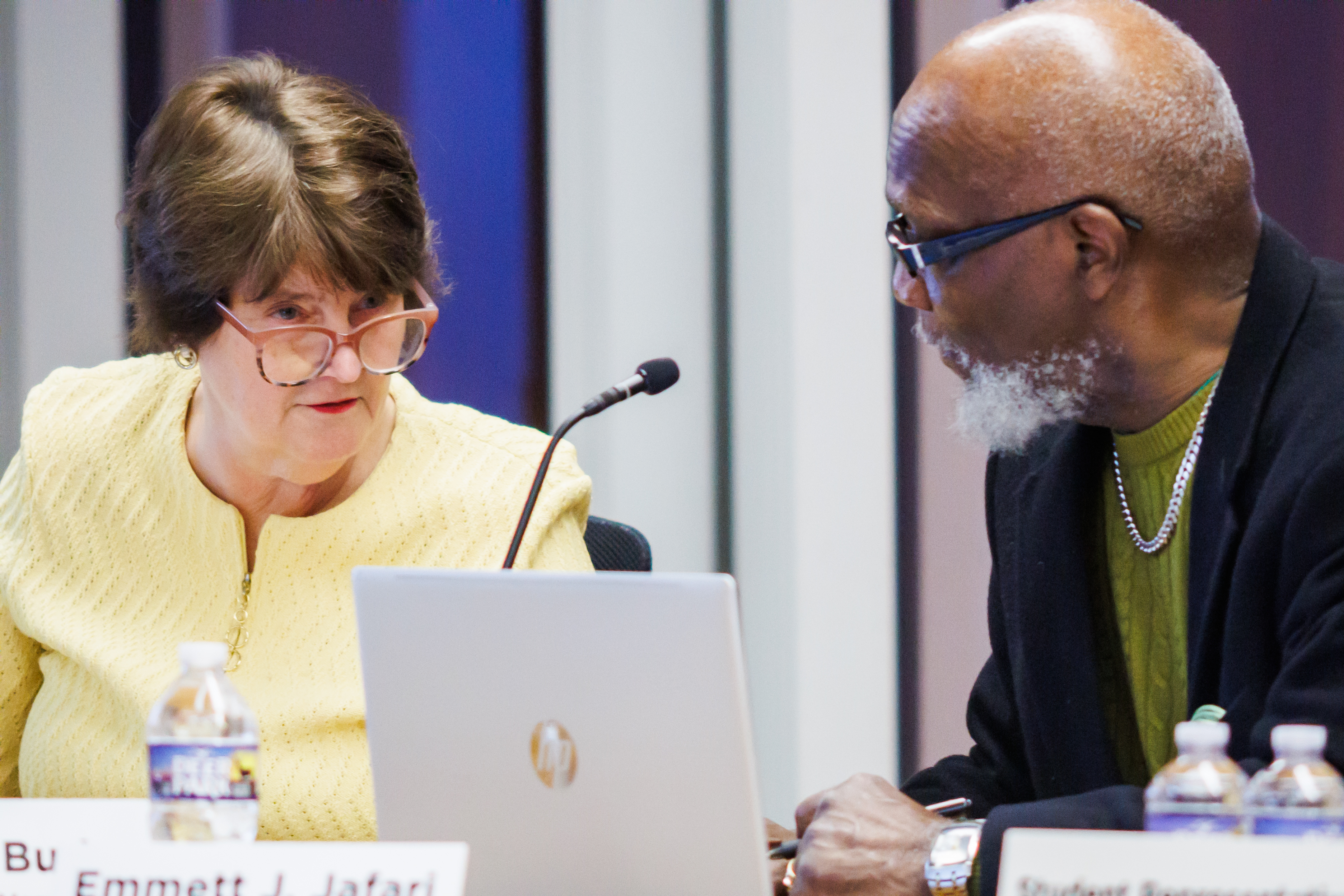
Fourth District Member Wesley Hedgepeth introduced a motion to amend Kamra’s budget proposal to include virtual academy’s funding. It ultimately passed 6–2, with 6th District Member Anne Holton and Board Vice Chair Matthew Percival voting no.
Holton, whose first official meeting was Monday’s work session, applauded the RPS community’s advocacy — but cautioned adding the program back to the budget would create false hope.
“I just think it’s unrealistic to think when we’re already pushing up against the limits. We’re already over the limits of what I think we’re realistically going to get from the city and the state,” Holton said Monday.
The approved budget assumes that General Assembly legislators will finalize a House-led budget that would fund a $20 million increase for RPS, as opposed to the Senate plan that only increases revenue by $16 million.
Kamras added that about $7 million of the anticipated new funding would be one-time funds, creating a shortfall during the next budget cycle.
If the district receives $12 million less in funding from the city — as in, if it’s funded at the same rate as in fiscal 2026 — or if the state adopts the less-favorable Senate budget, RPS will have to revisit previously proposed reductions.
Throughout the budget season, leaders and community members have questioned why RPS officials began with nearly $22 million in proposed reductions instead of outlining students’ needs first, calling the initial proposal inflated and publicly requesting an independent audit.
Kamras told VPM News last week that the budget reflects rising costs, staff raises through union contracts and the loss of one-time funding sources. Richmond’s superintendent said he remains “cautiously optimistic” that with additional funding from the state, the district will be able to reverse some of the outlined reductions.
“I thought it was most responsible and prudent to let folks know now what might need to come off the table,” Kamras said, “rather than waiting till the whole budget process winds down in May or June.”
(Virginia’s fiscal year runs July 1–June 30.)
In response to calls for an independent audit, Kamras said the district routinely posts its financial expenditures. RPS has been without an internal auditor since the May 2025 departure of Douglass Graeff, as reported by The Richmonder.
Percival, who represents the 1st District, told city councilors at the Organizational Development Standing Committee Monday that the school board has had difficulty filling the position despite an active search: “We are hoping within the next few weeks to have a candidate in place.”
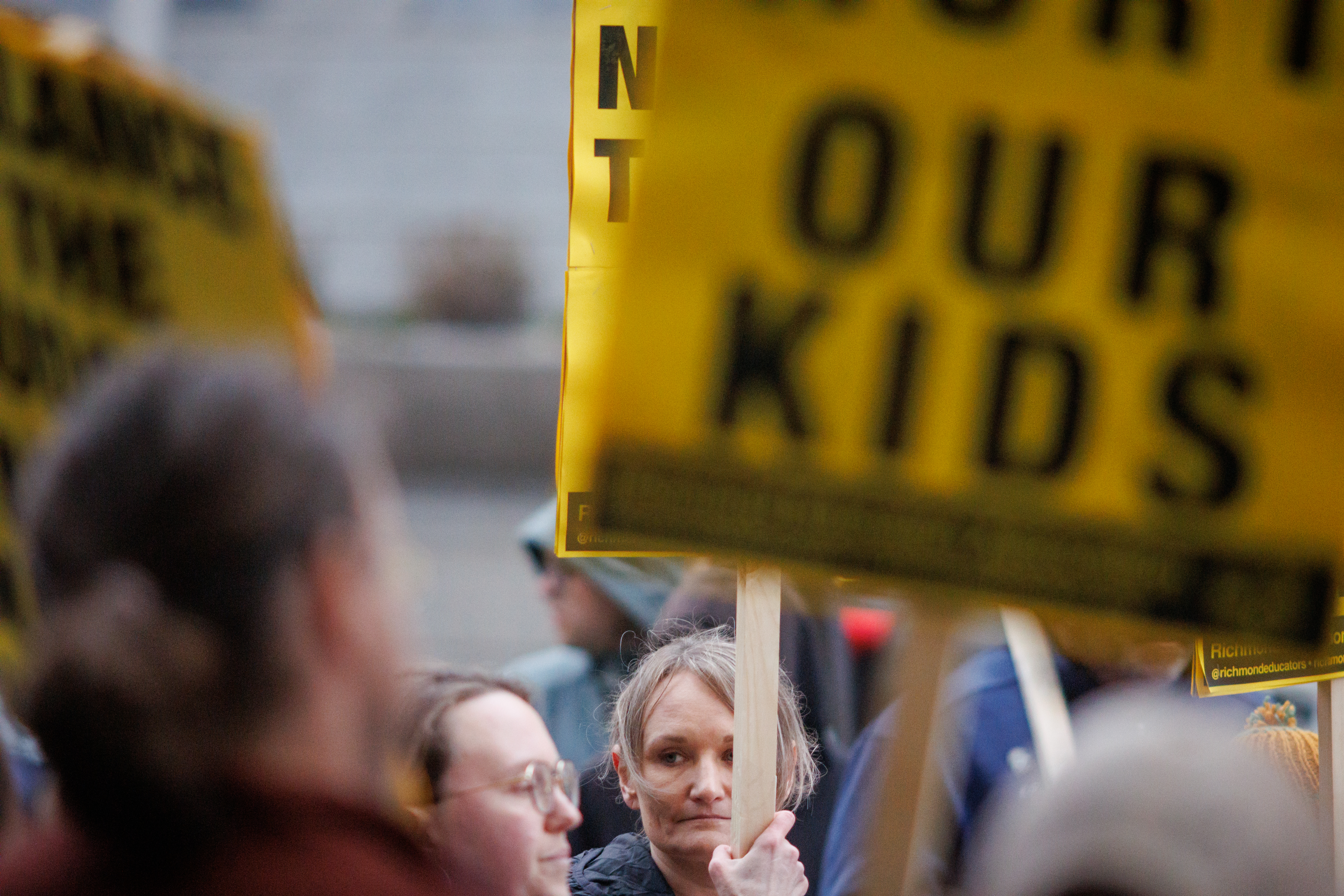
Prior to Tuesday night’s meeting, Richmond Education Association held a rally outside of City Hall calling once again for an audit of RPS and demanding a needs-based budget for fiscal 2027.
REA argued that a $31 million budget hole could not exclusively be blamed on rising costs and highlighted that the district has received funding increases from the city and state over the past couple of years.
The union presented a number of possible causes for the budget shortfall including that RPS was failing to plan ahead and using one-time funding for recurring costs.
Kamras has affirmed that if funding comes through, his top priority is fulfilling all of the district’s collective bargaining commitments, followed by providing raises to employees — including teachers currently in contract negotiations — maintaining a 75–25 split cost of insurance and preserving summer school.
“Frankenstein” system of funding
While the school board’s approval moves the budget process forward, it does not eliminate the financial uncertainty.
When asked what it would take to see an RPS budget cycle where the district isn’t proposing millions in reductions, Kamras told VPM News it comes down to the state redoing the public education funding formula.
“The way we fund public education in Virginia does not really make sense, and it has become kind of a Frankenstein system at this point, with lots of different funding streams and appendages to make up for its inadequacies,” Kamras said.
To fund schools, the state uses a local composite index or LCI, which is an estimate of a locality’s ability to pay for public education. In line with that formula, the state believes the city can pay for 58% of public education funding. The city’s LCI is higher than in neighboring counties like Hanover, Henrico and Chesterfield and below Fairfax County’s at 64%.
At the top of RPS’s legislative agenda this year was advocating for K-12 formula funding reform. As previously reported, the city’s overall success in its legislative agenda this year has been mixed.
In an update at Monday’s work session, RPS advocacy director Matthew Stanley said that a new formula is unlikely this year. That said, both statehouse chambers have proposed significant funding toward the joint subcommittee for elementary and secondary education funding, where a rewrite of the K-12 funding formula would take place.
Attention now turns to Richmond Mayor Danny Avula’s upcoming budget proposal next week, which will include in part or the whole RPS’ funding request and awaits decisions made by state legislators.
The coming months will determine whether the assumptions embedded in the approved budget become reality — or whether RPS will once again face difficult mid-year adjustments.