Copyright © 2026 VPM, all rights reserved.
PBS is a 501(c)(3) not-for-profit organization.
VPM News Morning Edition
NEXT UP: 9:00 AM

Thanks to our sponsors – Become a Sponsor

Breaking with tradition, Ukrainians celebrate Christmas on Dec. 25 this year

A Ukrainian serviceman holds his daughter as they take part in Christmas celebrations in the village of Pyrogove, near Kyiv on Monday.
Sergei Supinsky / AFP via Getty Images
A Ukrainian serviceman holds his daughter as they take part in Christmas celebrations in the village of Pyrogove, near Kyiv on Monday.

On Sunday night, Ukrainian President Volodymyr Zelenskyy addressed his nation and led its citizens in a short prayer to usher in Christmas Day.

“Today, all Ukrainians are together,” Zelenskyy said in a pre-recorded video shared on YouTube.

“We all meet Christmas together,” he said. “On the same date, as one big family, as one nation, as one united country. And today our common prayer will be stronger than ever. The people’s prayer. Today, it will unite millions of voices — more than ever before. And it will resonate today without a time difference of two weeks. Resonate together with Europe and the world.”

In central Kyiv, a big Christmas tree is decorated with blue and yellow ornaments, the colors of the Ukrainian flag.

This is the first time Ukraine will celebrate the holiday on Dec. 25. It has traditionally been celebrated on Jan. 6-7 in alignment with the Julian calendar.


Zelenskyy signed a law in the summer that made the date change official. Churches across the country upheld the new date, despite originally following the guidance of the Russian Orthodox Church.

It is another example of how Ukraine seeks to align itself with NATO allies and the West and away from Russian influence.

Christmas Day comes as the war carries into another difficult winter, and Russian attacks gain momentum inside Ukraine.

Financial and military aid from both the United States and the European Union are tied up and Ukrainians are worried. President Biden has asked Congress for $61 billion in support for Ukraine.

Earlier this month, Biden signed the National Defense Authorization Act, a yearly spending bill for the Department of Defense, which included a $300 million security assistance package for Ukraine.

But some Ukrainians worry what dwindling support might mean for their country.

Oleksandra Ustinova, a Ukrainian parliament member, told NPR that the international support is critical to Ukraine’s survival.

“If we don’t have munition coming, Ukraine is going to lose. And the question is whether the EU, U.S. and other countries are OK with Ukraine losing,” Ustinova said.

Copyright 2025 NPR
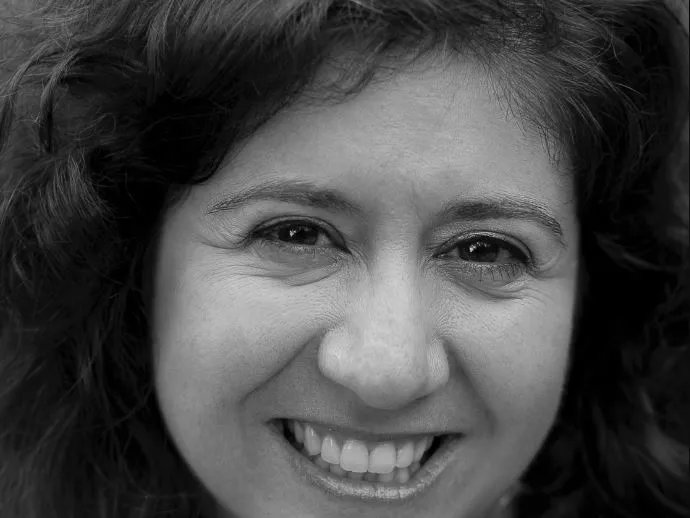
Joanna Kakissis is an international correspondent based in Kyiv, Ukraine, where she leads NPR's bureau and coverage of a conflict that has upended millions of lives, affected global energy and food supplies and pitted NATO against Russia.

Kakissis began reporting in Ukraine shortly before Russia invaded in February. She covered the exodus of refugees to Poland and has returned to Ukraine several times to chronicle the war. She has focused on the human costs, profiling the displaced, the families of prisoners of war and a ninety-year-old "mermaid" who swims in a mine-filled sea. Kakissis highlighted the tragedy for both sides with a story about the body of a Russian soldier abandoned in a hamlet he helped destroy, and she shed light on the potential for nuclear disaster with a report on the shelling of Nikopol by Russians occupying a nearby power plant.

Kakissis began reporting regularly for NPR from her base in Athens, Greece, in 2011. Her work has largely focused on the forces straining European unity — migration, nationalism and the rise of illiberalism in Hungary. She led coverage of the eurozone debt crisis and the mass migration of Syrian refugees to Europe. She's reported extensively in central and eastern Europe and has also filled in at NPR bureaus in Berlin, Istanbul, Jerusalem, London and Paris. She's a contributor to This American Life and has written for The New York Times, TIME, The New Yorker online and The Financial Times Magazine, among others. In 2021, she taught a journalism seminar as a visiting professor at Princeton University.

Kakissis was born in Greece, grew up in North and South Dakota and spent her early years in journalism at The News & Observer in Raleigh, North Carolina.

Related Stories