Ukraine was the breadbasket of the Soviet Union when dictator Josef Stalin seized the rich, fertile land from the local farmers in the early 1930s and forced them into a collectivized, state-run agricultural system.
The result: one of the worst famines of the 20th century. The death toll is still debated, but mainstream historians put the figure at 3 million to 5 million deaths in Ukraine alone, and a few million more in other parts of the Soviet Union.
“These farmers had something that the Soviet Union considered to be too much. Oftentimes this was something like they had a cow, or a little bit of land. It didn’t mean that they were rich,” said John Vsetecka, a Fulbright scholar who’s been in Ukraine researching the famine for his doctorate in history at Michigan State.
Those farmers lost everything, and grain production collapsed.
“They are working in the fields, they are producing everything for the state, and the state is giving them really nothing to eat,” he said. “They are eventually starved to death.”
Survivors of the 1932-33 famine protested and rebelled in the years that followed. They were eventually crushed. But those events still resonate with Ukrainians when they talk about today’s crisis — the more than 100,000 troops Russia has massed near Ukraine’s border.
“The famine comes up often. It’s a point of reference. ‘Well, look what happened to my grandmother in 1932-33, or look what happened to my family,'” Vsetecka said of his interviews with Ukrainians.
I reached Vsetecka as he was reluctantly packing to leave Ukraine for neighboring Poland due to the threat of a Russian invasion. The U.S. State Department told him to leave, and he’s unsure when he might return.

Repeated attempts for independence
When the Soviet Union was falling apart in December 1991, Ukraine held a referendum on the independence it had long sought. A whopping 92% voted in favor — a result that helped accelerate the collapse of the Soviet state just weeks later.
Professor Serhii Plokhy, who heads the Ukrainian Research Institute at Harvard, said some were surprised by the lopsided vote. He wasn’t.
“That was the fifth attempt in Ukraine to declare and maintain independence since the beginning of the 20th century,” he said, citing efforts dating back to 1918.
Plokhy says leaders in Moscow — from Stalin to Putin — have taken different approaches to deal with what they consider the “Ukraine problem.” But most all have alienated Ukrainians, driving them to pursue their own course.
Ukraine marked 30 years of independence just last month as Russia was starting to mass its troops near Ukraine’s borders.
“The sad irony of the situation is that we see Ukraine under attack, with the sovereignty and territorial integrity of the state in question,” said Plokhy, the author of multiple books on Ukraine, including The Gates of Europe: A History of Ukraine.
Since independence, Ukraine has often been in turmoil
Ukraine’s independence has been a rocky ride. The country has been plagued by dysfunctional governments, rampant corruption and an anemic economy.
Russian President Vladimir Putin has made it even harder with his repeated meddling in Ukraine, seeking to keep pro-Russia leaders in power.
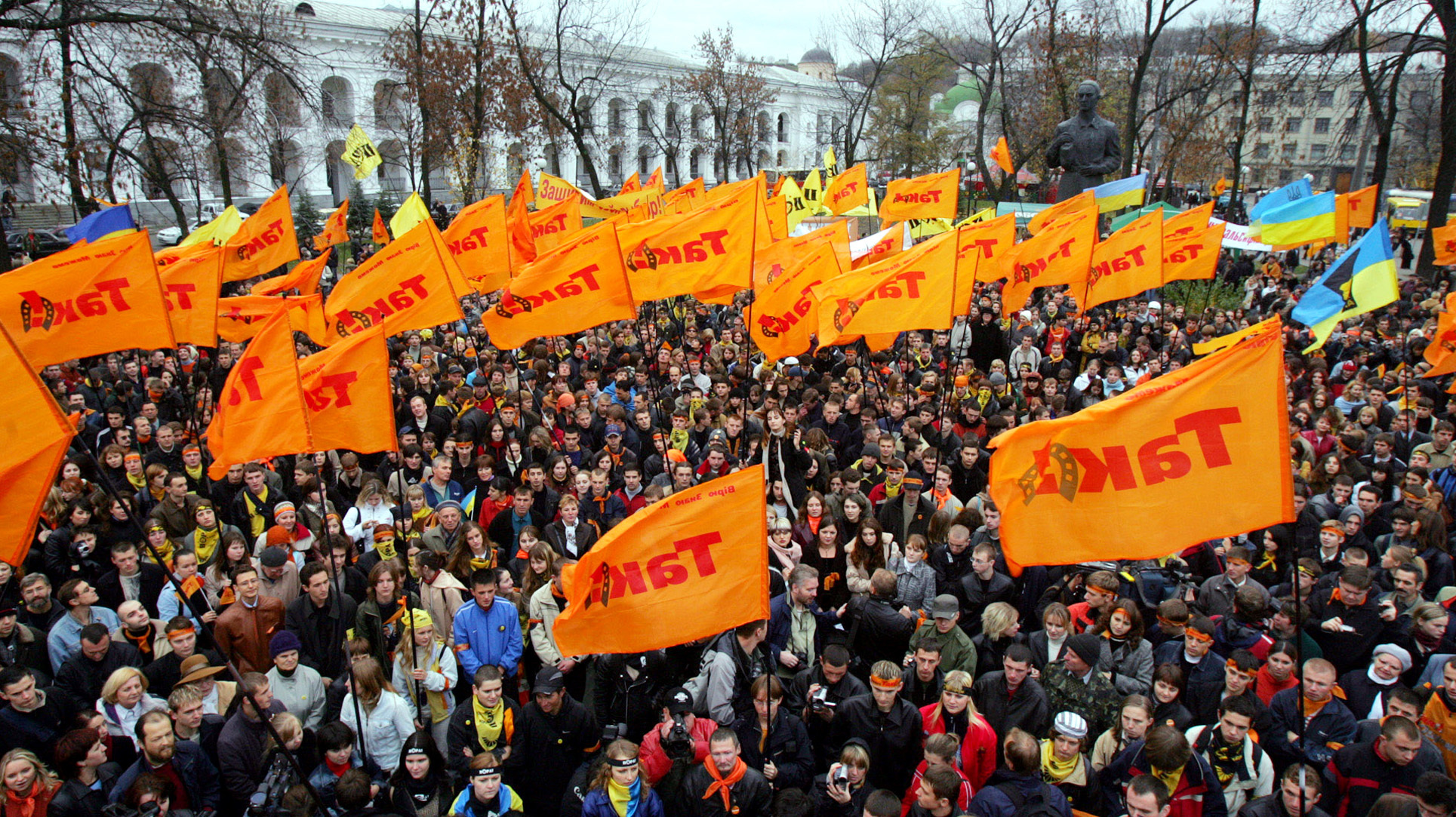
In 2004, Russia was seen as trying to rig the Ukrainian presidential election in favor of a pro-Russia candidate, Viktor Yanukovych. Ukrainians pushed back with massive street protests — the so-called Orange Revolution. Yanukovych was defeated.

In 2014, Ukrainians again took to the streets in protest of Yanukovych — who at that point had served as president for four years. After weeks of demonstrations, he fled to Russia.
“Putin has been a serial bungler when it comes to Ukraine,” said Andrew Weiss, a Ukraine expert at the Carnegie Endowment for International Peace in Washington.
“So much of what we’re seeing in this crisis is either about compelling Ukraine to do things that otherwise it wouldn’t do, or using force to make them do it,” he added. “That playbook has led to several consequences that Putin probably would like the least.”
Putin “has reanimated the NATO alliance. He’s given Ukraine more national cohesion and a stronger national identity and framed that identity on an anti-Russian trajectory,” Weiss said.
Russia has had troops in Ukraine for the past eight years
In an attempt to ensure its sovereignty, Ukraine worked out an unusual agreement in 1994, just three years after receiving independence. The country agreed to give up all the nuclear weapons it had inherited from the Soviet Union. In exchange, Ukraine received guarantees from Russia, the U.S. and Britain that its borders would be respected.
But shortly after Putin lost out politically in Ukraine in 2014, he sent the Russian military to seize Ukraine’s Crimean Peninsula, and the troops have remained there.
Today, Putin has massed a huge military force near Ukraine’s borders, which includes ground troops, tanks and other armored vehicles, heavy artillery and air power. He claims he’s not planning to invade — but also says he considers Ukraine to be part of Russia, and not an independent country in its own right.
Scholar Serhii Plokhy says Putin should ask Ukrainians how they feel.
“The answer of the Ukrainian people will be ‘We are Ukrainian and we want to live in Ukraine and we want this nightmare to end,'” he said.
Now, 44 million Ukrainians are awaiting Putin’s next move.
Greg Myre is an NPR national security correspondent who was based in Moscow from 1996-99. Follow him @gregmyre1.
Copyright 2023 NPR. To see more, visit https://www.npr.org. 9(MDM3NjYwMjA5MDE1MjA1MzQ1NDk1N2ZmZQ004) "From Stalin to Putin, Ukraine is still trying to break free from Moscow 4")