

With the flurry and energy of spring becoming a beautiful memory, it’s time to turn to the summer in the garden. Plants that bloom in the spring are now the leafy background for May’s flowers, and as the dates of May increase in number, so do the air and soil temperatures. Watering is a regular task as annual bedding plants and other spring plantings settle into the garden. Those with irrigation systems can easily adjust the amount and frequency of watering, but it may still not deliver water deep enough to meet the needs of trees and shrubs. Drip hoses and drip irrigation lines can be subject to wildlife chewing as small animals seek water during dry spells, too.
Many gardeners reach for the hose and sprinkler, but fail to realize the majority of the water that flies into the air evaporates. Reducing the water pressure so the water arcs just a few feet off the ground increases the droplet size, reducing the amount that evaporates. To measure the amount that reaches the plants, I place a tuna fish or cat food marked inside at the 1” level before placing it under the sprinkler. I then watch to learn how much time is needed to fill the can with 1” of water. Learning this informs me just how often to move the sprinkler. Setting a water shut-off timer is helpful to reduce overwatering, but so is setting a timer to remind me when to move the sprinkler.
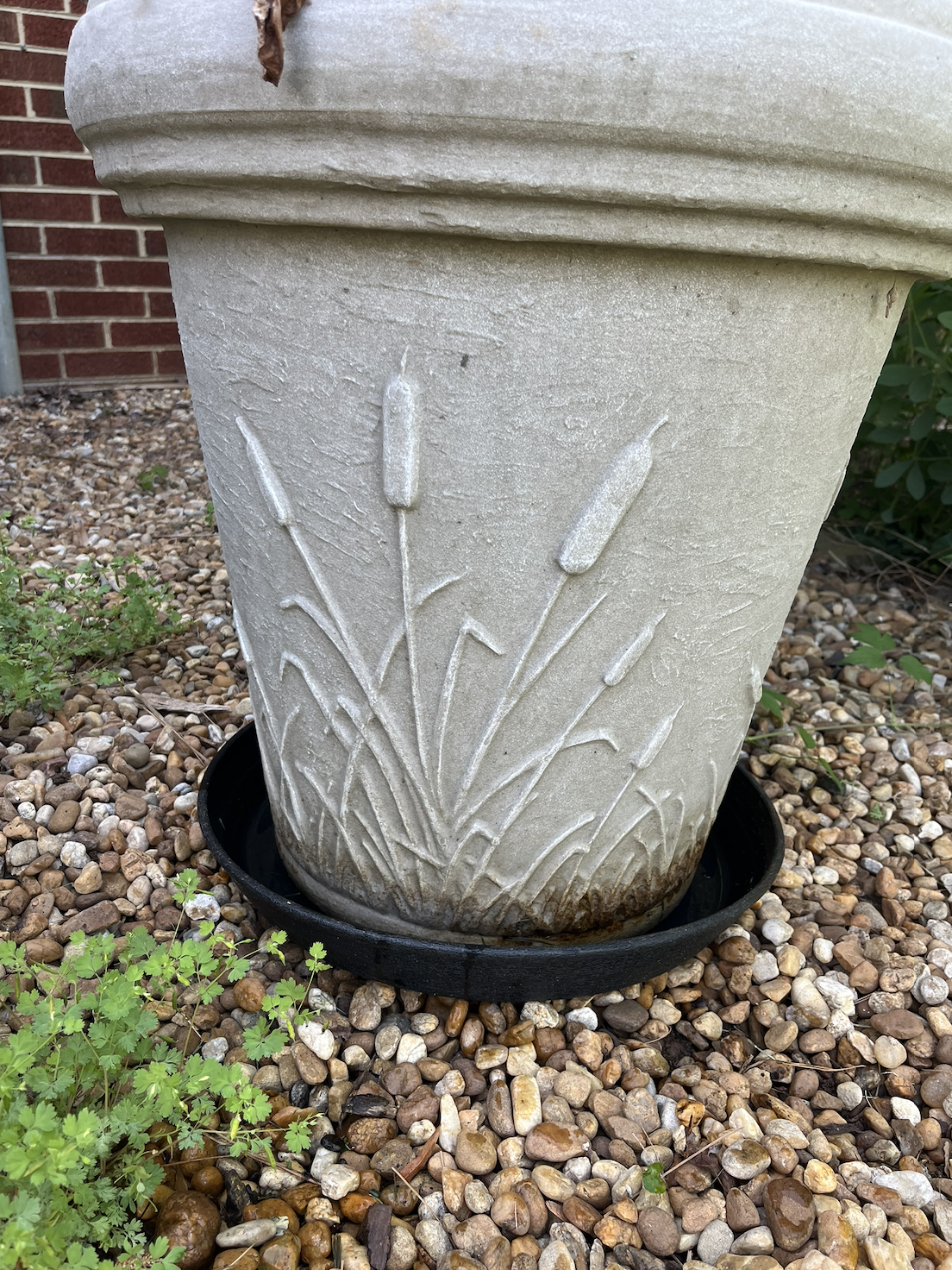
While I am a huge fan and practitioner of target watering, finding the time to hand water thirsty plants in the garden can be challenging. Applying the water directly to the base of the plant to provide a deep soaking is the best method. I water 3-4 plants at a time, and alternate watering each one numerous times, allowing time for water to soak through the root zone in between. To judge the amount of water I am applying by hand, I time how long it takes to fill a bucket with 1 gallon of water while counting to myself. As I water the plants, I count, so I can approximate how much water is being delivered to each plant. My goal is to deliver 1 gallon of water to each shrub transplanted from a 3-gallon nursery pot. I adjust the watering time with smaller plants so they receive less.
With trees and larger shrubs, consider using watering devices that release water over time so it soaks down to the root zone. One method to use is water bags that wrap around the trunk like a skirt. These bags hold about 20 gallons of water, which slowly trickles out through small holes at the base. The downside is having access to a garden hose to refill the bags. The other challenge is to remember to remove the bags when no longer needed. These bags trap moisture against the trunk, inviting decay and insects that could easily kill the tree. Remember, a woody plant’s vascular system is right under the bark.
Another watering device for woody plants is an advanced hydration system in the form of a ring placed around the base of the tree like a huge, glazed donut. The water-absorbing polymer pellets inside the device hold and release water for weeks at a time when covered with mulch. The ring can be rehydrated in a bucket of water and reset under the mulch if it dries during periods of drought.
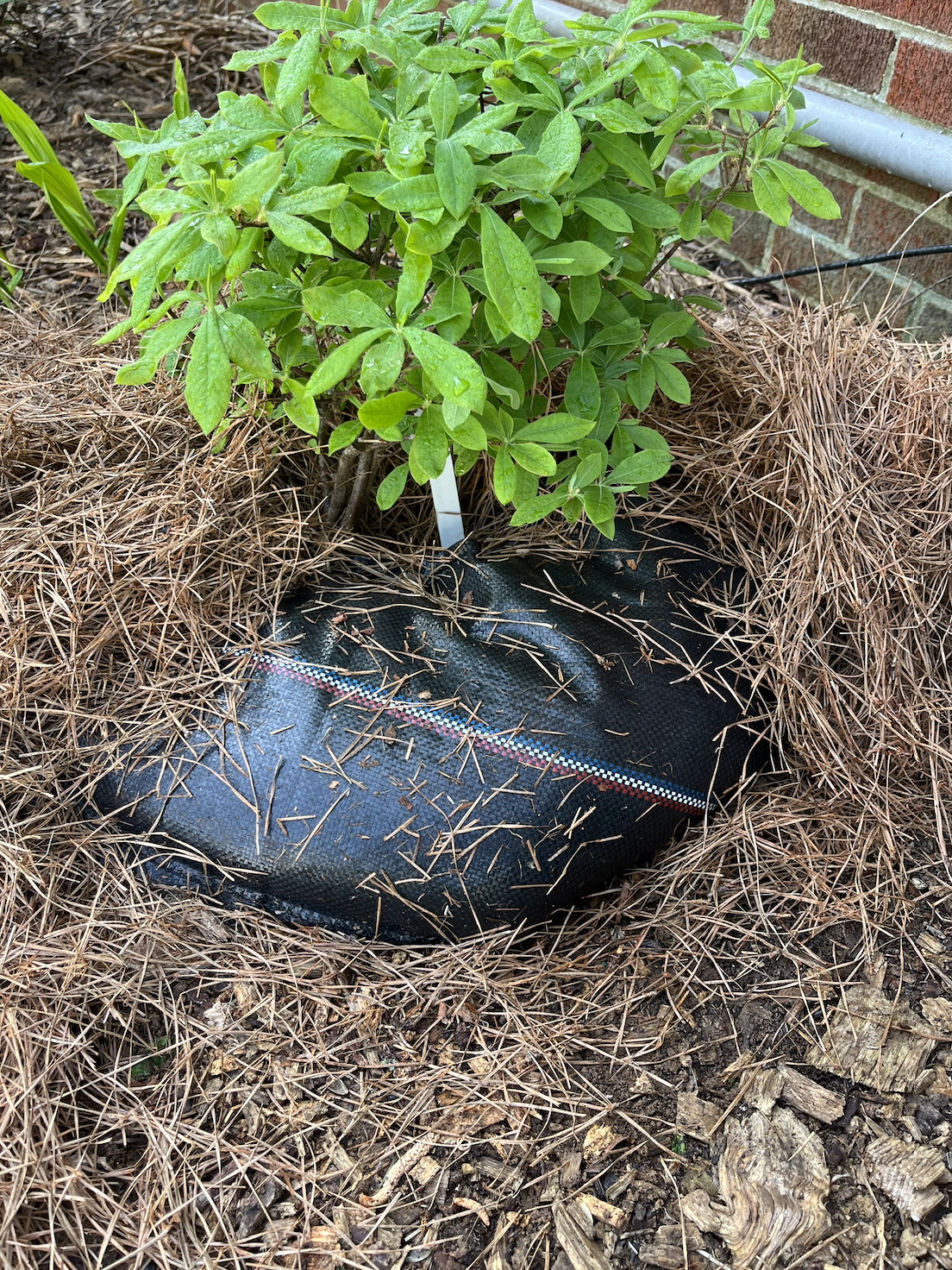
When it comes to mulch, I always reach for plant-based materials such as pine needles, hardwood or bark mulches, shredded leaves or other “green” materials. While it is important to leave some exposed soil for solitary ground-nesting native bees, mulching is also beneficial as it buffers the soil temperature, increases soil moisture retention, feeds the soil microbes and reduces weed growth. Another step to take for summer success is making sound plant choices that will thrive in your yard. Try your best to avoid impulsive plant purchases; they may end up consuming precious resources like water and time.
By choosing the best watering method for your situation, installing plants suitable for the site conditions and applying mulch, plants can survive even the hottest days of summer, and so can you!
Happy Gardening!
Peggy


