

Rarely do I concern myself with drought survival tactics this early in the year, but this entire growing season has been quite unique. With temperatures mimicking a ride on a roller coaster, which I am not a fan of either, I delayed planting both veggies and annuals. The delay provided time for me to become aware of the drought conditions and to initiate drought practices I have adopted over the years.
I purchased and planted annuals that handle drier conditions, such as Angelonia, Zinnia, Lantana, Purslane, Portulaca, Globe Amaranth and Celosia. I shied away from planting perennials and shrubs in the spring because I did not want to invest time, energy and the limited resource of water in keeping these more expensive plants alive through the summer. Fall is my favorite season, and planting perennials and woody plants is best during that season when the temperatures are cooler, moisture is typically more abundant and time allows for roots to grow before the heat stress of the following summer.
Giving young plants a solid start is important. While planting, I watered the hole before setting the small root mass into the ground. I watered immediately after planting to ensure good soil and root contact to reduce transplant shock. I mulched generously and watered when the little plants wilted a bit to encourage strong root growth. Any plants wilting from transplant shock were covered with a wicker basket as demonstrated on VHG’s April 2026 show (season 26 episode 2). I fertilized the bedding plants about a week later, drenching the roots with a cold-pressed hydrolyzed liquid fish fertilizer to improve overall growth of the plant and enrich soil microbes, without the strong smell. I will reapply throughout the growing season according to the instructions on the product’s label.
Looking ahead to a full, lush vegetable garden, I flagged where I sowed the seeds of cucumbers, squash and other vine-type vegetables. I place tomato plants on their sides when I plant to promote more root growth along the buried stems. To keep track of where the root ball is buried, I flagged it to mark where to initially target water for each plant. I mulch the beds generously with organic material such as straw or leaves. Pine needles make a great mulch, too, and despite what is shared, research has proved they do not acidify the soil.
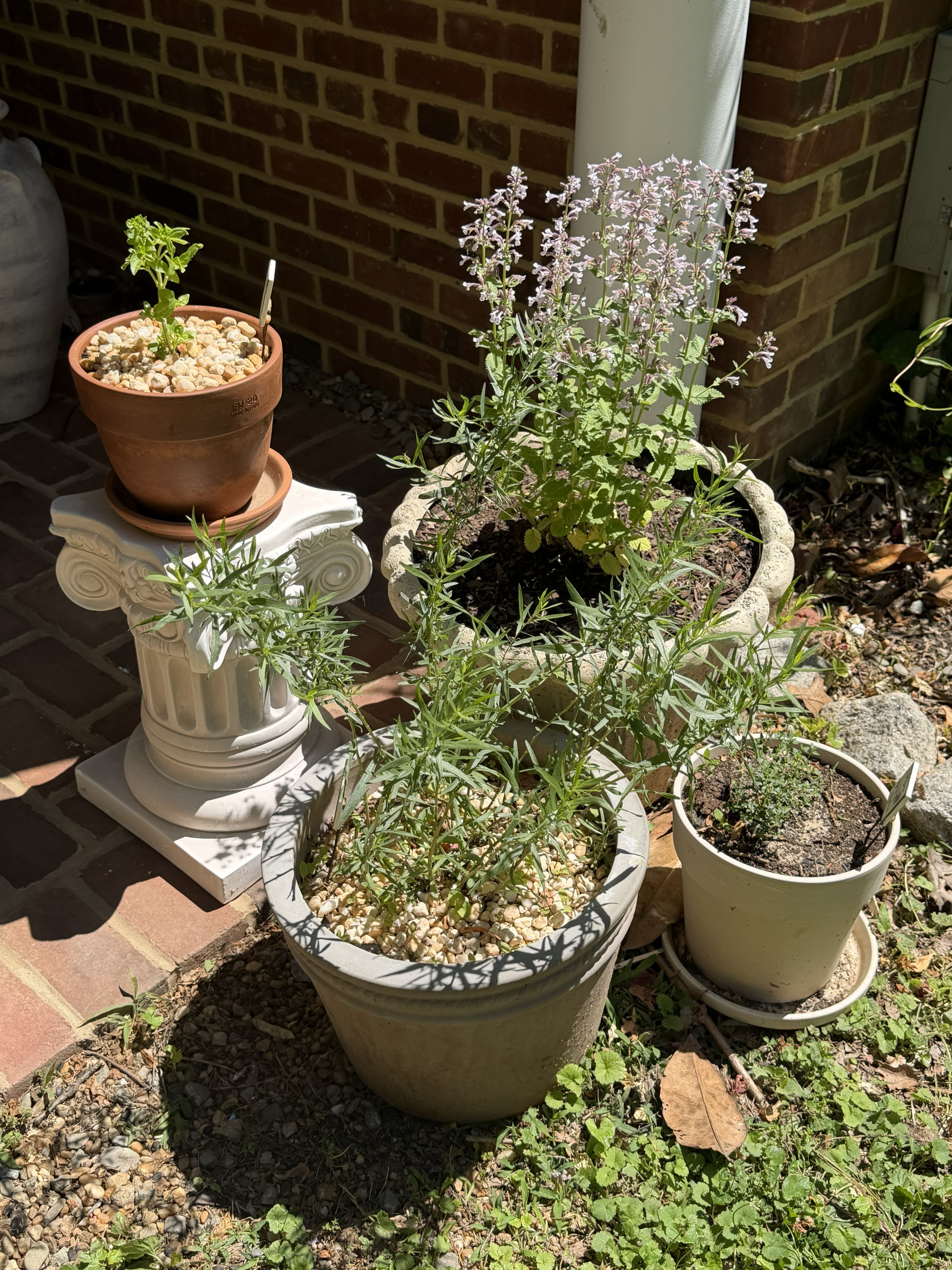
I flag for target watering because I aim to water deeply and not daily. I rarely use sprinklers, and when I do, I set the water flow and height low to keep the water droplets large. Small water droplets flying into the air are prone to being blown away by the wind or evaporating, leaving significantly less water falling to the ground.
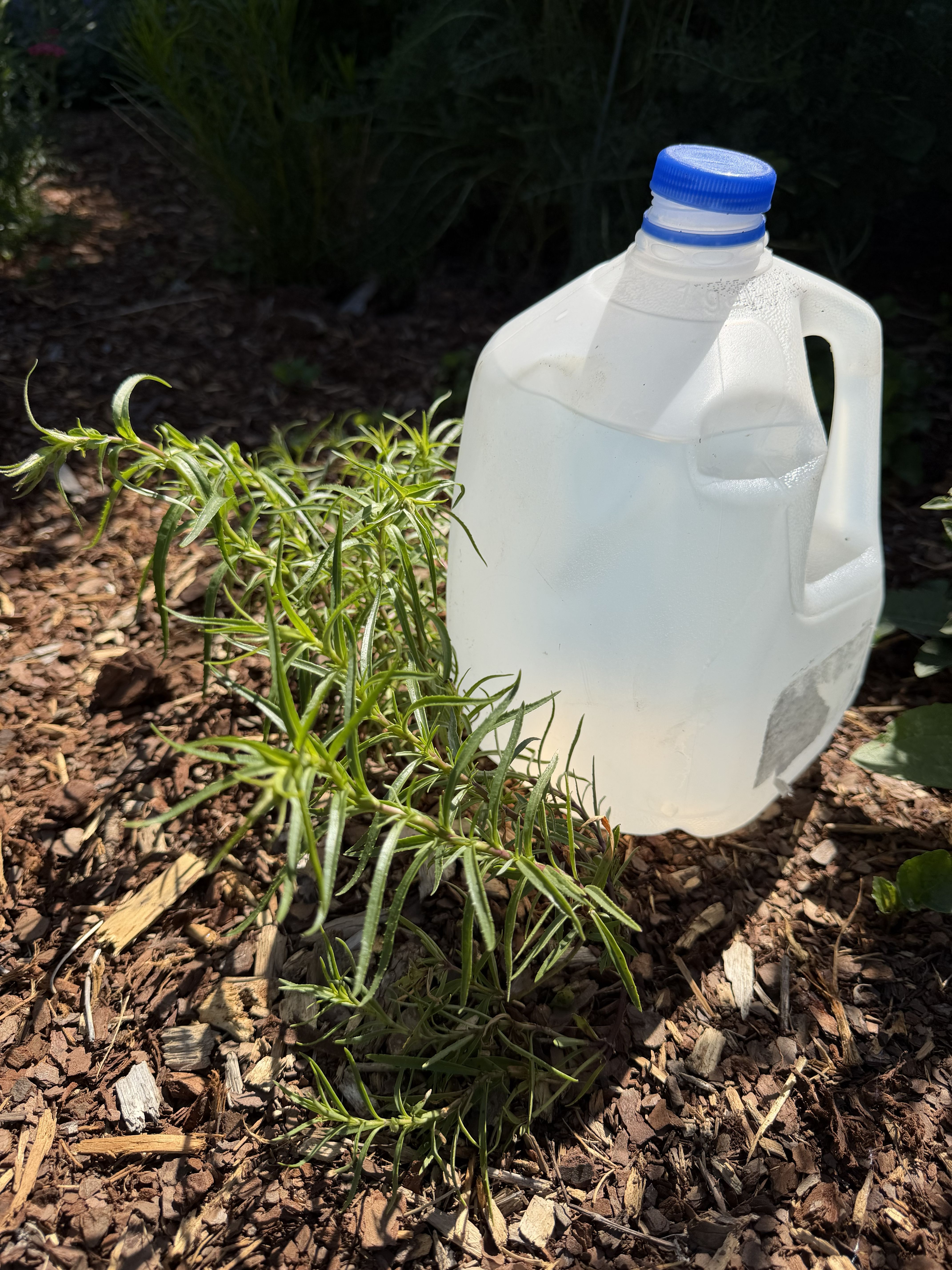
I also apply water directly to the roots of plants using a plastic jug. Using a sharp knife, I pierce 3-4 slits at the base of a clean jug. I like to do this in a bottom corner to direct the drips, but it can be done throughout the base if you prefer. I initially place the cap on very tightly after filling the jug with water, so I can move the jug to the plant without getting myself too wet. Once situated on the ground, I loosen the cap significantly to allow air in, so the water can drip out of the slits in the base. If the cap is too tight, a vacuum will form, and the water will not drip out. With this simple water-wise method, I can place up to 4 jugs around a stressed tree or shrub with confidence, knowing it will be watered well without wasting a drop.
With these tips and tricks, gardening through a drought is attainable without wasting our most precious resource, water.
Happy Gardening!
Peggy
More Resources:
Do Pine Needles Make Soil More Acidic? https://extension.unh.edu/blog/2019/10/do-pine-trees-pine-needles-make-soil-more-acidic#:~:text=Pine%20needles%20themselves%20are%20acidic,appreciably%20lower%20the%20soil%20pH


