

I love gardens with dimensions, and plants of different heights, big and small. But sometimes, with tall plants during summer storms or the weight of the blooms, the stems tend to lean on their neighbors. Just like us, sometimes our plants need a little support. I have found over the years that for our tall growing plant (upward of 6-8’ in my garden), it’s easier to put a staking system in place before the plant grows to its full size. In my garden, the top plants that tend to flop for me are Rudbeckia laciniata, Aster tartaricus and Silphium perfoliatum (cup plant). Doing this garden chore in late spring makes it easier, so you are not fighting to get those stems up, and you are ready before the first summer storm. All you need is a few materials, and you can have your tall-growing plants ready for the rest of the season.
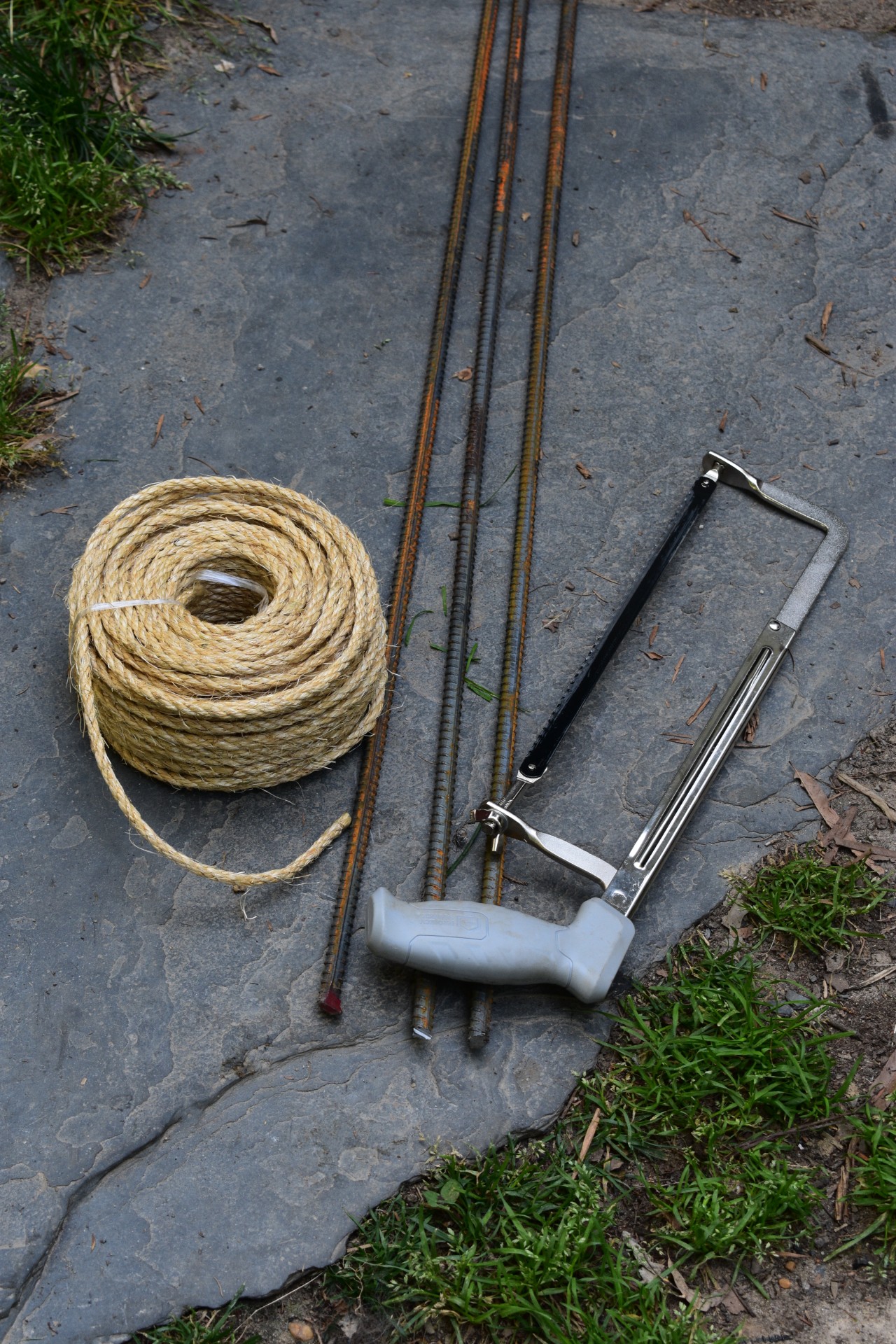
All you need for this task is stakes and twine, rope or wire. Also, a saw to cut the stacks if needed and scissors to cut the rope. There are many support options available, including wooden stakes, metal cattle fence posts and tall aluminum vegetable stakes. Personally, I prefer rebar because it is inexpensive, available in long lengths and develops a rustic, weathered look over time. And it easily blends into the plants when they grow. Then, I choose what to use to “tie it all together”. I use a natural rope. It usually holds up better than twine and easier to use than wire, but use what you have on hand. First, using three pieces of rebar cut into about 6’ pieces, I space them out evenly around the edge of each clump. If you don’t have plants that grow as tall, cut the stakes to about the height they normally grow, adding about a foot for ground support. Next, simply push the rebar into the ground at a slight outward angle about a foot into the ground. When the last piece is set, all that’s left is to tie on your rope. I start at the bottom, tying the rope to one of the rebar pieces and knotting it. Then, go around the clump, looping the rope around each piece of rebar till you get back to the first. At this point, you could cut the rope and knot it off. Or double-loop the rope and move up about a foot and start the next row. Repeat the process till you reach the top. Once you have gotten to the top, cut the rope, leaving enough to tie and make a final knot. Now you have built a cage to help support those flopping stems.
So, if you love tall plants as I do and they become floppy later in the season, give them some support. This will help to keep your tall plants from leaning on their neighbors and keep your garden looking neat. Get out there and get your hands dirty. A little time making a cage for your tall plants makes a big difference later in the season. And the other plants will appreciate your efforts as well.
-Serome


